


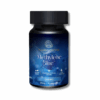
Methylene Blue 25mg (120 Capsules) – USP Grade, Independently Lab-Tested
R747.50 incl. VAT
Brand: Natures PharmatropiaMethylene Blue 25mg · 120 capsules
USP-grade raw-material specification, with an independent raw-material laboratory report to read below.
Potential uses being studied:
- Memory and attention
- Cellular energy processes
Ingredients: methylthioninium chloride (25mg per capsule), lactose, ascorbic acid and microcrystalline cellulose.
Capsule: Halaal-certified gelatin.
Ingredient research does not establish benefits for this finished product.
Before use: Do not use with G6PD deficiency. Check medicine interactions, particularly antidepressants and other serotonergic medicines, with a qualified healthcare professional.
About this Methylene Blue product
Each capsule contains 25mg methylthioninium chloride, in a bottle of 120 capsules. The raw material is specified to USP grade. You can read the independent raw-material report, complete ingredients and published research below.
Ingredients and product details
- Active ingredient: methylthioninium chloride, 25mg per capsule
- Strength: 25mg per capsule
- Quantity: 120 capsules
- Raw-material specification: USP grade
- Other ingredients: lactose, ascorbic acid and microcrystalline cellulose
- Capsule: Halaal-certified gelatin
- Storage: keep below 25°C in a dry place, protected from light and out of reach of children
How to use and important safety information
- Do not use if you have G6PD deficiency.
- Methylene Blue can interact seriously with serotonergic medicines. Obtain appropriate professional guidance before use.
- Do not use during pregnancy or breastfeeding unless specifically directed by an appropriate medical professional.
- Blue or green urine can occur because of the compound’s colour.
- Consult an appropriately qualified healthcare professional before use if you take prescription medicine or have a medical condition.
Before purchase: Review the bottle label and the Methylene Blue medicine-interaction guide.
View the Methylene Blue 25mg product information PDF
Independent laboratory report and COA explained
The Methylene Blue raw material is specified to USP grade. Independent laboratory documentation is available so that you can review the tests performed and the sample they cover.
View the original Peter Johnson Laboratories test report (PDF) — report LN503047-25N, issued 1 April 2025, for the submitted raw-material sample identified as Methylene Blue 20g. Analysis was completed on 31 March 2025.
- Assay, as received: 95.5% m/m
- Assay, calculated on a dried basis: 103.9% m/m
- Moisture: 8.11% m/m
- Ash: 0.52% m/m
- Mercury: 0.01 mg/kg
- Cadmium: 0.02 mg/kg
- Lead: 0.40 mg/kg
- Arsenic: <0.01 mg/kg
How to read these results: the report lists the assay as received and a separate calculated dried-basis assay. The sample contained moisture, so these values use different bases of calculation. They should be read alongside the stated test method; the calculated assay is not a statement that material is literally more than 100% pure. A result below the quantification limit, such as the arsenic result, does not mean zero.
What the report covers: these results relate to the raw-material sample tested. This document does not identify a finished 25mg capsule batch or provide capsule content-uniformity or microbiological results. A quality report is different from a clinical study: it documents the listed sample tests, rather than proving a health outcome. Contact us with your bottle batch number if you need the documentation applicable to your stock.
For an overview of raw-material and finished-product testing, traceability and capsule materials, see the supplement quality and COA guide.
How to read the documentation: Why a methylene blue Certificate of Analysis (COA) matters explains what to check and what a laboratory report can and cannot establish.
Research and published human studies
The studies below investigate methylene blue as an ingredient. Their doses, study populations and treatment settings differ from this 25mg capsule. None is a clinical trial of this finished Pharmatropia product. These summaries are educational and do not establish a product treatment claim or provide directions for use.
1. Rodriguez et al. (2016) — Radiology
Study: Randomised, double-blind, placebo-controlled study; 26 healthy adults; single oral 280 mg dose.
Findings: The investigators reported changes in task-related brain imaging and a 7% increase in correct memory-retrieval responses.
Relevance and limits: Closest of these papers to cognition in healthy adults, but small, short term and at a substantially different dose. It does not establish effects of a 25 mg capsule or long-term use.
Read the published study: Multimodal Randomized Functional MR Imaging of the Effects of Methylene Blue in the Human Brain · DOI: 10.1148/radiol.2016152893
2. Telch et al. (2014) — American Journal of Psychiatry
Study: Randomised, double-blind study; 42 adults with claustrophobic fear; 260 mg after an exposure session.
Findings: Contextual memory improved. Fear outcomes depended on the exposure session: participants ending with low fear benefited, while those ending with higher fear tended to do worse.
Relevance and limits: A specialised therapy experiment, not evidence that everyday capsule use relieves anxiety. The conditional and potentially adverse findings must stay visible.
Read the published study: Effects of post-session administration of methylene blue on fear extinction and contextual memory in adults with claustrophobia · DOI: 10.1176/appi.ajp.2014.13101407
3. Alda et al. (2017) — British Journal of Psychiatry
Study: Double-blind crossover study; 37 participants with bipolar disorder taking lamotrigine; 195 mg compared with 15 mg over six months.
Findings: Depression and anxiety scores improved at the higher dose. The study did not find a significant cognitive benefit.
Relevance and limits: Medication-adjunct research in a clinical population. The lower-dose comparator was not an inert placebo. This is not a trial of Pharmatropia capsules.
Read the published study: Methylene blue treatment for residual symptoms of bipolar disorder: randomised crossover study · DOI: 10.1192/bjp.bp.115.173930
4. Naylor et al. (1986) — Biological Psychiatry
Study: 31 participants receiving lithium; 300 mg/day compared with 15 mg/day; 17 completed the two-year crossover.
Findings: Depression ratings were lower during the higher-dose period. There was no significant difference in manic symptoms.
Relevance and limits: Historical, small study with substantial dropout, uncertain blinding and a potentially active comparator. It cannot substantiate general wellness or finished-product claims.
Read the published study: A two-year double-blind crossover trial of the prophylactic effect of methylene blue in manic-depressive psychosis · DOI: 10.1016/0006-3223(86)90265-9
5. Naylor, Smith and Connelly (1987) — Biological Psychiatry
Study: Three-week controlled clinical trial comparing 15 mg/day with placebo in severe depressive illness.
Findings: The published abstract reports greater improvement in the methylene blue group.
Relevance and limits: Assessment here is based on the indexed abstract; the full methods and participant count were not independently verified. Short, historical clinical research, not a modern 25 mg wellness-product trial.
Read the published study: A controlled trial of methylene blue in severe depressive illness · DOI: 10.1016/0006-3223(87)90194-6
6. Zoellner et al. (2017) — Journal of Clinical Psychiatry
Study: Randomised study of 42 people with chronic PTSD; 260 mg after daily imaginal-exposure sessions, with placebo and waitlist comparisons.
Findings: Both exposure groups improved. The methylene blue arm showed advantages on some response and quality-of-life outcomes.
Relevance and limits: Preliminary therapy-augmentation evidence at a different dose. It does not establish that this retail capsule treats PTSD or works as a standalone therapy. Assessment here uses the publisher’s abstract.
Read the published study: Enhancing Extinction Learning in Posttraumatic Stress Disorder With Brief Daily Imaginal Exposure and Methylene Blue: A Randomized Controlled Trial · DOI: 10.4088/JCP.16m10936
Medical history and additional research
These topics describe medical uses and research on specific preparations. They are not established benefits or treatment uses of these capsules.
- Blood oxygen — a specific medical use.
Intravenous methylene blue is used medically for acquired methemoglobinemia, helping convert abnormal methemoglobin back to normal hemoglobin. This does not establish that these oral capsules increase blood oxygen in people with normal hemoglobin. Read the medical prescribing information. - Malaria and antiparasitic research — specific combination regimens.
Human trials have investigated methylene blue alongside other antimalarial medicines. Those findings do not establish these capsules as a malaria treatment or as a general treatment for parasites. Read the malaria combination trial. - Urinary symptoms — combination medicines studied.
A clinical trial investigated preparations containing methenamine and methylene blue, with antibiotic treatment included later in the protocol. It did not test methylene-blue-only capsules or establish their effectiveness for UTIs. Read the urinary combination-medicine trial. - Bacterial and fungal research — laboratory and light-activated methods.
The linked experiments investigated activity against E. coli and Candida using particular laboratory preparations and light activation. These results do not demonstrate that swallowed capsules treat bacterial or fungal infections. Read the bacterial laboratory study · Read the fungal laboratory study.
Formulation, dose, route and treatment setting matter. Medical or laboratory findings should not be read as instructions to use this product to treat an infection or a blood-oxygen disorder.
Compare strengths and pack sizes
16mg / 60 capsules · 25mg / 60 capsules · 100mg / 30 capsules
Open the complete strength and pack-size comparison →
See the Methylene Blue South Africa guide for the range overview.
More about Methylene Blue
Use these guides alongside the ingredients, safety information and original laboratory report on this page.
- Methylene Blue South Africa: science, quality and product guide — our main methylene blue information page.
- Methylene blue: quality, formats and safety
- Why a methylene blue Certificate of Analysis (COA) matters
- How to choose methylene blue capsules in South Africa
Compare strength, formats and evidence
- 16mg vs 25mg vs 100mg: capsule strengths and pack sizes
- Methylene blue capsules vs liquid
- Methylene blue hype vs evidence
- Tracking effects and side effects
More methylene blue safety and ingredient guides
- Methylene blue and antidepressants: medicine interactions
- Methylene blue and G6PD deficiency
- Methylene blue during pregnancy and breastfeeding
- Methylene blue and pulse-oximeter readings
- Why methylene blue can turn urine blue or green
- Methylene blue and vitamin C
This complementary product has not been evaluated by SAHPRA and is not intended to diagnose, treat, cure or prevent disease.
Our Editorial and Evidence Policy explains how ingredient studies, traditional uses and product information are assessed.
| Weight | 0.07 kg |
|---|---|
| Dimensions | 5.5 × 5.5 × 9.5 cm |
| Active ingredient | Methylthioninium chloride |
| Strength per capsule | 25 mg |
| Pack size | 120 capsules |
| Other ingredients | Lactose, ascorbic acid, microcrystalline cellulose |
| Capsule shell | Halaal-certified gelatin |
| Raw-material specification | USP grade |
Only logged in customers who have purchased this product may leave a review.



Reviews
There are no reviews yet.