
Can Methylene Blue Affect Pulse-Oximeter Readings?
Written by Lize Bührmann, founder of Pharmatropia.
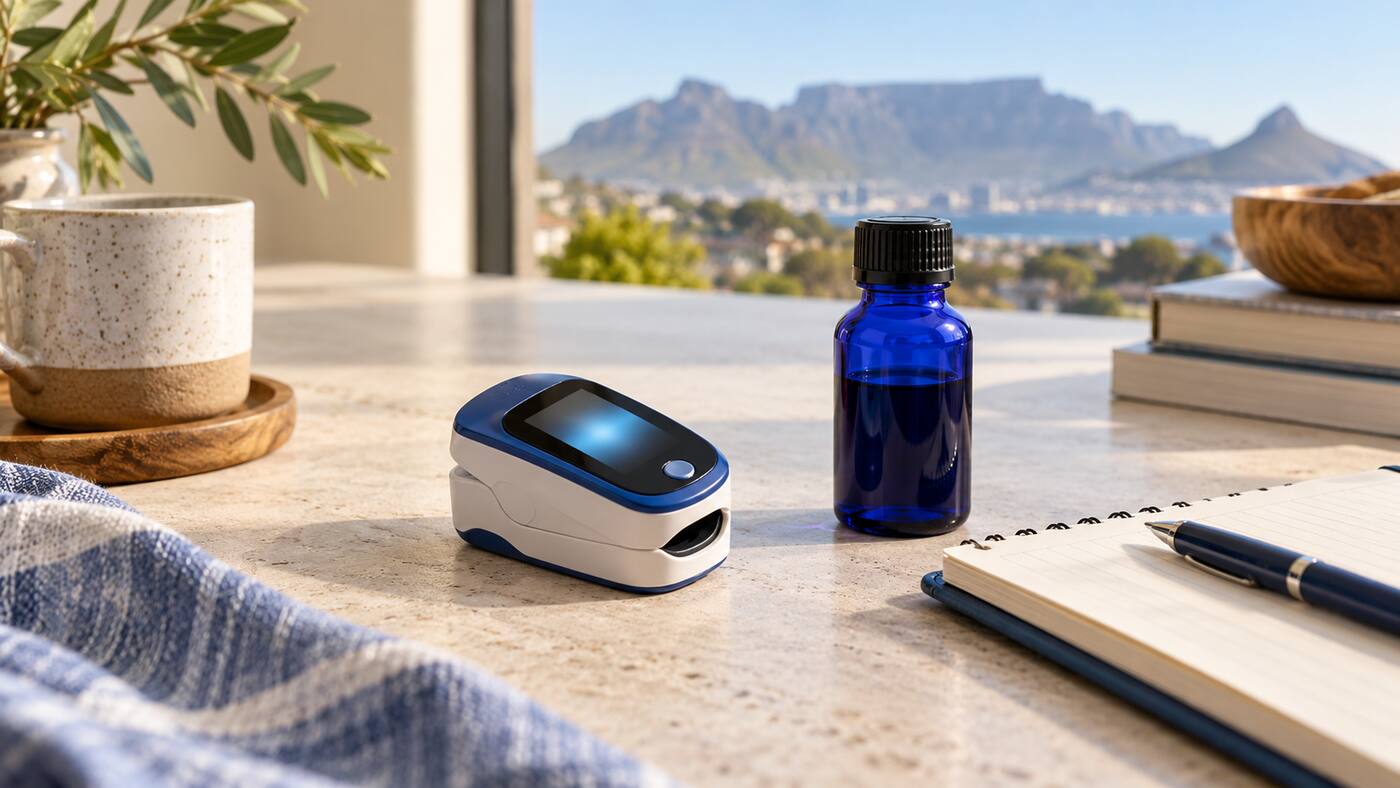
Yes. Methylene blue in the bloodstream can interfere with the light used by a pulse oximeter and make the displayed oxygen saturation appear lower than it really is. This effect is well documented after intravenous medical administration. It does not mean that every low home reading after an oral product is false—and it must never be used as a reason to ignore breathlessness, chest pain, blue lips, confusion or a persistently low reading.
The safest response is to tell the healthcare team about any methylene blue exposure and let them decide whether a different method of measuring oxygen is needed.
Why can a blue dye confuse an oxygen monitor?
A fingertip pulse oximeter shines red and infrared light through tissue. It estimates oxygen saturation from how the blood absorbs those wavelengths. Methylene blue also absorbs light, so the device’s calculation can interpret the dye as a change in haemoglobin oxygenation.
The result can be an artificially low SpO2 number even when arterial oxygen is adequate. This is an optical measurement problem, not proof that methylene blue has actually lowered oxygen. The reverse is also important: knowing about possible interference does not prove that a particular low reading is harmless.
What does the official prescribing information say?
The FDA-approved prescribing information updated in November 2023 warns that methylene blue in the blood may cause pulse oximetry to underestimate oxygen saturation. For patients who require an accurate measurement during or shortly after an infusion, it recommends an arterial blood sample tested by an alternative method.
That evidence concerns an intravenous prescription product used in clinical care. It should not be converted into a precise prediction for low-dose oral supplements: absorption, concentration and timing differ, and oral wellness use has not been studied to the same standard.
Can oral methylene blue affect a home pulse oximeter?
It is biologically plausible if enough dye reaches the bloodstream, but the magnitude and duration after oral use are not well established. Product strength, formulation, dose, absorption, kidney function and timing could all matter.
If a home reading changes after taking methylene blue:
- do not assume the device is wrong;
- repeat the reading correctly after resting;
- check how you feel, but do not rely on symptoms alone;
- record the product, strength, amount and time taken; and
- contact a healthcare professional for advice, especially if the reading stays low.
How to check a home reading properly
Several ordinary factors can produce unreliable readings. Before repeating a measurement, sit quietly, warm a cold hand, keep the finger still and make sure the sensor fits correctly. Dark nail polish, artificial nails, poor circulation, movement and some device limitations can interfere.
Wait for a stable number rather than reacting to a brief flash on the screen. If another finger gives a different result, that is useful information—but it is not a diagnosis. Consumer pulse oximeters have limits and can be less accurate at lower oxygen levels.
When is a low oxygen reading urgent?
Seek urgent medical assessment for severe breathlessness, chest pain, fainting, confusion, grey or blue lips, rapidly worsening symptoms or a low reading that persists after a careful repeat. Tell the clinician about methylene blue, all medicines and any relevant conditions.
Methylene blue has other important risks that are separate from pulse-oximeter interference. It is contraindicated in G6PD deficiency because of haemolysis risk; read why G6PD status matters. It can also interact seriously with serotonergic medicines, as explained in our guide to methylene blue and antidepressants.
Can methylene blue affect laboratory tests too?
Yes. The FDA label notes that the blue dye can interfere with urine tests that depend on a blue colour indicator, including some leucocyte-esterase dipsticks. Colour-based laboratory methods may also require special interpretation. Always disclose use before blood, urine, surgical or anaesthetic care.
A practical safety checklist
- Keep the original container or photograph the label.
- Record the exact strength rather than saying “a few drops” or “one capsule”.
- Tell clinicians before procedures, oxygen monitoring or urine testing.
- Do not increase a dose because a monitor appears normal.
- Do not dismiss abnormal readings as “just the dye”.
- Review product quality using our guide to choosing methylene blue capsules in South Africa.
Frequently asked questions
Does methylene blue cause genuinely low oxygen?
The recognised pulse-oximeter issue is optical underestimation after the dye enters the blood. Methylene blue can also cause adverse effects in inappropriate contexts, so only clinical assessment can distinguish an artefact from a real problem.
How long will the pulse-oximeter effect last?
There is no reliable universal duration, particularly for oral products. Medical reports mostly describe a temporary effect around intravenous administration. Do not use an online time estimate to overrule symptoms or a persistent low reading.
Will a smartwatch oxygen reading be affected?
Wearable devices also use optical methods, but technologies and algorithms differ. Treat an unexpected reading as screening information, not a diagnosis, and seek assessment when symptoms or repeated readings are concerning.
Should I stop methylene blue before surgery?
Do not make that decision alone. Tell the surgeon, anaesthetist and prescribing clinician well in advance so they can assess interactions, monitoring and an appropriate stop plan.
Educational note: This article is general information, not a diagnosis. A low oxygen reading or breathing difficulty needs appropriate medical assessment even when measurement interference is possible.