


Magnesium L-Threonate 500mg (60 Capsules)
R414.00 incl. VAT
Brand: Natures PharmatropiaMagnesium L-Threonate 500mg · 60 capsules
A capsule format for your magnesium routine.
Potential uses and benefits:
- Memory and attention
- Sleep and morning alertness
- Normal nerve function
Active ingredient: 500mg magnesium L-threonate compound per capsule · 60 capsules.
500mg is compound weight, not elemental magnesium.
Research uses particular preparations and doses; results vary. Cognitive and sleep research does not establish benefits for this finished product.
Before use: Check kidney-function and medicine cautions in the Description tab.
About this Magnesium L-Threonate supplement
Magnesium L-threonate pairs magnesium with L-threonic acid. Human research has explored particular preparations for cognition and sleep.
Each bottle contains 60 capsules, with 500mg of the magnesium compound per capsule. The compound weight is different from the amount of elemental magnesium.
Ingredients and product details
- Active ingredient: Magnesium L-Threonate, 500mg compound per capsule.
- Pack size: 60 capsules.
- Current-stock expiry: November 2027. Check the printed batch and expiry on your bottle.
Compare elemental magnesium per serving when choosing between forms. A raw-material percentage is not a measured amount per finished capsule. Check the full bottle label for dietary and allergy requirements.
Trials of branded or multi-ingredient preparations are discussed with their formulation details below. Matching an ingredient name does not by itself establish an equivalent clinical effect.
How to use and safety information
The displayed ingredient label states 2–4 capsules before bedtime. Follow the current bottle label and your clinician’s advice. The stated 500mg is compound weight; do not interpret a four-capsule serving as 2,000mg elemental magnesium.
- Kidney disease: obtain professional advice before supplemental magnesium because impaired kidney function can increase accumulation risk.
- Medicines: magnesium can reduce absorption of certain antibiotics and oral bisphosphonates. Ask your pharmacist about appropriate spacing. Diuretics and long-term acid-suppressing medicines can also affect magnesium status.
- Pregnancy, breastfeeding and children: confirm suitability and serving with a qualified healthcare professional.
- Tolerance and combined intake: excess supplemental magnesium can cause diarrhoea or stomach upset. Count other magnesium-containing supplements and antacids; seek advice if unwanted effects occur.
The existing packaging states that the unregistered product has not been evaluated by SAHPRA for quality, safety or intended use. It is not intended to diagnose, treat, cure or prevent disease.
Supplier COA and what the results mean
Read the historical magnesium L-threonate supplier COA (PDF). This is a historical ingredient reference. Its lot expired on 4 August 2026; it is not the certificate for current stock expiring November 2027.
- Material: Wuyang Vinsce Pharmaceutical Co., Ltd magnesium L-threonate D030; report 0670.
- Historical lot: D030202408-H179; manufactured 5 August 2024; report dated 6 August 2024.
- Ingredient results: assay 98.1% on a dried basis; magnesium 8.1%; water 0.8%. Assay and elemental-magnesium percentage are different measurements.
- Other checks: arsenic, lead and mercury reported as not detected against the stated specifications; total bacteria below 10cfu/g; E. coli below 20MPN/100g; yeast/mould below 10cfu/g.
A COA documents the tests and results for its named sample. These results provide ingredient-quality context, rather than proof of current-capsule potency or clinical benefit. Values below a reporting limit do not mean zero. See the original PDF for the methods and full specifications.
How to read the magnesium quality documents.
Research and published studies
The six studies below include branded/proprietary preparations, two clearly multi-ingredient formulations and a small uncontrolled pilot, as well as a negative clinical trial. They are not six equally strong positive trials of these capsules. They do not establish treatment of dementia, reversal of brain ageing, superior absorption or a guaranteed sleep benefit from this product.
Research amounts describe study protocols, not directions for this product. Studies of mixtures cannot isolate a single ingredient’s effect, and a change in a test score does not establish disease prevention or a meaningful benefit for every user.
1. Liu et al. (2016) · Cognition with the MMFS-01 formulation
In a 12-week randomized trial, the reported efficacy analysis included 44 adults aged 50–70 with cognitive complaints and sleep/anxiety symptoms. The proprietary MMFS-01 preparation containing magnesium L-threonate improved a composite cognitive score. Sleep and anxiety effects were not established because of strong placebo responses. The small selected population and proprietary preparation do not validate this retail capsule or prove prevention of cognitive decline.
Read the published human study
2. Wroolie et al. (2017) · Small uncontrolled dementia pilot
Fifteen patients with mild-to-moderate probable Alzheimer’s disease received an L-threonic-acid magnesium formulation containing vitamins C and D for eight weeks. One global cognitive score improved, while other cognitive measures did not. Primary brain-imaging regions did not show the expected changes, and exploratory imaging findings did not survive multiple-comparison correction. With no placebo group and several ingredients, this is preliminary context, not evidence that these capsules treat dementia.
Read the published human study
3. 2022 randomized trial · A multi-ingredient memory formula
A placebo-controlled study tested a magnesium L-threonate-based formula in 109 healthy adults over 30 days. Memory-test measures improved. However, the 2g daily formula also included phosphatidylserine and vitamins C and D, so the result cannot be attributed to magnesium L-threonate alone. The formula differs from this product, and its total formula weight is not an elemental-magnesium amount.
Read the published human study
4. Hausenblas et al. (2024) · Sleep and daytime functioning
Eighty adults aged 35–55 with self-reported sleep problems entered a blinded trial of 1g daily magnesium L-threonate or placebo for 21 days. Some questionnaire and consumer-wearable measures favoured supplementation. This short study used a particular preparation and a wearable rather than laboratory polysomnography. It does not establish a guaranteed sleep benefit from this product or identify a universally effective serving.
Read the published human study
5. Lopresti & Smith (2026) · Cognition and mixed sleep findings
One hundred adults reporting dissatisfied sleep were randomized to 2g daily branded Magtein or placebo for six weeks. Some cognitive and subjective sleep-related measures improved, but other cognitive tests and objective sleep outcomes did not differ. This product’s equivalence to the branded preparation is unverified. The publisher’s October 2026 correction clarified that statistical tests were two-tailed; it did not change the reported results.
Read the published human study
6. Ni et al. (2023) · Negative findings after breast-cancer surgery
A blinded trial studied magnesium L-threonate versus placebo in 109 patients after breast-cancer surgery. After the 12-week supplementation course, the investigators found no significant between-group improvements in persistent pain, mood, sleep or cognition at the assessed follow-ups. This is a different clinical population, but it is important direct-form negative evidence. These capsules are not presented as a treatment for cancer-related symptoms or pain.
Read the published human study
The January 2026 trial is read alongside the publisher’s October 2026 correction. Animal and laboratory work is not counted as one of these six human studies.
White papers and background reading
- EFSA NDA Panel (2024): Safety and bioavailability of magnesium L-threonate. Open-access scientific opinion on the applicant’s novel-food preparation under specified adult-use conditions. This is a safety/bioavailability assessment, not a clinical efficacy trial or an approval of this retail product.
- de Baaij, Hoenderop & Bindels (2015): Magnesium in man: implications for health and disease. Peer-reviewed Physiology Reviews background on magnesium physiology and regulation. It does not establish L-threonate-specific cognitive benefits.
- NIH Office of Dietary Supplements: Magnesium — Health Professional Fact Sheet. Public clinical background on elemental amounts, intake, medicine interactions and excess-magnesium risks.
These scientific reviews and technical assessments are separated from the six human studies above. No manufacturer white paper is presented as independent clinical proof, and branded-study findings are not assumed to apply to this bottle.
Compare magnesium forms
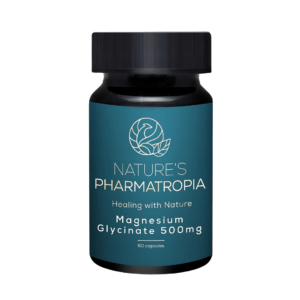
View Magnesium Glycinate 500mg (60 Capsules) – Chelated Magnesium
Compare the ingredient form, elemental amount, tolerability and directions. Neither form is universally better.
More about magnesium
- Magnesium L-Threonate vs Magnesium Glycinate: background comparison
- Elemental magnesium: how to read a supplement label
- Should you take magnesium in the morning or at night?
- Magnesium Glycinate: background article
- How to interpret supplement quality documents and COAs
- Excipients and fillers: reading the full ingredient list
- Combining sleep supplements: a label and safety checklist
These site articles provide additional background. The dated primary-study summaries above explain the preparations, findings and limitations used for this product page.
Our Editorial and Evidence Policy explains how ingredient studies, traditional uses and product information are assessed.
| Weight | 0.08 kg |
|---|---|
| Dimensions | 5.5 × 5.5 × 9.5 cm |
| Pack size | 60 capsules |
| Magnesium form | Magnesium L-Threonate |
| Declared compound amount | 500mg per capsule |
| Elemental magnesium | Not verified in reviewed documents |
| Current-stock expiry | November 2027 |
Only logged in customers who have purchased this product may leave a review.







Reviews
There are no reviews yet.