


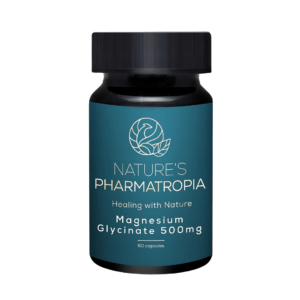

Magnesium Glycinate 500mg (60 Capsules) – Chelated Magnesium
R287.50 incl. VAT
Brand: Natures PharmatropiaMagnesium Glycinate 500mg · 60 capsules
A capsule format for your magnesium routine.
Potential uses and benefits:
- Normal muscle and nerve function
- Normal energy metabolism
- Relaxation and winding down
Active ingredient: 500mg buffered magnesium glycinate compound per capsule · 60 capsules.
Includes magnesium oxide. Capsule: Halaal-certified gelatine.
Research uses particular preparations and doses; results vary. 500mg is compound weight, not elemental magnesium.
Before use: Check kidney-function and medicine cautions in the Description tab.
About this Magnesium Glycinate supplement
Magnesium glycinate pairs magnesium with glycine. This product uses a buffered magnesium bisglycinate preparation that includes magnesium oxide.
Each bottle contains 60 capsules, with 500mg of the magnesium compound per capsule. The compound weight is different from the amount of elemental magnesium.
Ingredients and product details
- Active ingredient: Magnesium Glycinate, 500mg compound per capsule.
- Pack size: 60 capsules.
- Form: buffered bisglycinate chelate, including magnesium oxide.
- Capsule: Halaal-certified gelatine.
- Current-stock expiry: November 2027. Check the printed batch and expiry on your bottle.
Compare elemental magnesium per serving when choosing between forms. A raw-material percentage is not a measured amount per finished capsule. Check the full bottle label for dietary and allergy requirements.
How to use and safety information
The displayed ingredient label states 1–2 capsules before bedtime. Follow the current bottle label and your clinician’s advice; do not increase the serving to imitate a research protocol.
- Kidney disease: obtain professional advice before supplemental magnesium because impaired kidney function can increase accumulation risk.
- Medicines: magnesium can reduce absorption of certain antibiotics and oral bisphosphonates. Ask your pharmacist about appropriate spacing. Diuretics and long-term acid-suppressing medicines can also affect magnesium status.
- Pregnancy, breastfeeding and children: confirm suitability and serving with a qualified healthcare professional.
- Tolerance and combined intake: excess supplemental magnesium can cause diarrhoea or stomach upset. Count other magnesium-containing supplements and antacids; seek advice if unwanted effects occur.
The existing packaging states that the unregistered product has not been evaluated by SAHPRA for quality, safety or intended use. It is not intended to diagnose, treat, cure or prevent disease.
Supplier COA and what the results mean
Read the buffered magnesium bisglycinate supplier COA (PDF). This is a reference raw-material report supplied by Nautilus Chemicals, rather than a finished-capsule batch certificate.
- Material: Albion Laboratories / Balchem Magnesium Bisglycinate Chelate Buffered, product 03451-GF-KG0025.
- Reference lot: BN19000000357; manufactured 6 August 2026; ingredient expiry 5 August 2029.
- Magnesium: minimum specification 18%; reference-lot result 22%. This is ingredient magnesium content, not a purity claim or an amount per capsule.
- Other checks: FTIR identification passed; arsenic, cadmium, mercury and lead each below 0.05ppm; total aerobic count below 100cfu/g; mould/yeast below 10cfu/g.
A COA documents the tests and results for its named sample. These results provide ingredient-quality context, rather than proof of current-capsule potency or clinical benefit. Values below a reporting limit do not mean zero. See the original PDF for the methods and full specifications.
How to read the magnesium quality documents.
Research and published studies
Three studies below examine bisglycinate/diglycinate preparations, and three examine magnesium oxide for broader nutritional context. They are not six positive trials of this exact glycinate product. The supplier documents identify a buffered preparation, so an unbuffered study ingredient is not assumed equivalent. Different populations, forms and elemental doses limit what can be inferred.
Research amounts describe study protocols, not directions for this product. Studies of mixtures cannot isolate a single ingredient’s effect, and a change in a test score does not establish disease prevention or a meaningful benefit for every user.
1. Schuster et al. (2025) · Bisglycinate and poor sleep
A placebo-controlled trial enrolled 155 adults reporting poor sleep. Daily magnesium bisglycinate providing 250mg elemental magnesium produced a modest improvement in insomnia-severity scores after four weeks; the effect size was small. Other psychological outcomes did not significantly differ. This is relevant form-family evidence, not proof of the effect of a 500mg compound capsule with an unconfirmed elemental amount.
Read the published human study
2. Supakatisant & Phupong (2015; online 2012) · Pregnancy-related cramps
A blinded trial enrolled 86 pregnant women; 80 completed four weeks. Magnesium bisglycinate supplying 300mg elemental magnesium daily improved some cramp-frequency and intensity measures compared with placebo. These were pregnancy-specific findings under study supervision. They do not establish prevention or treatment of cramps in all adults, nor authorize use of this product during pregnancy without professional advice.
Read the published human study
3. Schuette et al. (1994) · Diglycinate absorption after intestinal surgery
Twelve patients with ileal resection received labelled magnesium diglycinate and magnesium oxide in a crossover absorption study. Average absorption did not differ across the whole group; a small subgroup with the poorest oxide absorption favoured the chelate, and tolerability favoured diglycinate. This is a small study in a specific clinical population, not proof that every glycinate product has superior absorption in healthy adults.
Read the published human study
4. Abbasi et al. (2012) · Sleep in older adults, using magnesium oxide
Forty-six older adults with insomnia were randomized to magnesium or placebo for eight weeks. The magnesium-oxide regimen improved several sleep-related measures, while total sleep time did not significantly differ between groups. This study used another magnesium form. Its reported magnesium dose must not be confused with this product’s 500mg compound weight or treated as dosing advice for these capsules.
Read the published human study
5. Veronese et al. (2014) · Physical performance in older women
A randomized study enrolled 139 older women attending a mild exercise program; 124 were analyzed. Magnesium oxide providing 300mg magnesium daily for 12 weeks improved some walking and chair-stand measures, especially among women with lower dietary intake. There was no placebo intervention, and strength outcomes did not significantly improve. This is indirect nutritional evidence, not a trial of magnesium glycinate or this bottle.
Read the published human study
6. Roguin Maor et al. (2017) · No clear benefit for nocturnal cramps
Ninety-four adults with nocturnal leg cramps were randomized to magnesium oxide or placebo for four weeks. Cramp frequency decreased in both groups, without a significant between-group benefit. Severity, duration and sleep-quality outcomes also did not favour magnesium. The different form limits direct transfer, but this negative result is a reason not to promise that magnesium glycinate will stop cramps.
Read the published human study
White papers and background reading
- Balchem HNH: Advantages of Magnesium Bisglycinate Chelate Buffered (technical white paper). Manufacturer-authored technical reading for healthcare and industry readers. It explains the buffered chelate/oxide formulation and its proposed absorption rationale. It is commercially interested background, not a peer-reviewed clinical trial or proof of this bottle’s benefits.
- de Baaij, Hoenderop & Bindels (2015): Magnesium in man: implications for health and disease. Peer-reviewed Physiology Reviews overview of magnesium physiology, metabolism and regulation. It provides nutrient context rather than efficacy evidence for these capsules.
- NIH Office of Dietary Supplements: Magnesium — Health Professional Fact Sheet. Public clinical background on elemental amounts, intake, interactions and excess-magnesium risks.
Technical papers and reviews are listed separately from the six human studies above. Raw-material evidence does not certify the current finished product.
Compare magnesium forms
View Magnesium L-Threonate 500mg (60 Capsules)
Compare the ingredient form, elemental amount, tolerability and directions. Neither form is universally better.
More about magnesium
- Magnesium L-Threonate vs Magnesium Glycinate: background comparison
- Elemental magnesium: how to read a supplement label
- Should you take magnesium in the morning or at night?
- Magnesium Glycinate: background article
- How to interpret supplement quality documents and COAs
- Excipients and fillers: reading the full ingredient list
- Combining sleep supplements: a label and safety checklist
These site articles provide additional background. The dated primary-study summaries above explain the preparations, findings and limitations used for this product page.
Our Editorial and Evidence Policy explains how ingredient studies, traditional uses and product information are assessed.
| Weight | 0.08 kg |
|---|---|
| Dimensions | 5.5 × 5.5 × 9.5 cm |
| Pack size | 60 capsules |
| Magnesium form | Buffered magnesium bisglycinate chelate (includes magnesium oxide) |
| Declared compound amount | 500mg per capsule |
| Elemental magnesium | Not verified in reviewed documents |
| Capsule shell | Declared Halaal-certified gelatine |
| Current-stock expiry | November 2027 |
Only logged in customers who have purchased this product may leave a review.





Reviews
There are no reviews yet.