What Are Excipients in Supplements—and Should You Avoid Them?
Written by Lize Bührmann, founder of Pharmatropia.
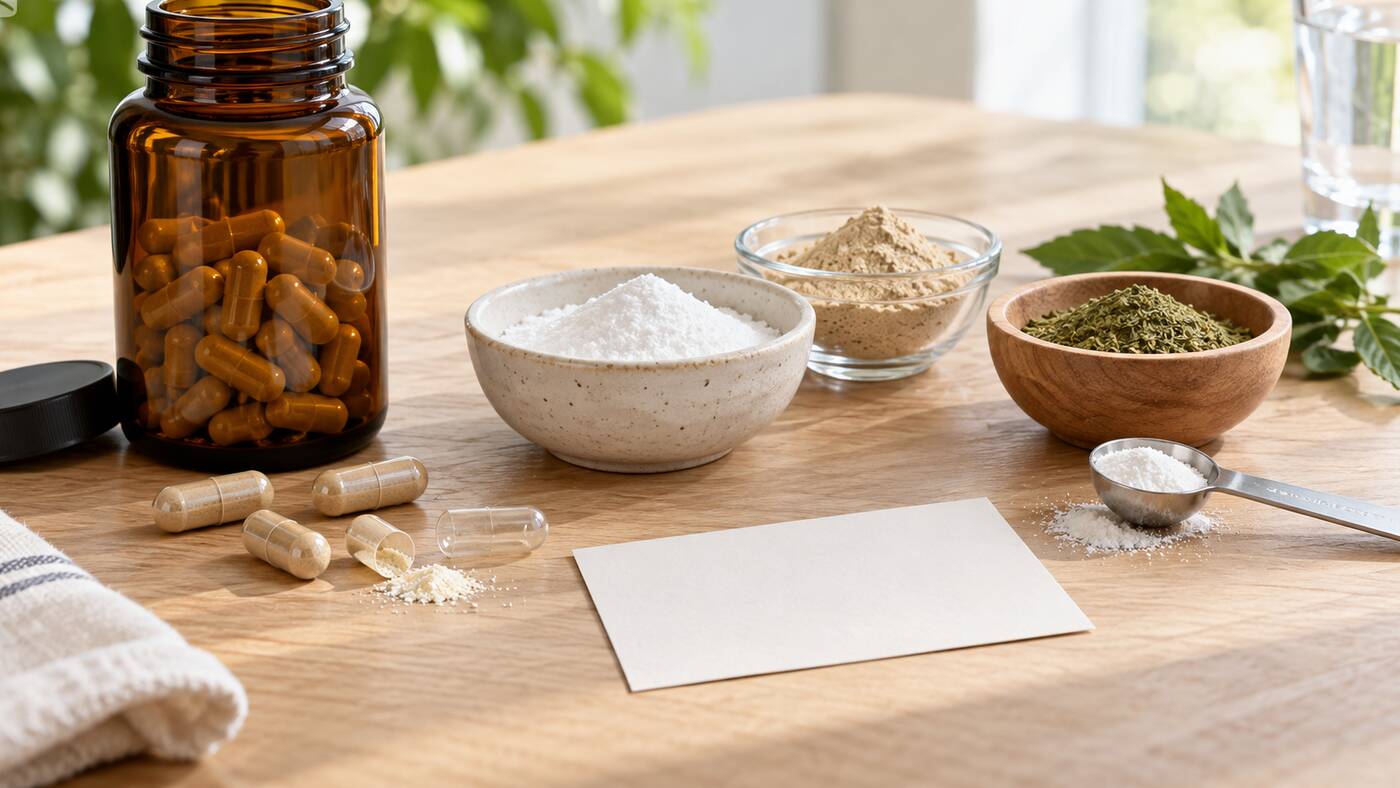
Short answer: excipients are ingredients added for a manufacturing or formulation purpose rather than as the main active ingredient. They may help a powder flow, hold a tablet together, protect it from moisture, improve stability or form the capsule shell. Their presence is not automatically a quality problem, but every ingredient should have a legitimate purpose and be declared clearly.
Why supplements need excipients
A small amount of botanical extract may not fill a capsule evenly. A sticky powder can jam machinery, a tablet may crumble without a binder, and moisture can shorten shelf life. Excipients help manufacturers create a consistent, usable product.
Common functions include:
- Fillers or diluents: add appropriate bulk when the active amount is small.
- Binders: help tablet ingredients hold together.
- Flow agents and lubricants: help powder move through equipment consistently.
- Disintegrants: help a tablet break apart after swallowing.
- Coatings and capsule shells: protect or contain the ingredients.
- Preservatives and antioxidants: help maintain quality during shelf life.
- Flavours, colours and sweeteners: affect taste or appearance.
Does “inactive” mean irrelevant?
No. “Inactive” means the ingredient is not intended to deliver the main nutritional or botanical effect. It can still matter to someone with an allergy, intolerance, religious requirement or dietary preference.
For example, capsule shells may use gelatin or hypromellose. Fillers may be derived from lactose, maize, rice or cellulose. Sweeteners can affect people differently. Our guide to gelatin vs vegetable capsules compares common shell materials. If you are checking whether a capsule can be opened, see our guide to opening capsules and mixing them with food. A transparent label should let you identify these ingredients before purchase.
What does South African guidance say?
SAHPRA’s March 2022 health-supplement guidance says inactive ingredients may generally be used when they are regarded as safe, subject to the relevant requirements. It also notes that artificial sweeteners must be clearly stated and that source materials delivering more than one nutrient should be identified and quantified appropriately.
Read the current SAHPRA health-supplement guidance. Regulatory status and the applicable product category should always be checked in context.
Are magnesium stearate and silicon dioxide dangerous?
These ingredients are commonly used in small quantities as processing aids or flow agents. Online claims often describe any excipient as “toxic”, but hazard, dose and actual exposure are different concepts. The presence of a familiar excipient is not proof of harm; equally, a “clean label” is not proof that the active ingredient is correctly identified or accurately dosed.
Assess the whole product: active amounts, intended use, warnings, allergens, quality documentation and manufacturer traceability.
What deserves closer attention?
- An undeclared allergen or source material.
- A capsule shell that conflicts with a vegan, vegetarian, halaal or kosher requirement.
- Artificial sweeteners or colours that are not clearly disclosed.
- A long “other ingredients” list with no obvious formulation purpose.
- A proprietary blend that hides active amounts—not merely excipients.
- A label that says “no fillers” while failing to identify the capsule material or carrier.
For active-ingredient transparency, see what a proprietary blend means. For broader quality terminology, read how to assess “lab-tested” and “pharmaceutical-grade” claims.
A practical label-reading method
- Separate the active ingredients from the “other ingredients” or excipient list.
- Check the capsule shell, coating, flavouring and sweetener.
- Look for allergens and animal-derived ingredients.
- Check whether a standardised extract includes a carrier and whether genuine extract content is stated.
- Ask the seller for clarification when an ingredient source matters to you.
- Do not judge quality from front-label claims alone.
If you are buying through a marketplace, use the verification steps in our online wellness-product buying guide.
Frequently asked questions
Are fillers the same as a proprietary blend?
No. Fillers are functional non-active ingredients. A proprietary blend groups active ingredients while withholding some individual amounts.
Does “vegetable capsule” mean the whole product is vegan?
No. It describes the shell only. Other ingredients or processing aids may still be animal-derived.
Does “no excipients” always mean better?
No. A powder may genuinely need no added processing ingredients, but some formulations require them for consistency or stability. Evaluate whether each ingredient is appropriate, not whether the list is fashionable.
Where are excipients listed?
They may appear under “other ingredients”, “inactive ingredients” or within a full ingredient list. South African labelling should be assessed against the applicable local rules.
Educational disclaimer: This article is general consumer information, not regulatory, allergy or medical advice. Confirm ingredients directly with the manufacturer when an allergy, intolerance or religious requirement is important.