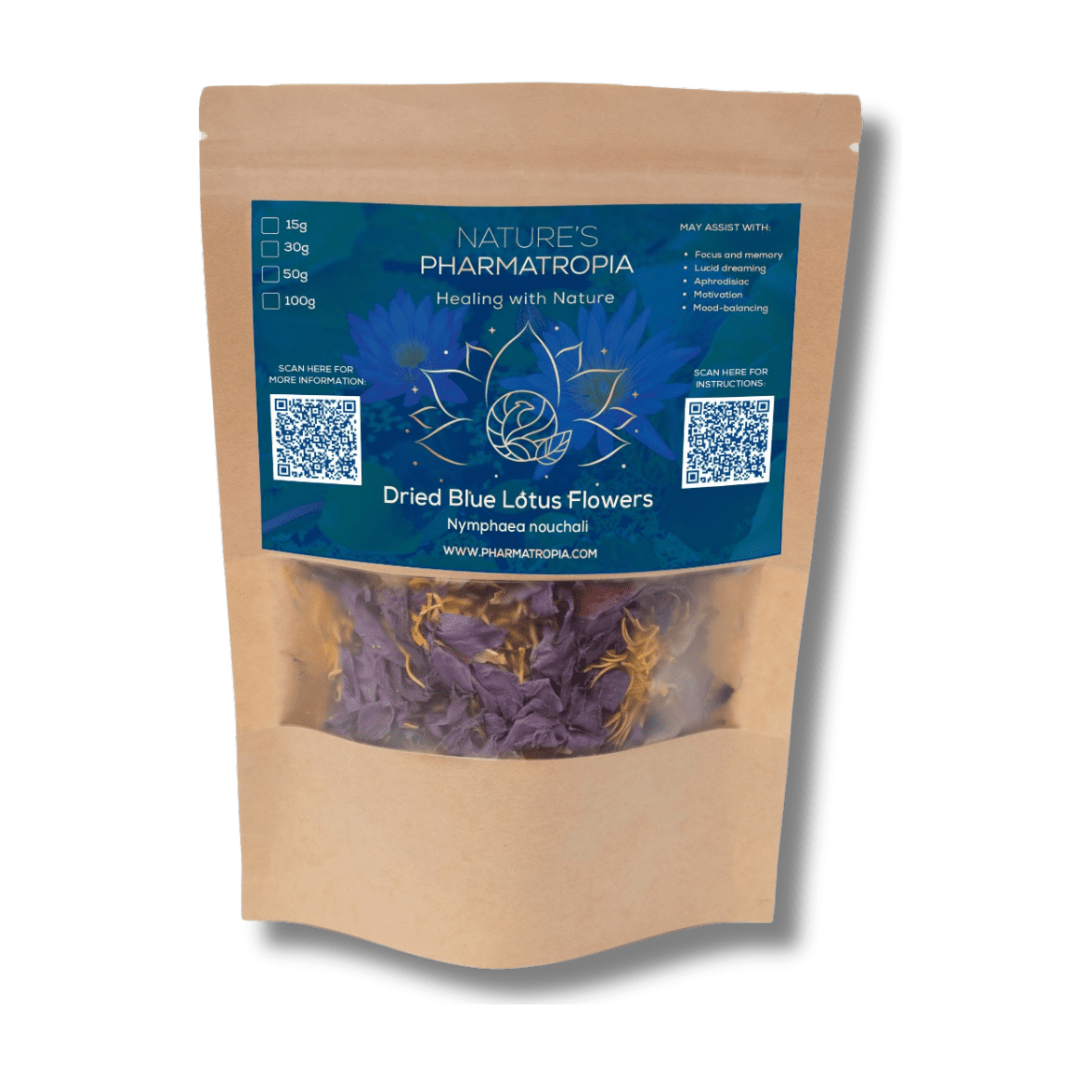
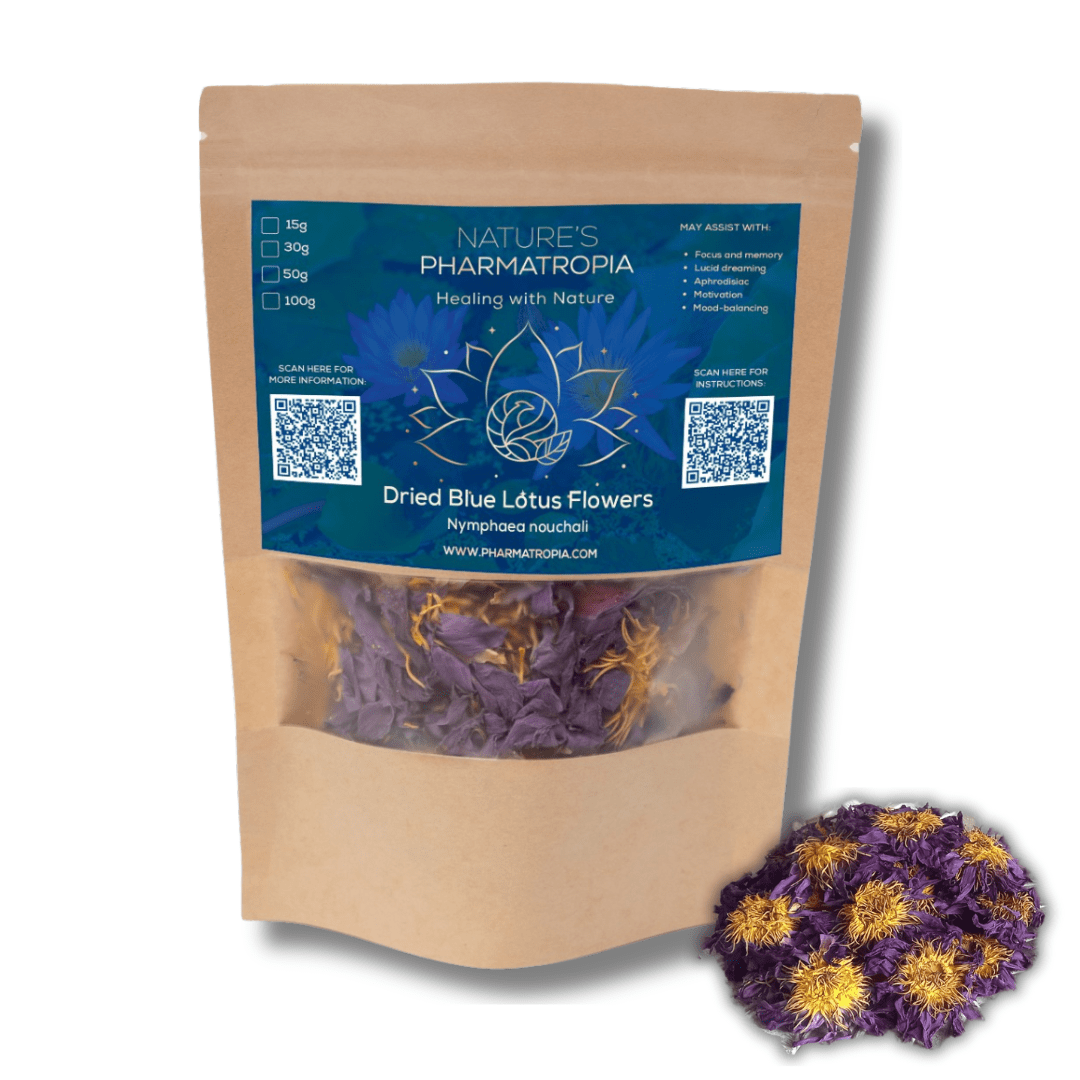
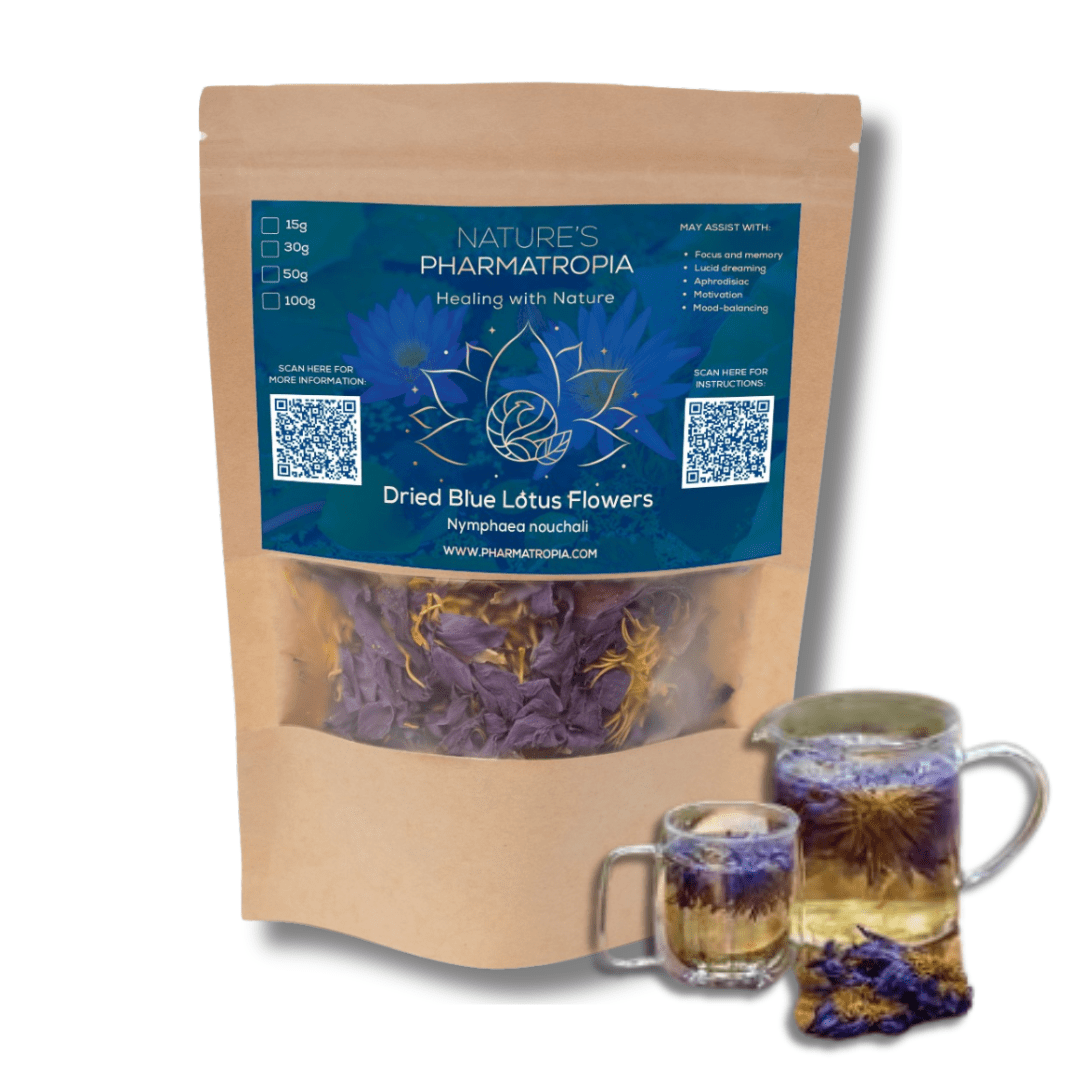
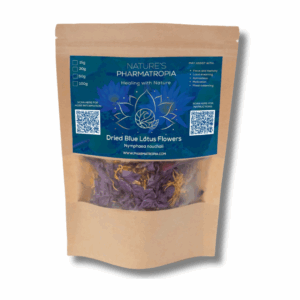
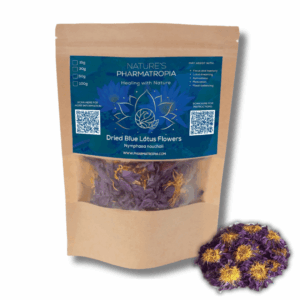
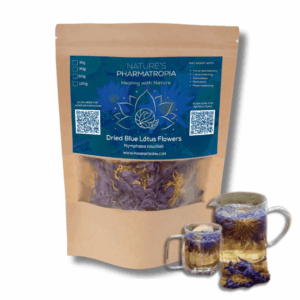
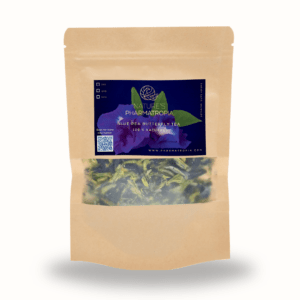
Blue Lotus Tea – Nymphaea nouchali Whole Flowers
Brand: Natures PharmatropiaBlue Lotus whole-flower tea
A floral, earthy infusion of dried Nymphaea nouchali flowers.
Traditionally used for:
- Relaxation and unwinding
- Mindful moments and quiet reflection
- A warm evening tea ritual
Ingredient: dried whole Nymphaea nouchali flowers.
Pack sizes: 5g, 15g, 30g, 50g and 100g.
Traditional use does not establish a clinical benefit.
For adults only. Avoid during pregnancy and breastfeeding. May cause drowsiness; do not combine with alcohol or sedatives.
About this Blue Lotus tea
Dried whole Nymphaea nouchali flowers make a floral, earthy infusion for a quieter moment in your day. This is a whole-flower tea, rather than a concentrated extract.
Blue Lotus is traditionally enjoyed in reflective and ceremonial tea rituals. Those traditions provide context; they do not establish a treatment effect for sleep or anxiety.
Ingredients and pack sizes
- Ingredient: dried whole Nymphaea nouchali flowers.
- Pack sizes: 5g, 15g, 30g, 50g and 100g.
- Format: whole botanical flowers, not a 15:1 extract or a standardised alkaloid preparation.
Refer to your pack for its batch and expiry. The botanical identity, solvent and preparation of a tincture or other extract should be considered separately.
How to brew and safety information
Follow the directions on your current pack. The existing tea guide suggests 1–2 teaspoons per cup, hot rather than vigorously boiling water, and a 5–10-minute steep before straining. Whole-flower teaspoon weights vary. This is preparation guidance, not a clinically established dose; do not increase the amount to seek intoxication.
For adults only. Avoid during pregnancy and breastfeeding. Do not combine with alcohol, sedatives or other intoxicating substances. Have a pharmacist or clinician check suitability if you use medication or have a health condition. Do not drive or operate machinery after use until any impairment risk is clear. Stop use and seek medical help for marked confusion, unusual sleepiness, fainting or another concerning reaction. Do not smoke or vape a product intended for an infusion.
Human evidence about medicine interactions and long-term oral safety is limited. Reports about other products sold as blue lotus are safety signals, not proof that this batch has the same composition. Read the Blue Lotus medicine-interaction guide.
This unregistered remedy has not been evaluated by SAHPRA for its quality, safety or intended use. It is not intended to diagnose, treat, cure or prevent disease.
Research and published scientific papers
No six controlled human benefit trials for this whole-flower tea were identified. The six papers below include laboratory work, a review, an analytical study of related blue-lotus extracts and a human safety case series. Their relevance differs. They do not prove that this retail product improves sleep, treats infection, repairs the brain or produces a predictable psychoactive effect.
1. Dash et al. (2013) · Flower extracts in antibacterial laboratory tests
Researchers tested solvent extracts of Nymphaea nouchali flowers against bacterial cultures. Some extracts inhibited selected organisms under laboratory conditions. This was not a trial in people and did not test a normally brewed cup. It does not establish that drinking this tea treats a urinary infection, another infection or a parasitic illness.
2. Alam, Ju and Lee (2017) · Flower extract and cellular oxidative stress
This work studied a flower-extract fraction in chemical assays and cultured cells, including antioxidant-response pathways involving Nrf2 and heme oxygenase-1. It offers a possible mechanism for further research. Laboratory DNA-protection findings do not demonstrate DNA repair, detoxification or protection from disease in people drinking whole-flower tea.
3. Egyptian blue-lily metabolome study · Flowers, leaves and stems
The researchers profiled Nymphaea nouchali organs using high-resolution chromatography and mass spectrometry, then tested antioxidant and cholinesterase-related activity in vitro. Flowers showed notable activity in those assays. Different organs, extracts and botanical provenance matter; this paper neither measures this retail tea nor establishes improved memory, sleep or brain function after drinking it.
4. Kiranmai, Sandhyarani and Tiwari (2023) · Botanical and pharmacological review
This review describes Nymphaea nouchali, its traditional medical context, constituents and preclinical investigations. It is useful for understanding the plant and why it attracts research. A review of traditional uses and laboratory experiments is not a controlled human efficacy trial, and findings on roots, leaves or concentrated fractions cannot automatically be assigned to a flower infusion.
5. Chemical composition, market survey and safety assessment (2023) · Related blue-lotus extracts
This analytical paper examined authenticated Nymphaea caerulea extracts and commercial products. Authentic extracts and marketed products were not chemically interchangeable; commonly advertised psychoactive compounds were virtually absent from the authentic extracts examined. Its fragrance/topical safety discussion does not establish oral safety for this tea. It supports checking botanical identity and testing rather than assuming a fixed alkaloid content.
6. Schimpf et al. (2023; online 2021) · Human safety case series
Five emergency presentations followed use of products sold as Nymphaea caerulea blue lotus: four involved vaping and one an infused beverage. Sedation and altered perception were reported. These cases are not proof of a therapeutic benefit or a measured risk rate for this Nymphaea nouchali tea. They are a reason to avoid intoxicating combinations, driving after use and assuming that a natural product is harmless.
Botanical references and background reading
- Kew Plants of the World Online — Nymphaea nouchali · authoritative botanical reference, not a treatment trial.
- Kew — Nymphaea caerulea synonym and accepted variety · explains naming; it does not authenticate a retail batch.
- Water Lily: An Ancient Treasure of Food and Medicine · the published review summarized above; counted once, not as an additional clinical study.
Understanding the botanical names
Common names can be confusing. Kew accepts Nymphaea nouchali as a species and treats Nymphaea caerulea as a synonym of N. nouchali var. caerulea. A species-level name on a label does not by itself confirm the variety, geographic origin, alkaloid profile or equivalence of two retail batches. This product is described by its declared N. nouchali identity; a more specific variety or origin is not inferred.
More about Blue Lotus
- Blue Lotus history, traditional use and modern safety
- Tea versus tincture · Blue, pink and white lotus compared
- Separate Egyptian Blue Lotus whole-flower listing
- 10ml tincture · 30ml tincture; check their ingredients and directions separately.
How to read supplement quality documents and COAs.
Our Editorial and Evidence Policy explains how ingredient studies, traditional uses and product information are assessed.
| Weight | 5g, 15g, 30g, 50g, 100g |
|---|---|
| Botanical name | Nymphaea nouchali |
| Plant part and form | Dried whole flowers; not a concentrated extract |
| Quality documents | Current batch-matched COA not publicly verified |
2 reviews for Blue Lotus Tea – Nymphaea nouchali Whole Flowers
Only logged in customers who have purchased this product may leave a review.




Melusi (verified owner) –
My grand ma says this lotus tea makes her sleep and rest well,and I use it as my mixer in my smokes. It’s amaziing
Kirstin –
The best Blue Lotus tea I have yet come across. Deeply nourishing and restorative. Helps to balance dopamine/motivation levels throughout the day, calms the system for a good sleep. I haven’t noticed any effects on dreaming but the effects on mood & wellbeing made me want to not go without!