Blue, Pink and White Lotus Compared: Tradition, Flavour and Safety
Blue, pink and white lotus are often presented as a single family of interchangeable wellness products. The common names sound similar, but they may refer to different species, plant parts and traditions. Before choosing a tea or tincture, check the botanical identity rather than relying on colour alone.
Common names can hide important differences
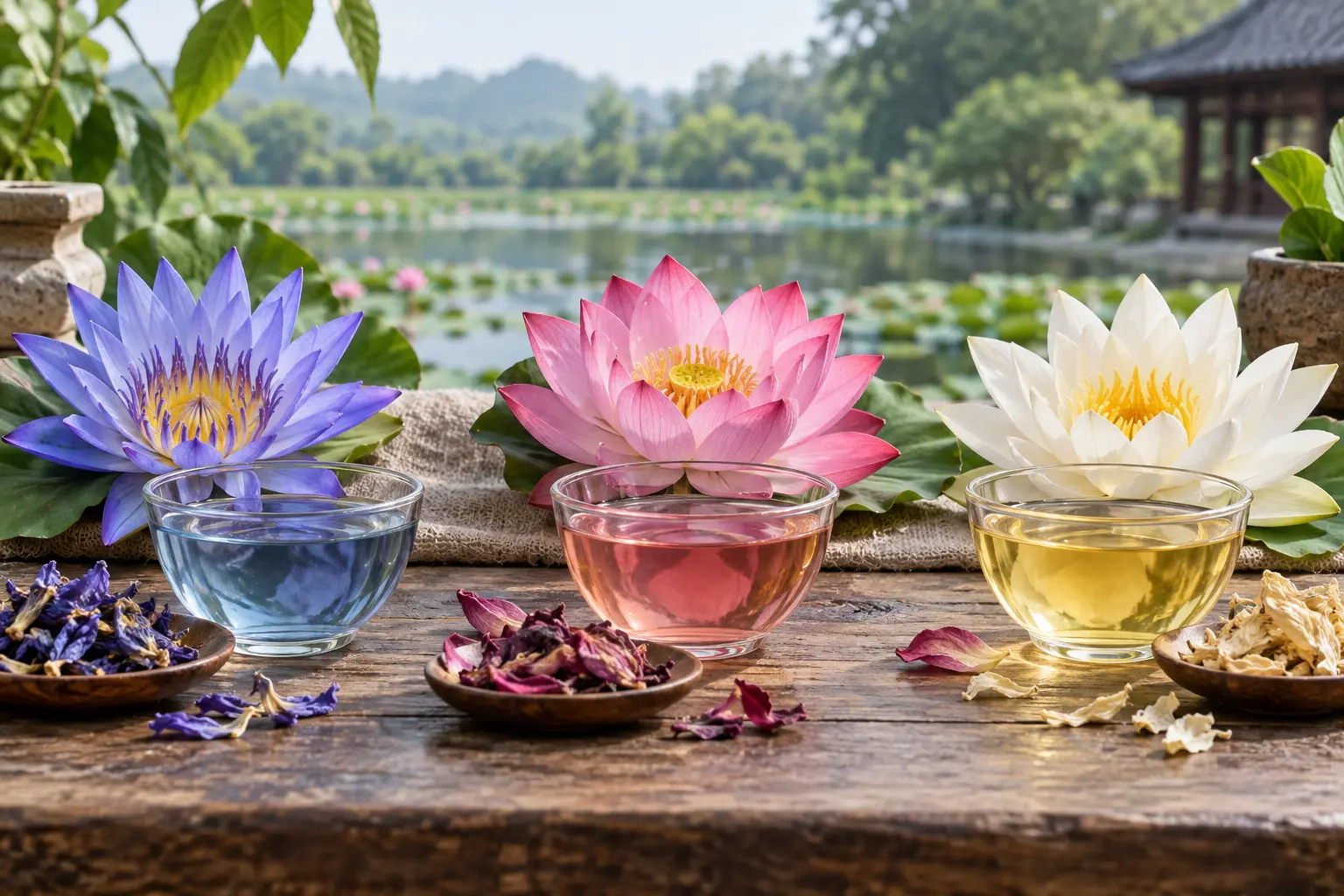
“Blue lotus” commonly refers to Nymphaea caerulea, an aquatic water lily associated with ancient Egyptian imagery and ritual. “Pink lotus” may refer to Nelumbo nucifera or to pink-flowering Nymphaea species, depending on the supplier. “White lotus” is also used for several pale-flowering water lilies, including different Nymphaea species.
That means colour is not enough to identify a product. A responsible label should provide the full Latin name, plant part, preparation and quantity.
Blue lotus
Blue lotus has a long symbolic history connected with renewal, beauty and altered states of awareness in ancient Egyptian contexts. Modern products include dried flowers, teas and extracts. Evidence for many current claims relating to mood, sleep or cognition remains limited, and product composition varies.
The tea is usually delicate and floral. A tincture is a more concentrated preparation and may contain alcohol. Our Blue Lotus tea versus tincture guide explains the practical differences.
Pink lotus
Pink lotus is widely associated with devotion, compassion and spiritual symbolism in Asian traditions, particularly when the plant is Nelumbo nucifera. Products sold under the name can differ botanically, so do not assume that every pink flower has the same constituents or traditional use.
Pink lotus tea may have a soft floral profile. Its symbolism can support a reflective ritual, but claims about emotional healing or specific physiological effects should remain modest.
White lotus
White lotus and white water-lily traditions often emphasise purity, clarity and stillness. Again, the botanical name matters. A white-flowering Nymphaea is not automatically equivalent to Nelumbo nucifera or to blue lotus.
White lotus teas are often light in colour and flavour. A pale infusion does not mean weak, and a darker infusion does not prove better quality.
Tea or tincture?
- Tea: usually a gentler sensory ritual, with strength influenced by flower quantity, water temperature and steeping time.
- Tincture: a concentrated extract that should state the solvent, ratio or amount per serving.
- Topical or aromatic formats: not intended for drinking unless explicitly labelled for internal use.
- Blends: require a full ingredient list because the lotus may be combined with other botanicals.
Safety questions to ask
Reliable human safety data are limited for some lotus products. Pregnancy, breastfeeding, childhood, significant liver or kidney disease and regular medicine use require extra caution. Combining several relaxing products may increase drowsiness or make reactions difficult to interpret.
Do not drive or perform hazardous work if a product affects alertness. Avoid unidentified flowers, products without batch details and preparations that make guaranteed medical claims.
Frequently asked questions
Which lotus is best for relaxation?
There is not enough reliable comparative evidence to name one as universally best. Botanical identity, format, amount and individual response matter.
Can the colours be blended?
They can be combined as a tea when each ingredient is correctly identified and suitable, but blending makes it harder to identify the cause of an unwanted response.
Does “sacred lotus” identify one exact product?
Not always in retail use. Ask for the Latin name because symbolic names may be used inconsistently.
Written by Lize Bührmann, founder of Pharmatropia. This article is general educational information and does not provide personalised medical advice.