Flower, Gem and Environmental Essences: What’s the Difference?
Written by Lize Bührmann, founder of Pharmatropia.
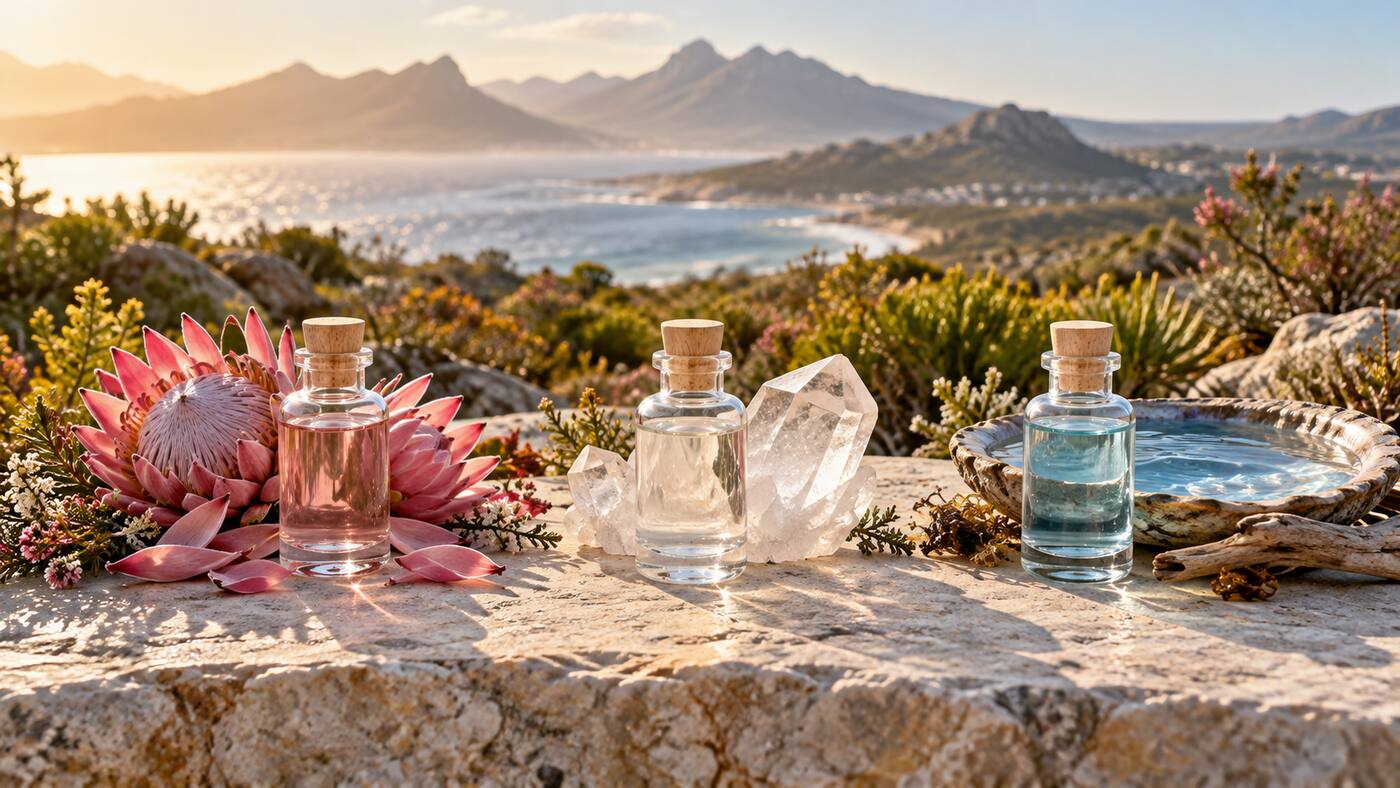
Flower, gem and environmental essences belong to the same broad vibrational tradition but use different sources and symbolic frameworks. Flower essences centre on a blossom or plant; gem essences centre on a crystal or mineral; environmental essences are associated with a place, landscape or natural event. None should be confused with a chemically concentrated herbal extract.
What is a flower essence?
Flower essences are typically prepared by placing flowers in water directly or allowing water to sit in their presence, often with sunlight, and then preserving and diluting the resulting stock. Within essence traditions, practitioners associate each flower with emotional or archetypal themes. Our guide to mother, stock and dosage bottles explains the terms used for different stages.
The final bottle generally contains little or no measurable phytochemical concentration comparable with a tincture. It should therefore not be described as delivering the known pharmacology of the plant. A rose flower essence is not rose essential oil, and a Sceletium essence is not a Sceletium extract.
What is a gem or crystal essence?
A gem essence is prepared within a similar energetic framework using a mineral or crystal as the symbolic source. Makers may use direct or indirect methods. Indirect preparation keeps the stone out of the water, which matters because some minerals can leach toxic elements or physically degrade.
The qualities attributed to gems—grounding, clarity, courage or protection—belong to spiritual and practitioner traditions. They are not established mineral-nutrition effects and do not mean the liquid supplies dietary magnesium, iron, copper or another element.
What is an environmental essence?
Environmental essences are associated with the felt character of a natural place or event: ocean, forest, mountain, storm, dawn or a particular landscape. The intention is symbolic connection rather than extraction of a physical active ingredient.
Because the category has no single scientific or regulatory standard, the maker should explain the preparation method, source, preservation and intended use without claiming to cure disease.
How this differs from a herbal tincture
A tincture is a material extract made with a solvent such as ethanol and water. It contains measurable plant constituents, has a botanical identity and extraction ratio, and can cause dose-related effects and medicine interactions.
An essence is normally highly dilute and chosen within an emotional, symbolic or spiritual framework. Read vibrational essence versus herbal tincture for the full comparison.
What does the scientific evidence say?
Controlled studies of Bach flower remedies have not shown benefit beyond placebo for the psychological problems studied, and the evidence base is small and at high risk of bias. Gem and environmental essences have even less clinical research.
This does not invalidate someone’s personal meaning, ritual or reflective experience. It does mean those experiences should not be converted into medical claims. An essence may be used as a prompt for journalling, intention or discussion while symptoms still receive appropriate assessment and treatment.
How to choose responsibly
- Name the aim: emotional reflection, spiritual ritual or sensory preference.
- Read the source: flower, mineral, place or combination.
- Check the method: direct or indirect preparation, dilution and preservative.
- Review the ingredients: alcohol, glycerine, water and allergens still matter.
- Avoid disease claims: an essence should not promise to treat infection, cancer, depression or another condition.
- Protect care: do not delay diagnosis or stop prescribed treatment.
Pharmatropia’s Nature Essences overview provides context for this symbolic approach, while choosing symbolic and energetic remedies responsibly offers a practical safety framework.
Can essences have side effects?
The highly dilute source material may reduce conventional dose-related risks, but the finished bottle can still contain alcohol, glycerine, allergens or contamination. Direct-contact gem preparations require special caution because not every mineral is safe in water. Children, pregnant people and anyone avoiding alcohol should check the complete ingredient list.
The larger risk is substituting an essence for needed care or interpreting worsening symptoms as a required “healing crisis”. New, severe or persistent symptoms need proper assessment.
Frequently asked questions
Are flower essences homeopathic remedies?
No. Both are highly dilute traditions, but their histories, preparation systems, labels and practitioner frameworks differ.
Do gem essences contain minerals?
They are not mineral supplements and should not be used to correct a deficiency. A safely made essence should not depend on leaching material from the stone.
Can I combine flower and gem essences?
Some practitioners do, but use a simple, clearly labelled combination so you can reflect on the experience without unnecessary complexity.
Are environmental essences the same as essential oils?
No. Essential oils are concentrated volatile chemical mixtures. Environmental essences are symbolic or vibrational preparations and should not smell or act like an essential oil.
Educational disclaimer: Essences are complementary symbolic practices, not evidence-based treatments for disease or substitutes for mental-health or medical care.