Flower Essences vs Essential Oils: What’s the Difference?
Written by Lize Bührmann, founder of Pharmatropia.
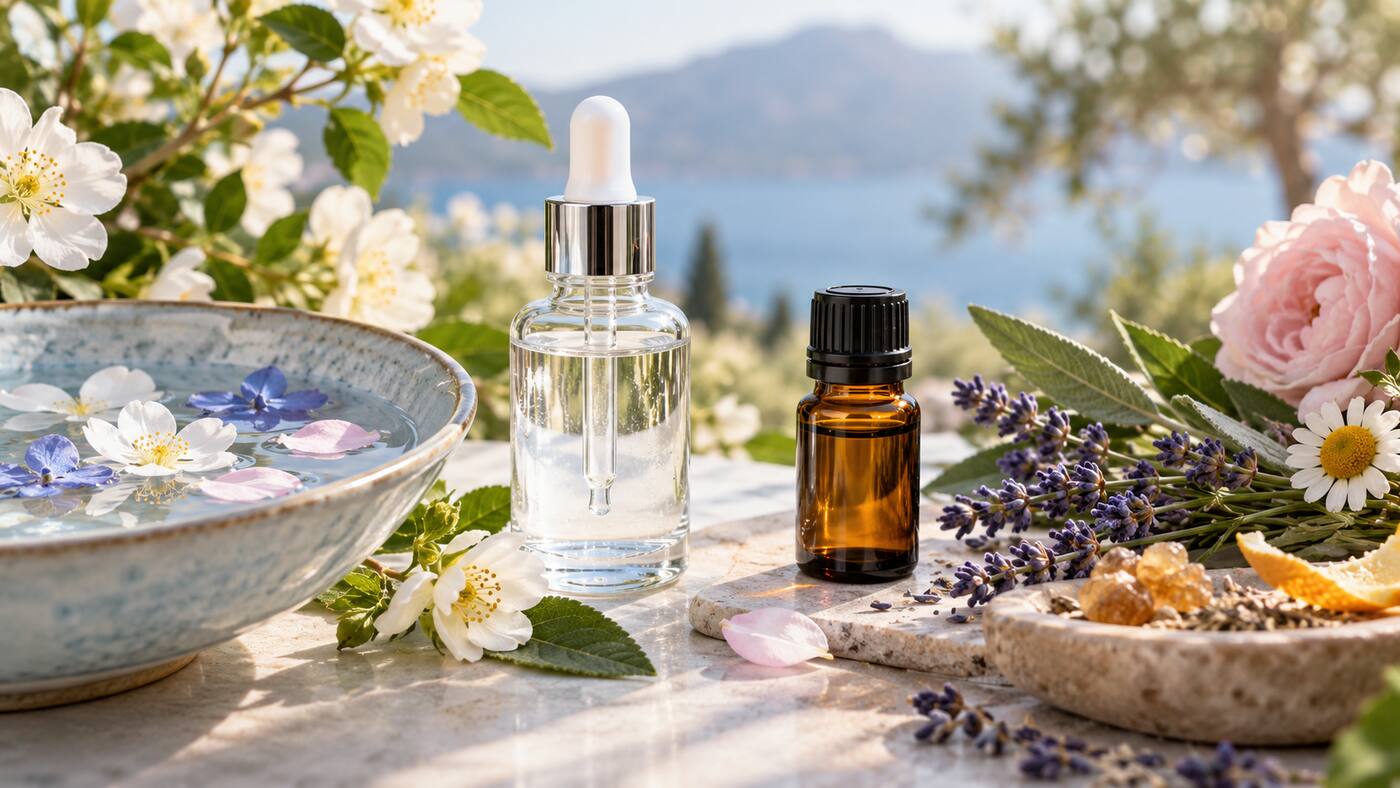
Flower essences and essential oils are not the same product. A flower essence is generally a water-based complementary preparation associated with emotional, symbolic or vibrational practice. An essential oil is a concentrated mixture of volatile aromatic compounds obtained from plant material. They differ in chemistry, scent, route of use, evidence and safety.
A clear label should tell you which one you are buying. Neither should be presented as a cure or as a replacement for medical or psychological care.
What is a flower essence?
Flower essences are usually made by placing flowers in water using a sun or boiling method, then diluting and bottling the preparation. Brandy, glycerine or another preservative may be added. In the frameworks used by essence practitioners, a preparation is selected for an emotional theme, personal reflection or symbolic resonance.
Those are traditional or spiritual interpretations, not established biochemical mechanisms. Most essences contain little or none of the flower’s volatile oil and are not expected to smell strongly like the plant. Evidence for condition-specific clinical effects is limited, so claims should remain modest.
Pharmatropia’s Nature Essences overview presents them as part of a reflective wellness practice rather than as disease treatment.
What is an essential oil?
Essential oils are concentrated aromatic compounds typically produced by steam distillation, mechanical expression or related methods. Lavender oil, for example, contains volatile constituents that create its characteristic aroma. These molecules can be inhaled or absorbed through the skin when a properly diluted topical product is used.
The US National Center for Complementary and Integrative Health describes aromatherapy as the use of essential oils, mainly by inhalation or diluted skin application. It also notes that rigorous research is limited for many claimed uses.
Key differences at a glance
| Feature | Flower essence | Essential oil |
|---|---|---|
| Main base | Water, often with a preservative | Concentrated volatile plant compounds |
| Aroma | Usually faint or absent | Strong and characteristic |
| Common use | Oral drops or reflective ritual, depending on the product | Inhalation or properly diluted topical use |
| Primary framework | Symbolic, emotional or vibrational tradition | Aromatherapy and volatile-compound exposure |
| Main safety questions | Preservative, alcohol, hygiene and unrealistic claims | Dilution, irritation, allergy, toxicity and pet/child exposure |
Are flower essences the same as tinctures?
No. A herbal tincture is made to extract measurable plant constituents into alcohol, glycerine or another solvent. A flower essence is not a botanical extract in that pharmacological sense. See our detailed comparison of a vibrational essence versus a herbal tincture.
Can essential oils be swallowed?
Do not assume so. Essential oils are highly concentrated, and swallowing them can cause poisoning, aspiration, liver injury, seizures or interactions depending on the oil and dose. “Food grade” is not a universal instruction for unsupervised internal use.
Keep oils away from children and pets. For skin use, follow product-specific dilution guidance and perform a cautious patch test where appropriate. Citrus oils and some other oils may increase sensitivity to sunlight. People with asthma, epilepsy, pregnancy, allergies or chronic illness should seek individual advice.
Are flower essences automatically risk-free?
No product is automatically suitable for everyone. A flower essence may contain alcohol, glycerine or other preservatives. Hygiene and storage matter, and some people should avoid alcohol-containing drops. The greater risk can also be indirect: a symbolic wellness product becomes unsafe when it delays assessment of severe anxiety, depression, infection or another medical problem.
How to choose between them
Start with your intention. If you want a scent-based relaxation ritual, a properly used essential oil or aromatic product may fit. If you want a reflective practice centred on emotions, journalling or symbolism, an essence may fit that tradition. If you want a measurable herbal extract, neither is necessarily the right category.
Our guide to choosing symbolic and energetic remedies responsibly can help you keep meaning, evidence and safety in proportion. You can also explore the broader context of vibrational medicine and energy therapies in South Africa.
A responsible buying checklist
- Look for a complete ingredient list, including preservatives and carriers.
- Check the botanical name for essential oils and the preparation type for essences.
- Avoid labels that promise cures, detoxification or guaranteed emotional outcomes.
- For essential oils, check route, dilution and safety warnings.
- For essences, ask whether the product contains alcohol and how it should be stored.
- Keep both categories out of reach of children.
Frequently asked questions
Do flower essences smell like flowers?
Usually not. They are water-based preparations rather than concentrated aromatic oils.
Can I put flower essence in a diffuser?
It is unlikely to provide the aroma expected from an essential oil, and the product may not be designed for a diffuser. Follow its stated directions.
Can I apply essential oil directly to my skin?
Many essential oils should be diluted in an appropriate carrier before skin use. Neat application can irritate or sensitise the skin.
Which one has better evidence?
Evidence depends on the specific use. Some essential oils have been studied for particular symptoms, but results do not apply to every oil or claim. Clinical evidence for flower essences remains limited. Neither category should be marketed as a cure-all.
Educational note: This article is general information. Aromatic products can cause reactions, and emotional or physical symptoms may require qualified care.