Vibrational Essence vs Herbal Tincture: What Is the Difference?
From the Pharmatropia Knowledge Library
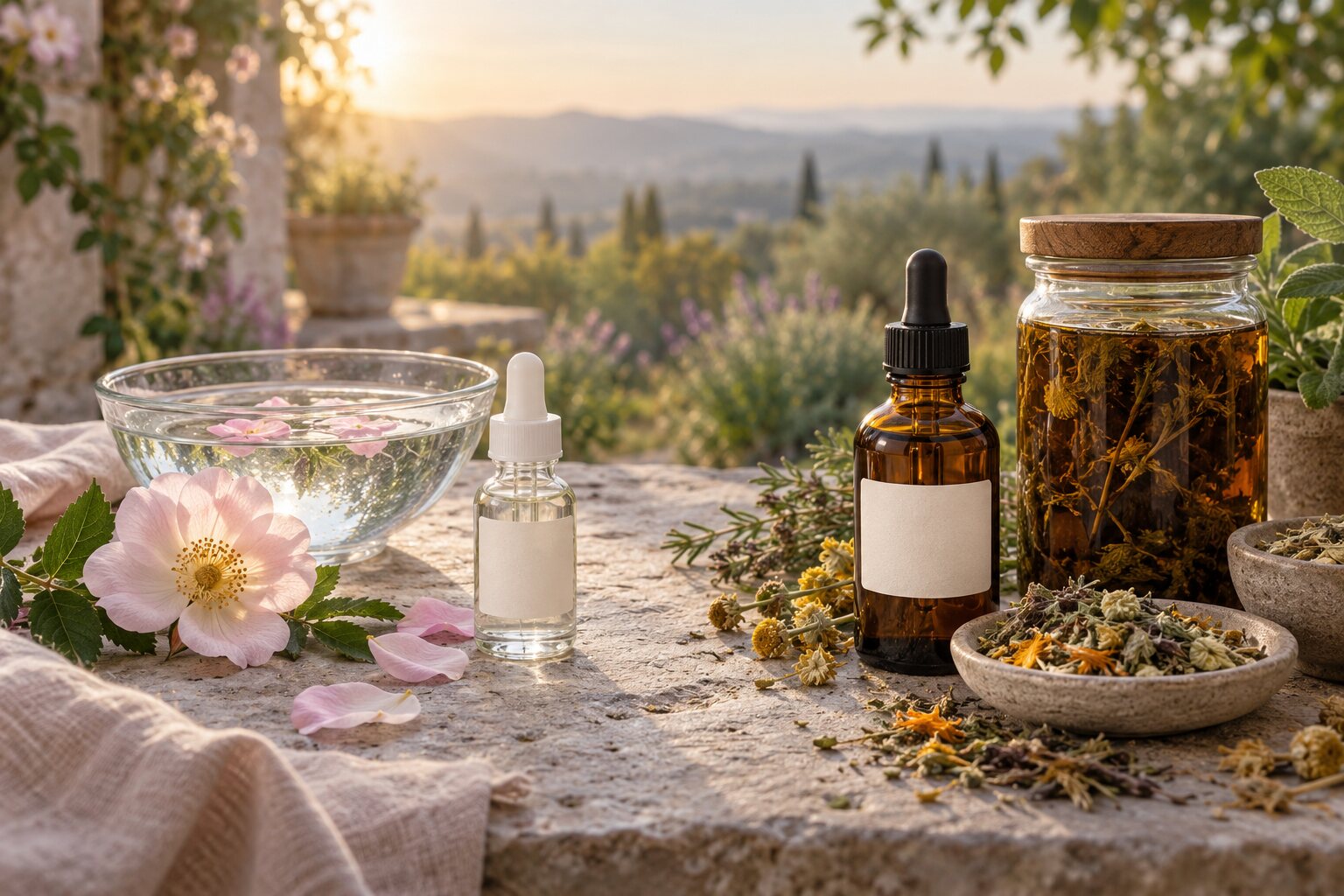
Two small dropper bottles can represent very different kinds of preparation.
Short answer: A herbal tincture is a liquid extract made to draw physical plant constituents into a solvent such as alcohol and water. A vibrational or flower essence is prepared within an energetic or symbolic healing framework and is not selected for a measurable dose of the plant’s conventional active constituents. They should not be described or used as though they are the same product.
How is a herbal tincture made?
In a traditional tincture, identified plant material is placed in a solvent for a defined period. The solvent extracts a profile of soluble constituents from the plant. The label may state the botanical species, plant part, fresh or dried state, extraction ratio and alcohol percentage.
The herb matters biochemically. A tincture can therefore have dose-dependent effects, side effects and medication interactions. “Natural” does not make those considerations disappear.
How is a vibrational essence made?
Flower and vibrational essences are generally prepared by exposing water to a flower or other source within a particular energetic method, then preserving and diluting the preparation. Different makers may incorporate sunlight, intention, sound, ceremony or other processes.
The proposed action is energetic or informational rather than a conventional pharmacological dose of plant constituents. This places essences in a different category from phytotherapy. People may value them as reflective rituals or symbolic support, but those uses should not be presented as proven treatment for disease.
Do both products contain alcohol?
They can. Alcohol may be the extraction solvent and preservative in a tincture. In an essence, brandy or another alcohol may be used mainly to preserve the stock or dosage bottle. An essence containing alcohol is not therefore automatically a herbal tincture.
Alcohol-free options may use glycerine or another system. Check the actual ingredient list if alcohol is unsuitable for you because of medication, pregnancy, recovery, religion, sensitivity or personal preference.
What does the clinical evidence say about flower essences?
Evidence should be described honestly. Systematic reviews of controlled trials have not shown convincing effects beyond placebo for the studied psychological indications. A 2026 triple-blind trial in people with advanced cancer also found no significant difference between a flower-essence group and placebo for hope or quality of life, although both groups changed over time.
This does not tell a person what a ritual must mean to them. It does mean that an essence should not be advertised as a clinically established treatment. Reflection, expectation, care and ritual can be meaningful experiences without being converted into unsupported medical claims.
Which should I choose?
- Choose a tincture when you specifically want a constituent-containing botanical extract and have checked the species, dose and interactions.
- Choose an essence when you are intentionally seeking a subtle-energy, symbolic or reflective practice and understand the limits of the clinical evidence.
- Choose neither without guidance when symptoms are severe, persistent, unexplained or potentially urgent.
Nature’s Pharmatropia carries both energetic preparations and conventional botanical extracts. Read about the broader philosophy in Vibrational Medicine and Energy Therapies in South Africa, explore the Nature Essences guide, or compare herbal liquids in our tincture and extract buyer’s guide.
Frequently asked questions
Is a flower essence a homeopathic remedy?
No. Both may use highly diluted preparations, but their histories, preparation systems and prescribing philosophies differ. They should be labelled accurately.
Can an essence interact with medication?
The energetic premise itself is not a conventional drug mechanism, but the finished product may contain alcohol or other ingredients. Check the complete formula rather than assuming it is interaction-free.
Does a tincture contain more plant material?
A tincture is intentionally made to contain extracted plant constituents. A vibrational essence is not defined by an equivalent constituent dose.
Can I use both?
Some people do, but each product should have a clear role. Review tincture interactions and avoid building a confusing routine with many overlapping products.
Sources
- Systematic review of Bach flower remedies for psychological problems and pain
- 2026 triple-blind randomised trial of Bach flower remedies
- European Medicines Agency guidance on declaring herbal preparations
Written by Lize Bührmann, founder of Pharmatropia. This article distinguishes complementary frameworks from established clinical evidence and is not a substitute for medical care.