
How to Store Supplements in South African Heat and Humidity
Written by Lize Bührmann, founder of Pharmatropia.
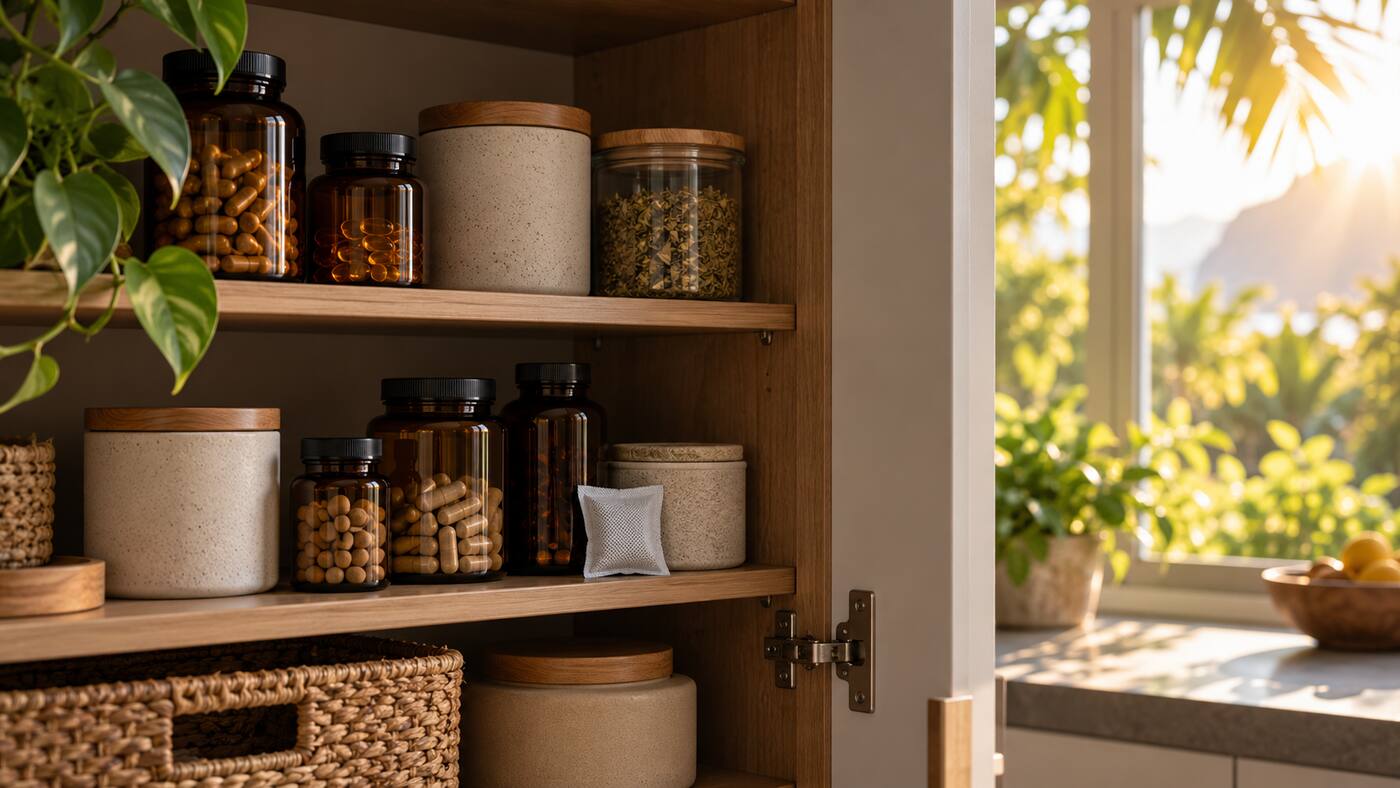
For most supplements, the safest default is a cool, dry interior cupboard in the original, tightly closed container. Keep them away from direct sun, hot cars, bathroom steam, kettles, stoves and damp windowsills. Follow the product label when it gives a temperature range or refrigeration instruction—because “cool and dry” does not mean that every supplement belongs in the fridge.
Why South African conditions matter
A closed car in summer, a sunny delivery box, a coastal bathroom and a cupboard above the stove can all expose products to more heat or moisture than a label intends. Temperature, humidity, light and oxygen may affect a product’s identity, strength, composition or physical condition. The effect varies by ingredient and packaging, so a changed appearance does not provide a complete stability test.
The best place in most homes
Choose an interior cupboard that remains dry and does not share a wall with an oven or hot-water appliance. Keep containers off a damp floor and out of children’s and pets’ reach. Close the lid promptly after every use.
Avoid:
- bathroom cabinets, where showers create repeated humidity;
- the cupboard above or beside a stove or kettle;
- windowsills and counters in direct sun;
- cars, gym bags and parcel lockers for extended periods;
- decanting into unlabelled containers;
- leaving powder scoops wet or returning them after use.
Should supplements be refrigerated?
Only if the label says so or the manufacturer confirms it. Refrigeration can help certain probiotics, oils or liquids, but it can also create condensation when a cold container is opened in warm, humid air. Other products are formulated for room-temperature storage. “Keep refrigerated”, “refrigerate after opening” and “store below 25°C” are different instructions.
If a refrigerated product travels through a South African summer, ask the supplier what transport conditions it can tolerate and how it is packed. Do not infer quality from a cold pack alone. For a practical packing checklist, see our guide to travelling with supplements in South Africa.
Keep the original packaging
The original bottle provides the batch number, expiry or best-before date, directions and warnings. Amber or opaque packaging may limit light exposure, and the closure may be selected for that product. A desiccant sachet should generally remain inside if supplied, but it must never be swallowed and should be kept away from children.
Weekly pill organisers are convenient, yet they expose doses to a different environment. Use them for short periods only when the product or pharmacist considers it appropriate, and keep the original container for traceability.
What heat or moisture damage can look like
- capsules sticking together, softening or becoming brittle;
- powders clumping after moisture exposure;
- tablets cracking, swelling or changing colour;
- oils developing an unusual rancid smell;
- labels lifting, fading or becoming unreadable;
- a broken seal, leaking bottle or damaged desiccant sachet.
Normal sediment in a botanical liquid is not automatically spoilage. Our guide to herbal tincture shelf life, sediment and storage explains the difference. When in doubt, do not taste a suspicious product; contact the manufacturer with the batch details.
A simple summer-storage routine
- Read every label and group products by their stated storage needs.
- Move room-temperature products to a shaded interior cupboard.
- Check that lids, dropper tops and seals close properly.
- Keep a photo of batch and expiry information if a label is wearing.
- After heat exposure, ask the supplier whether the batch remains suitable rather than guessing.
For buying checks beyond storage, our guide to reading proprietary blends on supplement labels can help you assess transparency.
Frequently asked questions
Can I keep supplements in the fridge during summer?
Not by default. Refrigerate only when instructed, because condensation and temperature cycling may be unhelpful for some products.
Are supplements ruined if they were left in a hot car?
Not necessarily, but you cannot confirm stability from appearance alone. Record how long and how hot the exposure may have been, then contact the manufacturer or pharmacist.
Should I throw away clumped powder?
Clumping can indicate moisture exposure, although some hygroscopic powders naturally attract water. Stop using it until the supplier confirms whether the change is expected.
Is the bathroom medicine cabinet suitable?
Usually not for moisture-sensitive supplements because humidity rises repeatedly during baths and showers.
Sources and educational note
US dietary-supplement manufacturing rules require holding products under appropriate conditions of temperature, humidity and light; USP also defines packaging and storage conditions. This article offers general storage guidance. The product label and manufacturer’s stability instructions take priority.