
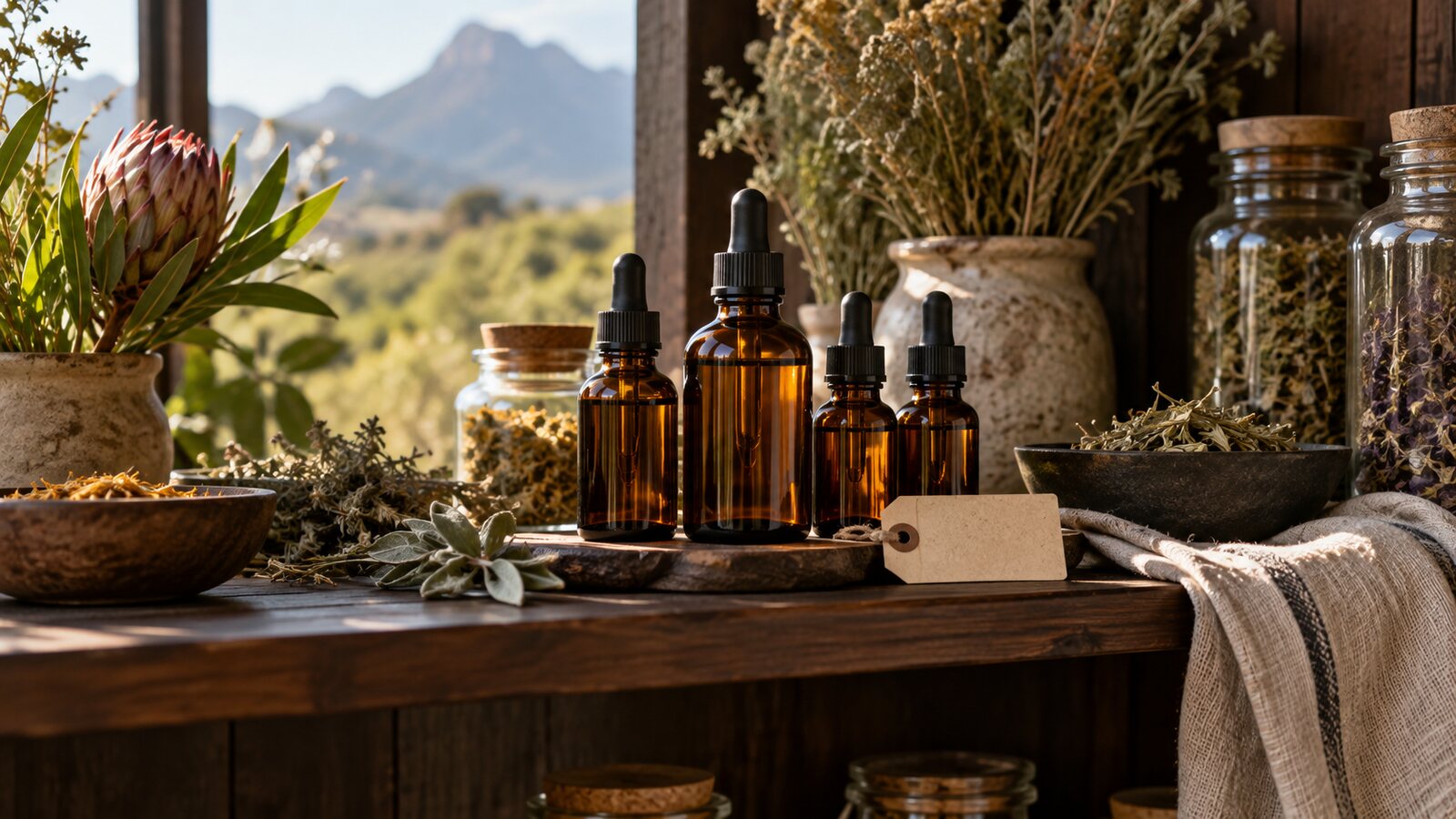
How Long Do Herbal Tinctures Last? Storage, Sediment and Spoilage
Most well-made alcohol-based herbal tinctures remain usable for a considerable time when they are tightly closed, kept away from heat and direct light, and handled cleanly—but the product label’s expiry or best-before date should remain your first guide. There is no honest universal shelf life for every tincture. The answer depends on the extraction solvent, alcohol concentration, plant material, packaging, manufacturing controls and evidence used to set the date.
If you are looking at a half-used dropper bottle and wondering whether it is still suitable, use a simple three-part check: read the label, review how it has been stored, and look for a meaningful change from its normal appearance or smell.
What determines a herbal tincture’s shelf life?
A tincture is a liquid herbal preparation made by extracting plant material in a solvent, commonly a mixture of alcohol and water. The European Medicines Agency’s herbal quality guidance treats stability as product-specific: storage conditions and shelf life should be supported by appropriate stability information. That is why a date printed by the maker is more useful than a blanket internet rule.
Important variables include:
- Solvent: alcohol-containing extracts and alcohol-free glycerites do not necessarily have the same stability.
- Water content: more water can make a liquid more vulnerable to microbial growth if formulation and handling are poor.
- Botanical chemistry: light, oxygen and heat affect different plant compounds in different ways.
- Bottle and closure: amber glass helps reduce light exposure, while a tight cap limits evaporation and contamination.
- Handling: touching a dropper to the mouth, tongue or another surface can introduce moisture and microbes.
Expiry dating is meaningful only when it is backed by data. For comparison, the US FDA notes that a supplement expiry date, when used, should be supported by valid data. South African products should be assessed in their own regulatory and manufacturing context, but the underlying principle is useful: a date should not be invented.
How should you store a tincture in a South African home?
South African summers can be punishing, and a closed cupboard in a hot room may still become warmer than expected. Unless the label says otherwise, a sensible storage routine is:
- keep the bottle upright in a cool, dry cupboard;
- protect it from direct sunlight and repeated temperature swings;
- close the cap firmly after every use;
- keep the dropper clean and avoid touching it to your mouth;
- do not add water, tea or another tincture to the original bottle;
- retain the batch number and expiry information.
A bathroom windowsill, car cubbyhole or shelf above a kettle is a poor choice. Refrigeration is not automatically better: it may encourage precipitation in some extracts and is unnecessary unless the maker specifically recommends it.
Is sediment in a tincture normal?
A small amount of sediment, cloudiness or botanical material can be normal in a minimally filtered extract. Temperature changes may also cause plant constituents to come out of solution. “Shake well” on the label usually signals that separation is expected.
Sediment alone does not prove that a tincture is stronger, more natural or spoiled. Compare the bottle with the maker’s description. If the appearance was always slightly cloudy and the product is within date, that is different from a new fuzzy growth, pressure build-up or dramatic change after months of poor storage.
Signs that you should stop using it
Do not taste a questionable product to test it. Set it aside and contact the supplier if you notice:
- a broken seal, leaking cap or damaged bottle;
- visible mould, unusual strings or unexpected surface growth;
- fermentation-like bubbling or pressure in a product not intended to ferment;
- a new rancid, sour or otherwise abnormal smell;
- a major colour or texture change that the label does not explain;
- missing batch details or an unreadable expiry date;
- uncertainty after storage in extreme heat.
If a dropper has repeatedly touched the mouth—especially during illness—replacement may be the prudent option. When in doubt, the manufacturer can compare the batch, ingredients and expected appearance more accurately than a general online checklist.
Does alcohol evaporate from a dropper bottle?
It can, particularly if the cap is loose or the bottle is left open. Because alcohol and water evaporate at different rates, repeated exposure can alter the balance of the liquid. A falling fill level, crust around the closure or a persistent loose cap deserves attention. Do not “top up” the bottle yourself; that changes the preparation and makes the labelled strength unreliable.
How storage connects to tincture strength
Shelf life and extraction ratio answer different questions. A 1:2 or 1:5 ratio describes the relationship used during manufacture; it does not guarantee indefinite stability. For help interpreting those numbers, read our guide to herbal tincture ratios. Our broader South African tincture buyer’s guide explains solvents, labels and responsible selection.
Frequently asked questions
How long does a tincture last after opening?
Use the labelled expiry or best-before date and storage instructions. Opening does not create one universal countdown, but poor closure, heat and contamination can shorten usable life.
Should tinctures be kept in the fridge?
Only when the label or supplier recommends it. A cool, dark cupboard is often appropriate for alcohol-based tinctures, while some alcohol-free liquids may have different requirements.
Can I use a tincture after its expiry date?
The safest approach is not to rely on an expired product, especially when its stability, potency or storage history is uncertain. Ask the supplier about the batch rather than assuming the date is optional.
Does darker colour mean a tincture is stronger?
No. Colour varies by plant, solvent, ratio, filtration, age and storage. It is not a reliable measure of dose or quality.
Educational information only. Herbal products can interact with medicines and may not be suitable during pregnancy, breastfeeding or for children. Follow the product label and ask a qualified healthcare professional when unsure.
Written by Lize Bührmann, founder of Pharmatropia.