The Colour Orange in Wellness Rituals: Creativity Without Burnout
Orange sits visually between red’s intensity and yellow’s brightness. Many people associate it with warmth, sociability, appetite, movement and creativity. An orange colour wellness ritual can turn those associations into a small practice—provided we keep symbolism separate from medical treatment.
The goal is not to become cheerful on command. It is to create enough warmth and curiosity to begin.
What colour can—and cannot—do
Colour can change the atmosphere of a room and draw attention to an object or task. Personal preference, culture, memory, brightness and surrounding colours all shape the response. Orange may feel playful to one person and overwhelming to another.
Claims that a colour reliably changes hormones, heals organs or corrects an “energy imbalance” are not established. A responsible ritual uses colour as a prompt for reflection and behaviour, not as a diagnosis or cure.
Orange as a cue for sustainable creativity
Creativity does not require a dramatic breakthrough. It often grows from repeated, low-pressure contact with a question. Orange can become a visual reminder to:
- approach a problem with curiosity rather than immediate judgement;
- make a rough first version before trying to make it perfect;
- connect with another person and exchange ideas;
- include pleasure and play without abandoning practical limits;
- stop before enthusiasm becomes exhaustion.
A twelve-minute orange ritual
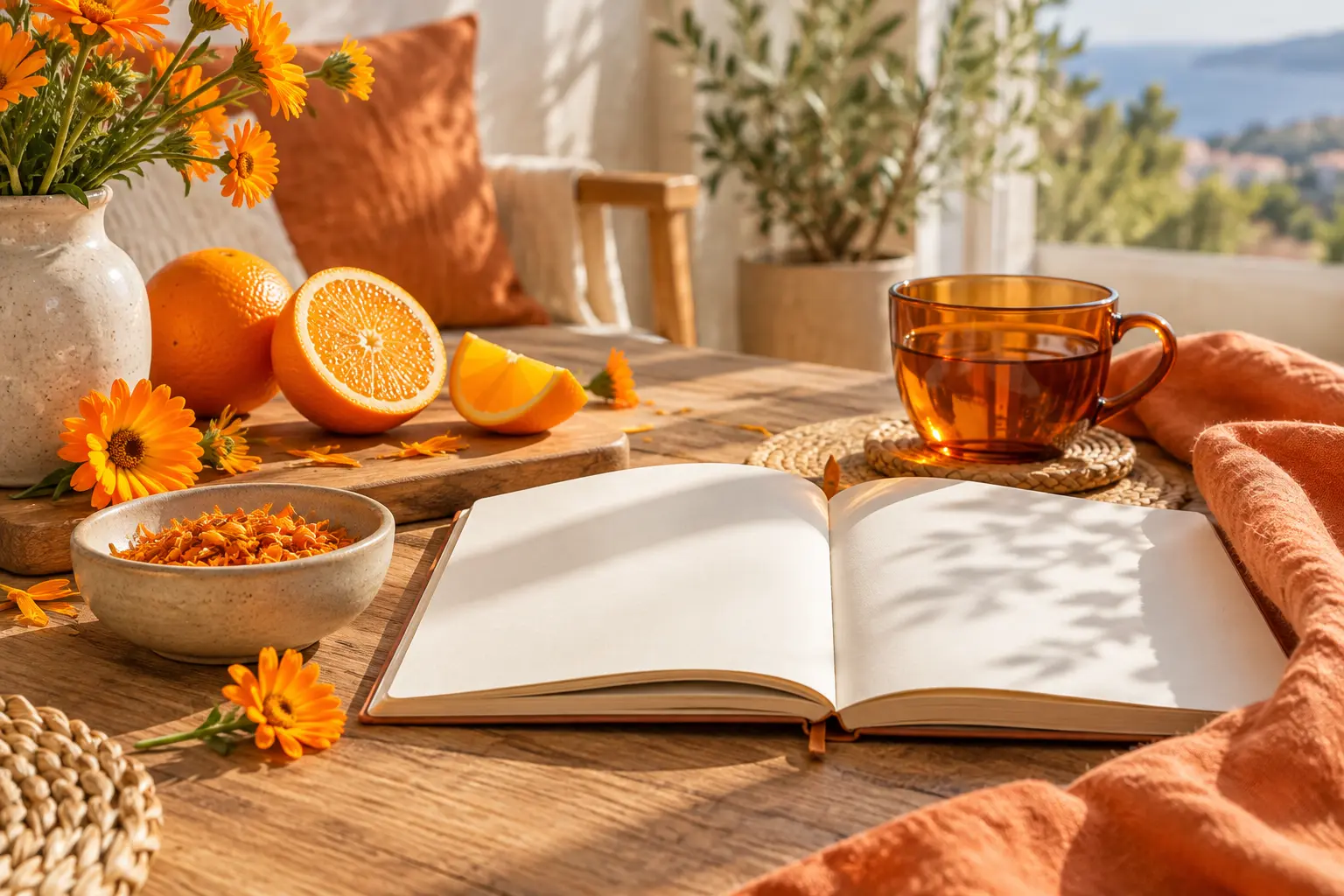
- Choose one orange item—a fruit, flower, textile, mug or pencil.
- Place a blank page beside it and set a twelve-minute timer.
- Write the question or project at the top of the page.
- List ten imperfect ideas. Repetition and silliness are allowed.
- Circle one idea that is both interesting and achievable.
- Write the next physical action: open the file, gather materials, send a message or schedule time.
- Stop when the timer ends. Sustainable creativity leaves energy for tomorrow.
Warmth is not the same as stimulation
Orange décor may make a space feel warmer, but a very bright room late at night can still interfere with winding down. Light intensity and timing matter. For an evening ritual, use dim, comfortable light and avoid staring into bright lamps or screens simply because the colour temperature looks warm.
Using botanicals for colour
Calendula petals, citrus peel and naturally coloured infusions can make a ritual visually appealing. They do not automatically share the same effects or safety profile. Check the exact plant, preparation and intended use. Do not apply essential oils directly to skin or add them to drinks unless a product is specifically formulated and labelled for that route.
If you enjoy working with a sequence of colours, compare this practice with our guides to yellow for grounded optimism and pink for self-compassion. Each colour should remain optional rather than prescriptive.
When to choose less colour
People with migraine, visual stress, sensory sensitivity or neurological symptoms may find saturated colour and bright light tiring. Reduce contrast, use a muted terracotta shade, work in natural light or skip the visual element. Comfort is more important than following a theme.
Frequently asked questions
Does orange improve mood?
Some people find it cheerful or inviting, but the response is not universal. Colour does not replace assessment or care for ongoing low mood.
Can orange make me more creative?
No colour guarantees creativity. A timed, low-pressure exercise can make it easier to start, and the colour can serve as a consistent cue.
Do I need orange foods or supplements?
No. The ritual works with an ordinary visual object. Choose foods for nutrition, preference and suitability—not because their colour promises a specific emotional result.
What if orange feels irritating?
Use a quieter shade or a different cue. A supportive practice should be adjustable.
Educational information only. Colour rituals are reflective tools and are not medical or mental-health treatment. Seek professional support when symptoms are persistent, severe or affecting daily functioning.
Written by Lize Bührmann, Doctor of Natural Medicine and founder of Pharmatropia.