
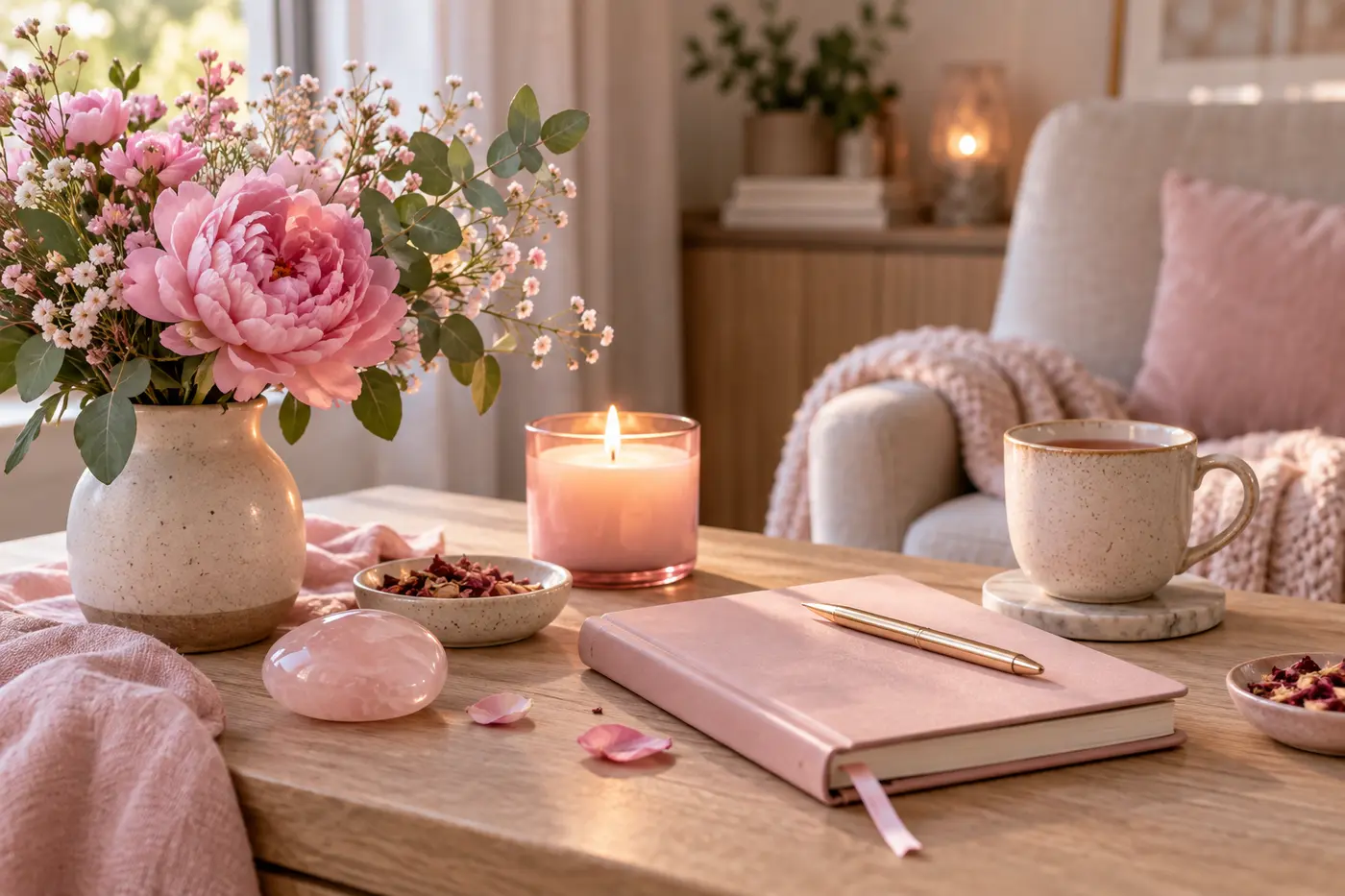
The Colour Pink in Wellness Rituals: Calm, Care and Self-Compassion
Pink is widely associated with care, tenderness and affection. Used intentionally, colour can help shape the atmosphere of a reflective practice without becoming a medical treatment. The value lies in attention, symbolism and the actions that accompany it.
Why colours carry meaning
Colour associations develop through culture, memory, design and personal experience. Pink may feel comforting to one person and overly sentimental to another. There is no universal energetic prescription, so personal response matters more than a rigid rule.
A pink ritual for self-compassion
- Choose one pink object—a flower, cloth, candle or journal.
- Sit somewhere comfortable and reduce unnecessary stimulation.
- Name the feeling that needs care without trying to correct it immediately.
- Write one supportive sentence you would offer a close friend.
- Choose one practical act of care: food, rest, a boundary, movement or a conversation.
From symbolism to action
A ritual is most useful when it changes what happens next. Compassion can mean resting, but it can also mean keeping an appointment, addressing conflict or asking for help. Pink symbolism should not become a way to avoid difficult information.
Botanicals associated with a pink theme
Pink lotus, Bobinsana and other botanicals may be included in heart-centred or reflective traditions. Their cultural meanings and physiological effects are not identical. Product identity, preparation and interactions still matter. For a grounded perspective on one of these plants, see our Bobinsana guide.
What colour practices cannot do
Colour cannot treat heart disease, depression, trauma or another health condition. A calming room may support a difficult conversation or coping practice, but persistent distress deserves appropriate professional care.
Frequently asked questions
Does pink scientifically reduce anger?
Responses to colour vary, and findings do not justify a universal treatment claim. Environment, expectation and personal association all influence experience.
Can I use this ritual after a breakup?
Yes, as a gentle reflection practice. It can sit alongside social support, sleep, nourishment and counselling where needed.
Do I need special products?
No. A piece of fabric, a flower or a notebook is enough. The practice matters more than purchasing an object.
Written by Lize Bührmann, founder of Pharmatropia. This reflective wellness article is educational and is not psychological or medical treatment.