L-Arginine vs L-Citrulline for Nitric Oxide: What’s the Difference?
Updated 20 September 2026. L-arginine and L-citrulline are amino acids commonly used in products marketed for nitric-oxide support, but they do not enter the pathway in exactly the same way. Understanding the distinction helps shoppers compare labels without treating every “nitric oxide” product as interchangeable.
This guide explains the ingredients; it does not promise a result or prescribe a dose. Evidence about an ingredient is not automatically evidence that a specific retail formula produces the same outcome.
L-arginine vs L-citrulline at a glance
| Ingredient | Relationship to nitric oxide | Label detail to check |
|---|---|---|
| L-Arginine | A direct substrate used by nitric-oxide synthase | Declared amount per serving and whether other amino acids are included |
| L-Citrulline | Can be converted by the body to L-arginine | Whether the label states L-citrulline or citrulline malate |
| Citrulline malate | A form combining citrulline with malate | Declared form, serving size and complete formula |
How do their pathways differ?
L-arginine is used by nitric-oxide synthase to produce nitric oxide. L-citrulline can be converted into L-arginine, so it supports the same broader pathway at an earlier step. This is why the two ingredients are sometimes supplied together, but their presence on a label does not guarantee a particular effect.
What is in Pharmatropia Nitric Oxide Support?
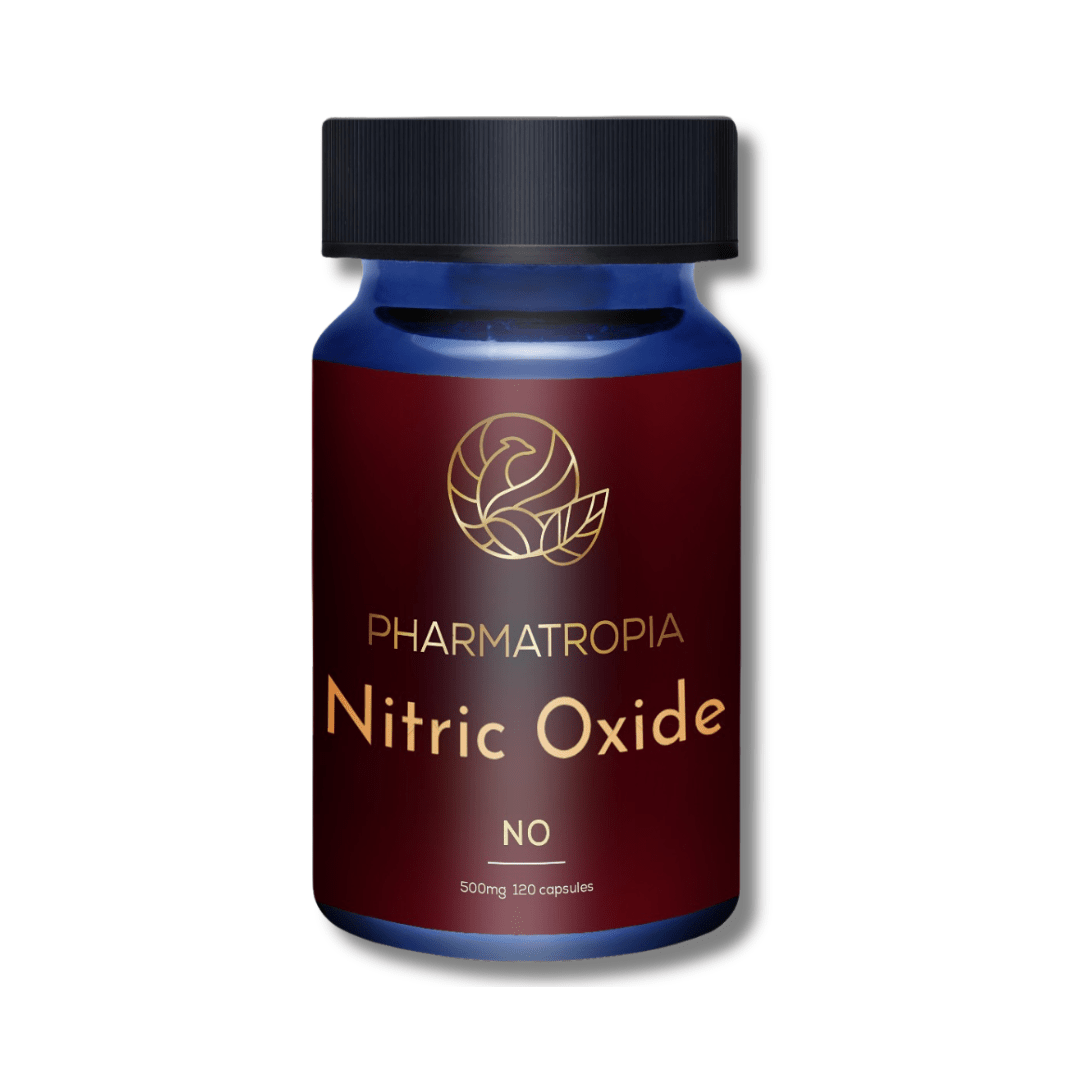
The current Pharmatropia Nitric Oxide Support formula combines L-Arginine, L-Citrulline Malate and L-Ornithine AKG in a 120-capsule bottle. Check the current product label for the declared ingredient amounts and serving directions. A two-bottle pack is also available for shoppers comparing quantity and value.
How should you compare nitric-oxide products?
- Read the complete ingredient panel. “Nitric oxide” is a marketing category, not one standard formula.
- Check the precise ingredient form. L-citrulline and citrulline malate should not be assumed to be identical.
- Compare declared amounts per serving. Capsule count alone does not describe the formula.
- Separate stimulants from nitric-oxide ingredients. Many pre-workouts contain caffeine; nitric-oxide pathway ingredients are not inherently stimulants. See Nitric Oxide supplements versus pre-workout.
- Check safety information. Ingredients that affect blood-flow pathways may not suit everyone.
What about beetroot?
Beetroot products typically use the dietary nitrate–nitrite–nitric oxide pathway, which differs from the amino-acid pathway described above. Our beetroot versus L-citrulline comparison explains that distinction.
Important safety considerations
Seek professional advice before using nitric-oxide-support ingredients if you take nitrates, blood-pressure or cardiovascular medicines, anticoagulants or erectile-dysfunction medicines; have low blood pressure, cardiovascular or kidney disease; or are preparing for surgery. Do not use during pregnancy or breastfeeding unless an appropriately qualified clinician confirms that the product is suitable.
Frequently asked questions
Is L-citrulline the same as L-arginine?
No. They are different amino acids, although L-citrulline can be converted to L-arginine in the body.
Does either ingredient contain caffeine?
Neither amino acid is caffeine. A finished product may contain other ingredients, so always read the complete label.
Which one is better?
There is no universal answer from the ingredient name alone. Formula, form, declared amount, individual circumstances and the intended use all matter. This page does not provide personalised product or dosing advice.
Where can I compare South African product options?
See the Nitric Oxide Supplements South Africa buying guide for products, ingredients and cautions.
Author and review: Written and reviewed for responsible product information by Dr Lize Buhrmann, Doctor of Natural Medicine and postgraduate-trained in Phytomedicine.
Evidence standard: General ingredient research is not presented as proof for a specific finished product. See Pharmatropia’s Editorial & Evidence Policy.
This complementary-product information is educational and is not intended to diagnose, treat, cure or prevent disease.