Is Kanna the Same as Sceletium?
Written by Lize Bührmann, founder of Pharmatropia.
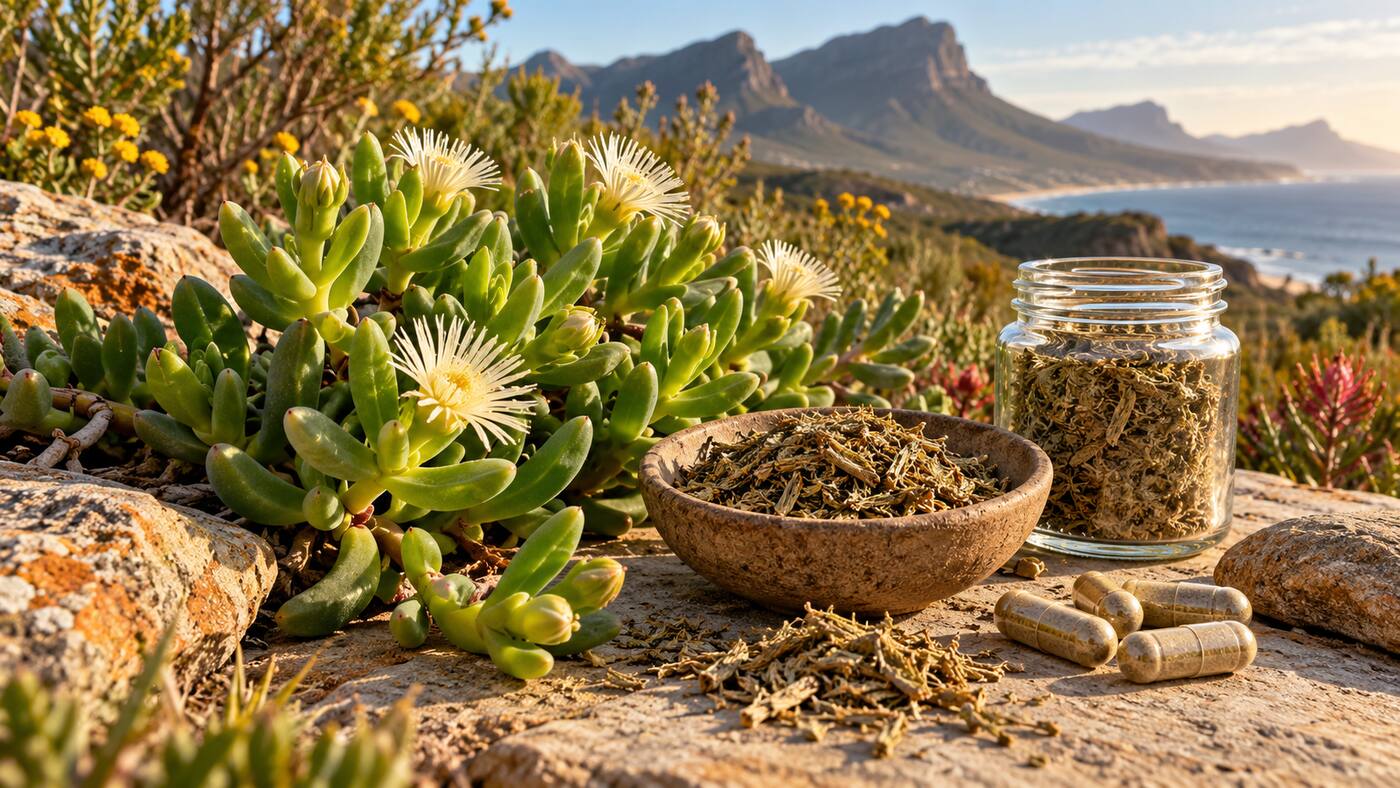
Usually, yes: “Kanna” is a common name used for Sceletium tortuosum, a succulent indigenous to South Africa. You may also see the name “kougoed”. However, Sceletium is a botanical genus containing more than one species, while commercial products can differ widely in plant identity, preparation and alkaloid content. A trustworthy label should therefore say more than “Kanna”.
Kanna, kougoed and Sceletium: the naming difference
Sceletium tortuosum is the scientific name most often intended when a modern product is sold as Kanna. “Kanna” and “kougoed” are common or traditional names. They carry cultural history, but they are not a complete botanical specification.
South African literature describes the plant’s long association with Khoekhoe and San communities, including chewing, fermenting and social or ceremonial use. That traditional record should be treated respectfully and distinguished from modern clinical evidence. Tradition tells us how a plant has been understood and prepared; it does not automatically prove every contemporary health claim.
Why the Latin name still matters
The genus Sceletium includes several related species. Common names can also travel between sellers and regions. If a package lists only “Kanna powder”, you cannot confirm from that wording alone that it contains authenticated S. tortuosum.
A better label identifies:
- the full Latin binomial, ideally Sceletium tortuosum;
- the plant part used;
- whether the material is raw, fermented or extracted;
- the amount per serving;
- for an extract, the extraction details and any declared alkaloid standardisation;
- batch and supplier traceability.
Raw, fermented and extracted Kanna are not interchangeable
“Kanna” may describe dried plant material, traditionally fermented material, tincture, tea, powder, capsule or a concentrated extract. The same mass of two products may therefore not deliver the same chemical profile.
Fermentation is a preparation process, not another species. It can change the sensory qualities and chemical composition of the plant material. Our guide to fermented Sceletium explains the difference between traditional preparation, modern processing and what the research can actually support.
A standardised extract is different again. It may be manufactured to meet a defined marker or alkaloid range. That can improve consistency, but “standardised” does not mean risk-free, clinically equivalent to every study product or suitable for everyone.
What does the evidence say?
Laboratory research has identified mesembrine-type alkaloids in S. tortuosum. Small human studies have examined particular extracts and outcomes related to stress, mood or cognition. The evidence is product-specific and still limited; it cannot justify broad promises that any Kanna product will treat anxiety, depression or another condition.
This is why the first question should be “what exactly is in this product?” rather than “does Kanna work?” Our broader grounded guide to Sceletium’s history and modern use separates traditional context from emerging research.
Interactions and people who should pause
Sceletium alkaloids may affect serotonin-related pathways. Avoid combining Kanna or Sceletium with antidepressants, MAO inhibitors or other serotonergic medicines unless a qualified clinician has specifically assessed the combination. See our detailed guide to Sceletium and antidepressants.
Pregnant or breastfeeding people, children, and people with significant psychiatric, liver or kidney conditions should seek professional advice before use. See our detailed Sceletium pregnancy and breastfeeding safety guide. Stop and seek urgent help for severe agitation, confusion, fever, tremor, muscle rigidity or a rapid heart rate.
How to compare Kanna products in South Africa
- Confirm identity: look for Sceletium tortuosum, not only a common name.
- Identify the form: raw, fermented and concentrated extracts are different products.
- Check the amount: compare serving sizes, not package size.
- Ask about testing: identity, microbes, heavy metals and relevant contaminants matter more than vague “premium” language.
- Review medicines: use extra caution around serotonergic products, caffeine, alcohol and sedatives.
- Prefer measured claims: a seller should not promise to cure anxiety or replace treatment.
For readers comparing formats, Pharmatropia’s fermented Sceletium capsules page shows one product format; always read the current label and suitability information before buying.
Frequently asked questions
Is kougoed the same as Kanna?
The names are commonly associated with Sceletium tortuosum and its traditional preparations. A product label should still state the botanical species.
Is fermented Kanna stronger?
Not necessarily. Fermentation changes the material, but strength depends on the actual alkaloid profile, serving size and process. “Fermented” is not a potency guarantee.
Is every Sceletium product standardised?
No. Whole plant powder, fermented material and extracts may be sold without a defined alkaloid standard. Read the specification rather than assuming.
Can Kanna replace an antidepressant?
No. Do not stop or replace prescribed treatment without the clinician who manages it.
Educational disclaimer: This article is general information, not medical advice. Botanical products can interact with medicines and are not substitutes for diagnosis or treatment.