Sceletium Tortuosum A Grounded Guide to Its History and Modern Use
From the Pharmatropia Knowledge Library
This article expands one of our original newsletters into a practical, evidence-aware guide.
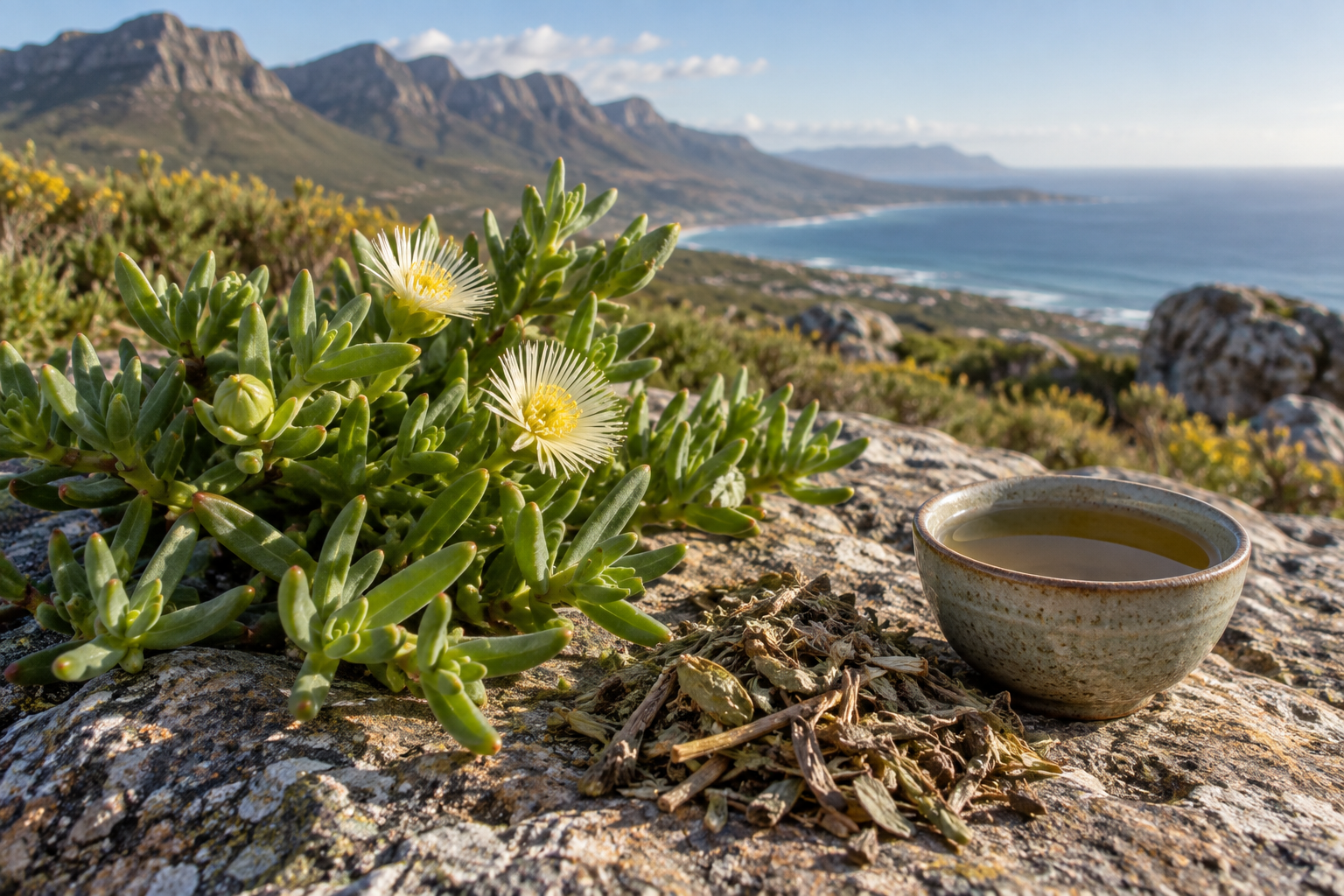
Sceletium tortuosum, often called kanna, is a succulent indigenous to southern Africa. Interest in the plant has grown internationally, but its story begins with the knowledge and practices of Khoekhoe and San communities. A responsible modern guide should keep that cultural context visible while separating tradition, emerging research and commercial claims.
What is Sceletium?
Sceletium is a low-growing succulent whose plant material has traditionally been prepared through drying and fermentation. Historical accounts describe it in social, ceremonial and practical contexts. Today it is sold in teas, powders, capsules and extracts, which are not interchangeable: concentration and composition can differ substantially.
Traditional context and respect
The plant is sometimes reduced to a fashionable “mood herb”. That description misses the depth of its cultural history. Ethical sourcing, accurate botanical identification and acknowledgement of indigenous knowledge are central to discussing Sceletium responsibly.
What modern research is exploring
Researchers have examined naturally occurring alkaloids including mesembrine and related compounds. Small human studies have explored stress, mood and cognitive outcomes, but the evidence base remains limited. This means Sceletium should not be presented as a proven treatment for anxiety, depression or any other medical condition.
Choosing a product thoughtfully
- Look for the botanical name and plant part used.
- Choose suppliers that can explain origin, extraction and batch testing.
- Do not assume that a concentrated extract has the same strength as traditional dried plant material.
- Avoid products that promise to cure mood disorders or replace prescribed care.
Safety and interactions
Because Sceletium may affect serotonin pathways, combining it with antidepressants or other serotonergic substances requires professional guidance. Pregnant or breastfeeding people, children and anyone managing a mental-health condition should seek individual advice before use. Stop using a product and obtain help if an unexpected reaction occurs.
Continue with the right Sceletium resource
Start with what fermented Sceletium means if you are comparing preparation methods. Before considering a product, read the dedicated guides on Sceletium and antidepressant interactions and Sceletium during pregnancy or breastfeeding. If the safety information is suitable for your circumstances, view the Fermented Sceletium 500mg 60-capsule product; product suitability should be assessed separately from ingredient research.
Frequently asked questions
Is Sceletium the same as kanna?
Kanna is a widely used common name for Sceletium tortuosum, although product identity should still be verified on the label.
Does traditional use prove a modern extract is safe?
No. Traditional knowledge is valuable, but concentrated extracts can differ in dose and chemistry. Product testing and individual suitability still matter.
Can Sceletium replace mental-health treatment?
No. It should not replace assessment, counselling or prescribed treatment.
Written by Lize Bührmann, founder of Pharmatropia. General educational information only; it does not replace individual medical advice.