
How to Store Hapé Safely: Moisture, Hygiene and Respectful Handling
Hapé—also written Rapé—is a finely powdered traditional botanical preparation associated with Indigenous Amazonian practices. Blends vary widely and may contain strong tobacco, plant ash and other botanicals. Knowing how to store Hapé does not make every product safe, but it can reduce avoidable moisture, contamination and accidental exposure.
Storage should protect both the blend and the people around it. Keep cultural respect, ingredient transparency and nicotine safety at the centre of the routine.
Why moisture is the main storage problem
Fine powders absorb moisture from humid air. Dampness can cause clumping, change aroma and make microbial growth more likely. Cape coastal conditions and warm bathrooms can be especially challenging.
Keep the original jar closed except when needed. Do not leave powder exposed on a tray, spoon or applicator while preparing other items.
Use an airtight, clearly identified container
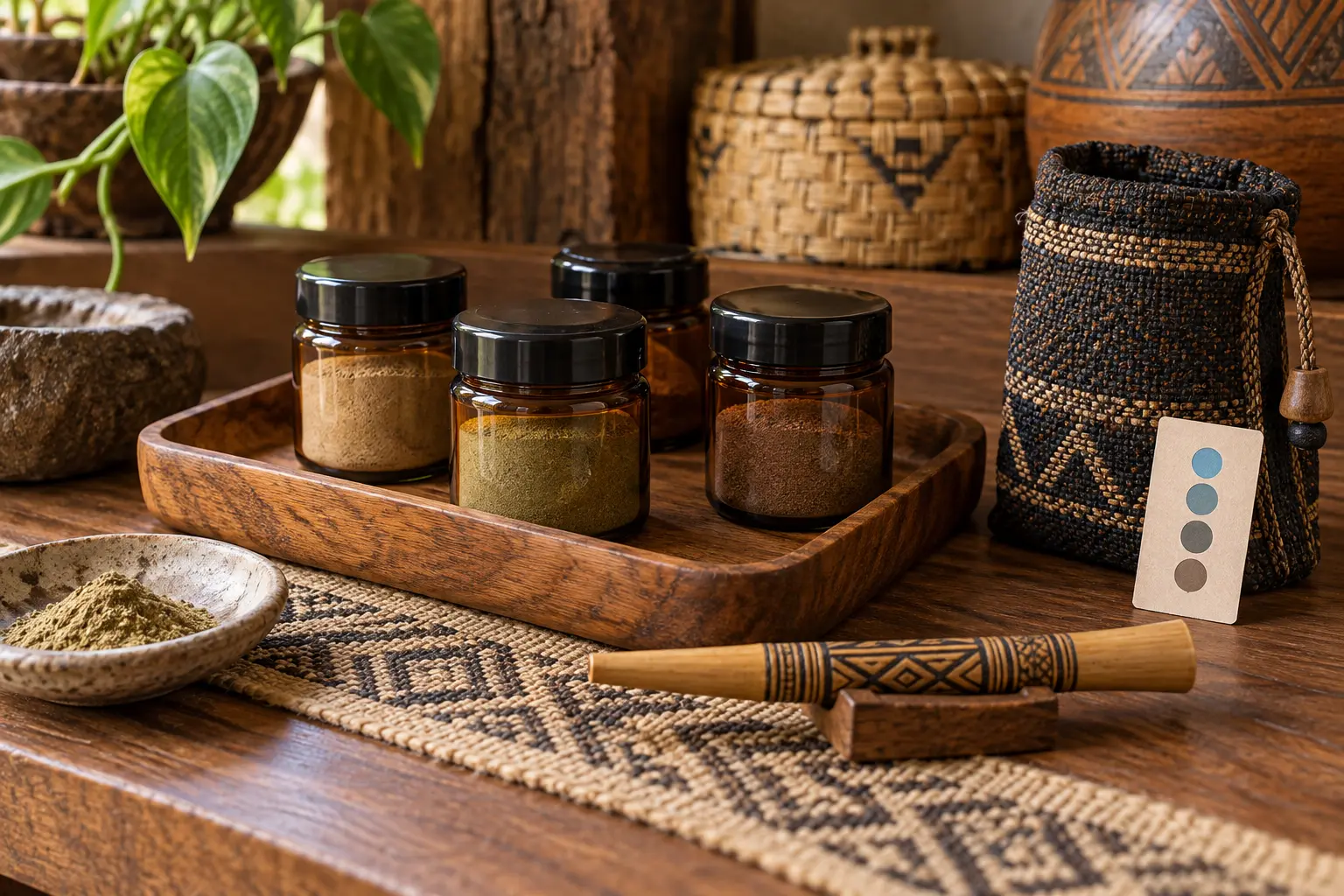
A suitable container should be clean, dry, food-contact appropriate and able to close tightly. Amber glass can help protect contents from light, while a secure lid protects against humidity and spills.
Retain the product name, ingredient information, batch details and purchase date. Do not decant several blends into identical unmarked jars. Appearance alone cannot reliably identify a formula.
Choose a cool, dry and dark location
- Keep jars away from windows, direct sun and heat-producing appliances.
- Avoid bathrooms, kitchens near steam and vehicles that become hot.
- Use a dry cupboard or storage box that children and pets cannot access.
- Do not refrigerate routinely unless the producer specifically instructs it; condensation can enter when a cold jar is opened.
- If a permitted desiccant is supplied, keep it intact and separate from the powder according to the packaging instructions.
Hygiene when handling a blend
Wash and dry hands before opening the container. Use a dedicated, completely dry implement if one is needed. Never return unused powder from a surface or applicator to the main jar.
Do not share nasal applicators. Saliva, nasal secretions and traces of blood can transmit infection. Clean and fully dry tools between uses according to their material. See our guide to cleaning and storing a handmade bamboo Kuripé.
Signs that a blend should be discarded
Do not use a blend when you notice:
- visible mould or unusual spotting;
- a new damp, sour or musty odour;
- unexpected wet clumps that do not break apart;
- insect activity or foreign material;
- a damaged container or unknown period of exposure;
- missing identity or ingredient information.
Dry powder can naturally vary in colour and texture, so compare it with the original condition rather than expecting every blend to look the same. When uncertain, contact the supplier and do not use it.
Nicotine and ingredient safety still apply
Many traditional blends contain Nicotiana rustica or another tobacco source and can deliver substantial nicotine. Risks can include nausea, vomiting, dizziness, sweating, changes in heart rate or blood pressure, irritation and dependence. Ingredient strength is not reliably predicted by colour or aroma.
Keep all blends locked away from children and pets. Accidental exposure or swallowing requires urgent poison-centre or medical advice. Pregnancy, breastfeeding, cardiovascular concerns, nicotine sensitivity, nasal injury and medicines that affect heart rate or blood pressure deserve particular caution.
Respectful purchasing and record-keeping
Ask who made the blend, whether ingredients are disclosed and how relationships with Indigenous producers are maintained. Avoid inventing a lineage or presenting a commercial blend as interchangeable with community-led ceremonial practice.
Record when a jar was opened. If a supplier gives a storage period, follow it. Stockpiling many opened blends can make identification and quality control harder.
Frequently asked questions
Can I store Hapé in the fridge?
Usually a cool, dry cupboard is simpler. Refrigeration can create condensation when the jar is opened. Follow the producer’s instructions if they differ.
Can I dry out a damp blend and keep using it?
Home drying cannot confirm that contamination has not occurred. If dampness is significant or the smell has changed, discard it.
Can different blends share one scoop?
A dedicated dry tool for each blend reduces cross-contamination. Never put a used applicator into the main container.
How long does Hapé last?
There is no reliable universal period. Ingredients, packaging, humidity, handling and producer guidance all matter.
Educational and harm-reduction information only. This article does not recommend using nasal tobacco or any Hapé blend and does not replace medical advice or emergency care.
Written by Lize Bührmann, Doctor of Natural Medicine and founder of Pharmatropia.