
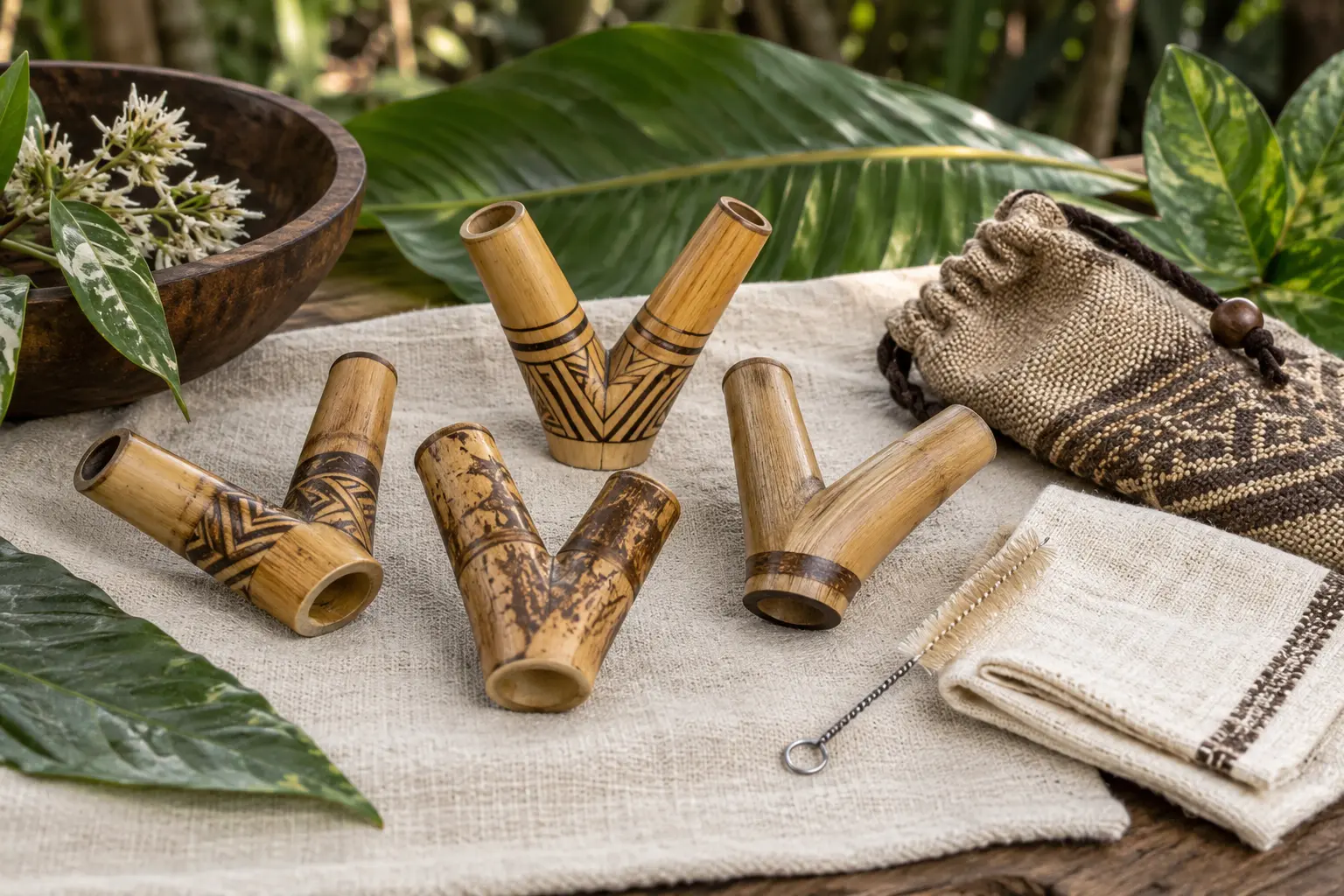
How to Choose, Clean and Store a Handmade Bamboo Kuripé
A Kuripé is a small V-shaped self-applicator associated with Amazonian Hapé or Rapé traditions. Handmade bamboo tools can be functional pieces of craft, but they require careful hygiene and respectful sourcing. A beautiful carving does not compensate for a poor fit, sharp edge, crack or damp interior.
Understand the tool and its context
Kuripés are linked to Indigenous knowledge and ceremonial traditions. They should not be treated as novelty accessories stripped of that context. Ask who made the tool, where the material came from and whether the seller can describe the sourcing honestly.
Many Hapé blends contain mapacho tobacco and therefore nicotine. A Kuripé does not make a nicotine-containing product harmless, non-addictive or suitable for everyone.
What to check when choosing a Kuripé
- Comfort: both ends should sit comfortably without sharp edges.
- Alignment: the angle should suit the user rather than forcing the neck or face.
- Airway: the channel should be open and smooth.
- Construction: inspect joins, decorations and sealants for cracks or loose material.
- Finish: there should be no splinters, strong chemical odour or flaking coating.
- Cleanability: narrow decorative passages can be difficult to clean and dry.
Clean after every use
Remove loose residue promptly. Follow the maker’s care instructions because bamboo, adhesives, decorative materials and finishes differ. In general, use a dry soft brush first, then a lightly damp narrow brush or cloth when the construction permits it.
Avoid soaking a bamboo tool. Long water exposure can swell fibres, weaken joints and trap moisture. Do not use bleach, perfume, essential oil or harsh disinfectant inside a porous tool unless the maker specifically confirms compatibility.
Drying is as important as cleaning
Shake out moisture and leave the Kuripé in a well-ventilated position until the internal channel is completely dry. Do not seal it immediately in plastic or a closed pouch. Damp storage can create odour, microbial growth and damage.
Once dry, keep it in a clean breathable pouch away from bathroom humidity, direct sun and extreme heat.
Do not share personal applicators
A Kuripé can contact the nose and mouth area. Sharing can transfer saliva, nasal secretions and respiratory organisms. Each person should have their own clearly identifiable tool. Do not use it during an active respiratory infection, nosebleed, nasal injury or immediately after nasal surgery.
Inspect before every use
Replace or professionally repair a tool with cracks, splinters, a persistent musty smell, visible growth, loose decorations or an obstructed channel that cannot be cleaned. Do not scrape aggressively inside the bamboo, as this can create rough fibres.
Health considerations extend beyond the tool
Cleaning the applicator does not remove the risks of the substance used with it. Nicotine can affect heart rate and blood pressure and can lead to dependence. Pregnancy, breastfeeding, childhood, cardiovascular conditions and medicine use require particular caution. Nasal burning, bleeding, persistent congestion, chest symptoms or a strong unexpected reaction warrants stopping and seeking advice.
Frequently asked questions
Can I boil a bamboo Kuripé?
Usually not. Boiling can split bamboo, damage adhesives and affect decorative finishes. Follow the maker’s instructions.
Can I clean it with alcohol?
Only if the maker confirms that the bamboo, finish and joins tolerate it. Alcohol may damage some materials and does not solve incomplete drying.
Why does the Kuripé smell musty?
Moisture or retained residue may be present. Stop using it. If cleaning and complete drying do not remove the odour, replace the tool.
This article is general education about tool care and cultural respect. It is not an instruction to use nasal tobacco or other substances and does not replace medical advice.