Herbal Infusion vs Decoction: What’s the Difference?
Written by Lize Bührmann, founder of Pharmatropia.
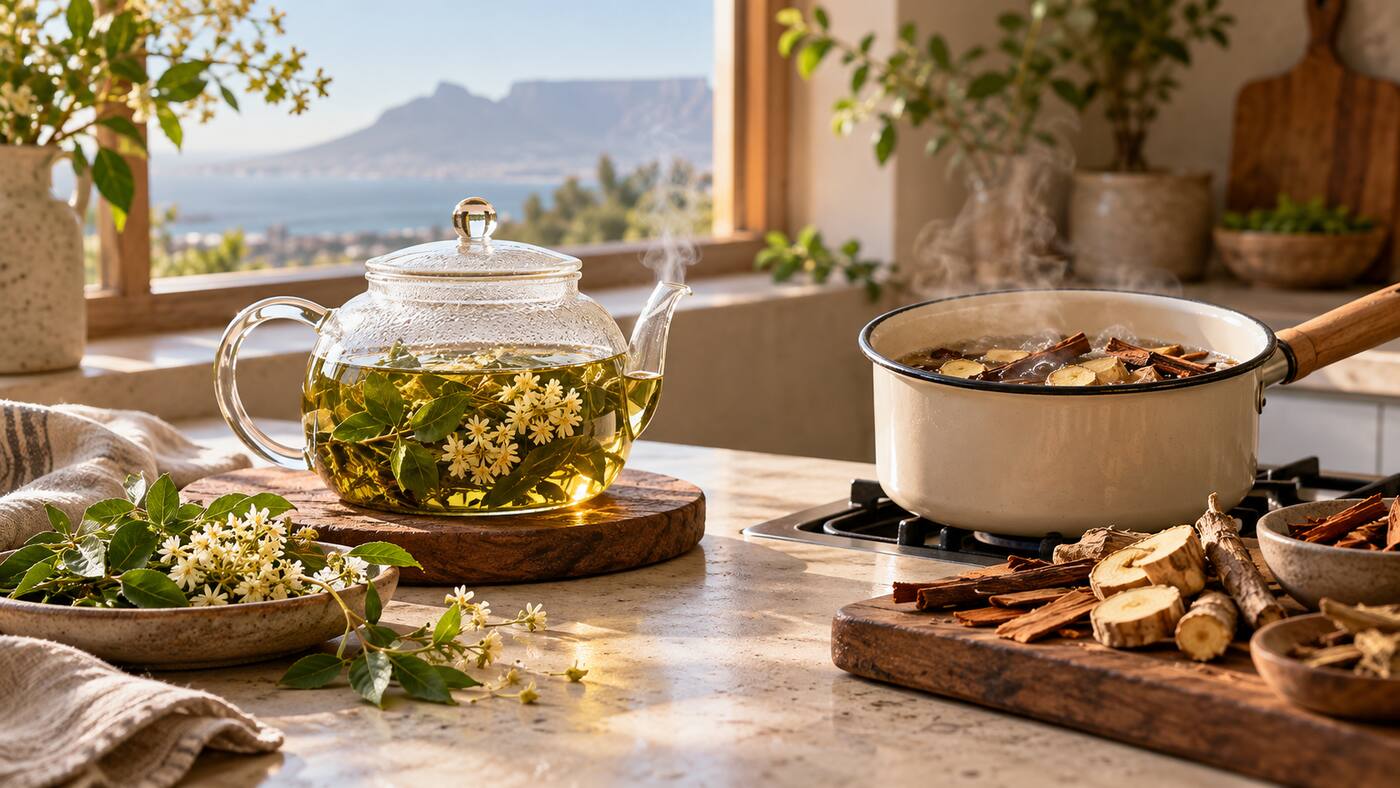
An herbal infusion is steeped; a decoction is gently simmered. Infusions are usually used for delicate leaves, flowers and aromatic plant parts. Decoctions are commonly used for dense roots, bark, hard seeds and some berries that need more time and heat. These are traditional water-extraction methods, not interchangeable promises of potency.
Infusion and decoction at a glance
| Feature | Infusion | Decoction |
|---|---|---|
| Method | Pour hot water over the herb and steep | Gently simmer the herb in water |
| Often used for | Leaves, flowers, soft stems, aromatic parts | Roots, bark, hard seeds, dense fruits |
| Typical vessel | Covered cup or teapot | Covered stainless-steel or enamel saucepan |
| Main consideration | Retaining aroma and volatile constituents | Allowing water to penetrate tougher material |
The plant’s identity and its specific directions matter more than the rule of thumb. Some aromatic roots are infused rather than simmered because prolonged heat can drive off volatile compounds. Some seeds are lightly crushed first. A supplier’s preparation directions should therefore take priority over a generic chart.
How to make a basic herbal infusion
- Confirm the botanical name, plant part and suggested amount on the product label.
- Place the herb in a heat-safe cup or teapot.
- Pour freshly boiled water over it and cover the vessel.
- Steep for the stated time, strain and use promptly.
Covering the vessel helps retain aromatic steam. Do not automatically double the amount or steep indefinitely: a longer brew can change flavour and the amount of water-soluble constituents extracted.
How to make a basic decoction
- Place the correctly identified root, bark or other dense material in a non-reactive saucepan with the instructed amount of water.
- Bring it to a gentle simmer rather than a vigorous rolling boil.
- Keep it covered where appropriate and simmer for the product’s stated time.
- Strain carefully and allow it to cool before drinking.
A decoction is not automatically “better” or “stronger” than an infusion. It is simply a different preparation suited to certain materials.
What if a blend contains leaves and roots?
Combination blends need clear directions. One traditional approach is to simmer the dense ingredients first, remove the pot from the heat, then add the delicate aromatic ingredients to steep. But this should not be improvised for every formula. Follow the maker’s instructions or ask a qualified practitioner familiar with the plants.
Water preparations also differ from alcohol or glycerine extracts. Our alcohol tincture versus glycerite guide explains those solvents, while whole-herb powder versus extract helps you interpret other formats.
Safety and storage
- Identify the plant by its botanical name and the part used.
- Do not assume a culinary amount equals a practitioner-directed preparation.
- Check for medicine interactions, pregnancy cautions, allergies and age restrictions.
- Prepare with clean equipment and potable water.
- Water-based preparations are perishable; use them promptly or follow specific refrigerated-storage directions.
Frequently asked questions
Is herbal tea an infusion?
Usually. A familiar leaf or flower tea is normally made by infusion. The broader term “herbal tea” can also include decoctions.
Can I decoct leaves and flowers?
Sometimes a formula calls for it, but prolonged simmering can flatten delicate aromas or alter the preparation. Check the plant-specific directions.
Is a decoction more concentrated?
It may be reduced through simmering, but concentration depends on the herb-to-water ratio, time, temperature and final volume. “Decoction” alone does not state a dose.
Can I use a microwave?
A covered cup or saucepan provides better control over time and temperature. Use the preparation method supplied with the herb rather than substituting equipment without guidance.
Sources and educational note
Preparation distinctions are consistent with established herbal practice; for quality concepts around herbal preparations, see the European Medicines Agency’s herbal medicinal products overview. This article describes traditional preparation methods for education. It does not recommend a particular herb or treat a health condition.