Whole-Herb Powder vs Herbal Extract: Which Should You Choose?
Written by Lize Bührmann, founder of Pharmatropia.
Short answer: whole-herb powder is dried plant material that has been milled, while a herbal extract uses a process and solvent to transfer selected constituents into a liquid or dry concentrate. An extract is not automatically better, and whole herb is not automatically more “natural”. Choose according to botanical identity, intended use, evidence, tolerability and label transparency.
What is whole-herb powder?
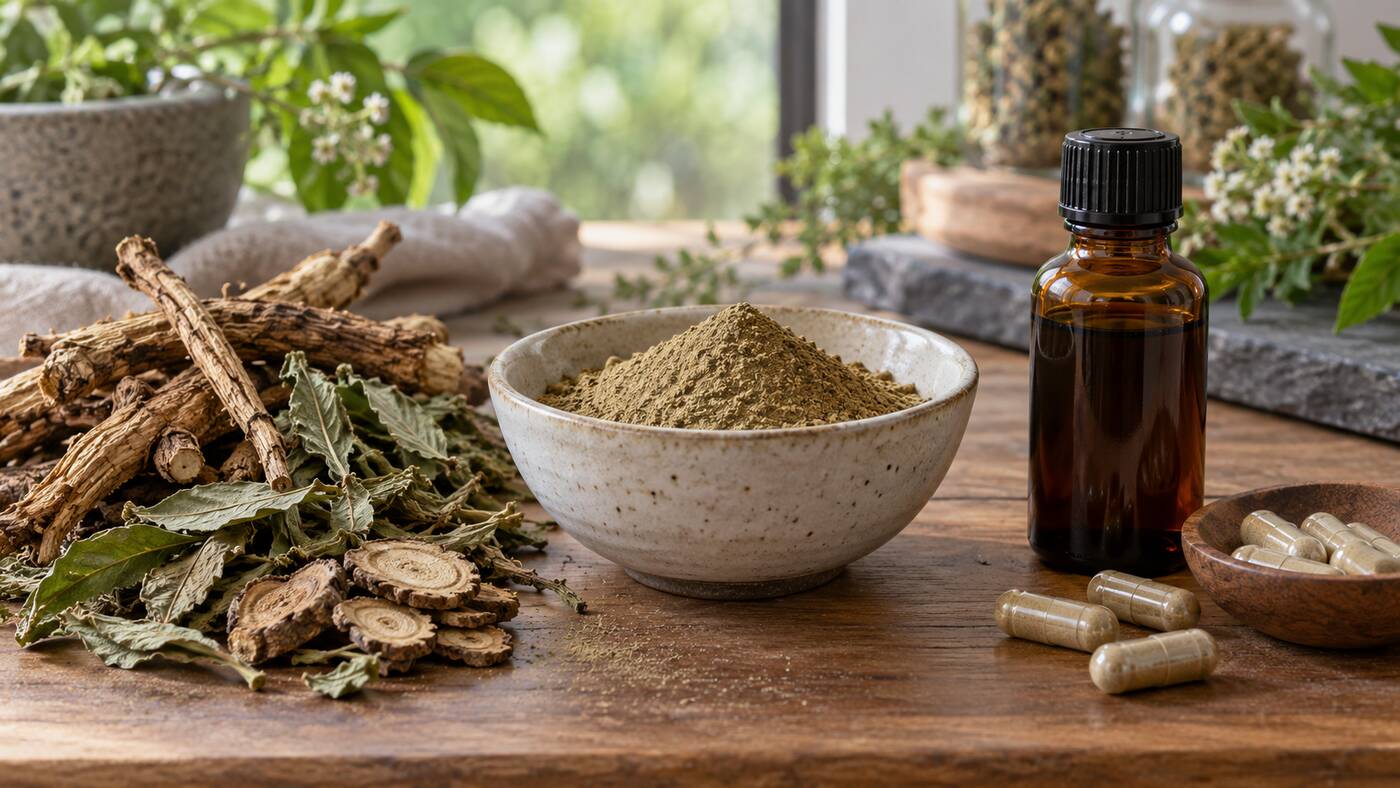
Whole-herb powder usually begins with a specified plant part—such as root, leaf or fruit—that is dried and ground. It retains fibrous material and a broad range of naturally occurring plant components. Its composition can vary with species, soil, harvest, storage and processing.
That natural variation is not automatically a defect, but it means a stated milligram amount does not necessarily guarantee a particular level of a marker compound.
What is a herbal extract?
An extract is produced by exposing plant material to a solvent such as water, ethanol or another permitted extraction medium, then separating the liquid from spent plant material. The preparation may remain liquid or be dried into a powder. The result depends on the plant, solvent, temperature, time and concentration process.
The European Medicines Agency emphasises that herbal preparations are defined by both their production process and specification. Quality begins with correct botanical identity, plant part and controlled starting material—not simply the word “extract”. See the EMA herbal-quality guideline.
What does 10:1 extract mean?
A 10:1 label usually intends to describe the relationship between the quantity of starting herbal material and the resulting extract. It does not mean that one capsule will always have ten times the clinical effect of the same weight of whole herb.
Ratios can be expressed in different ways, and the genuine or native extract may also contain carriers. Look for the extraction solvent, drug-extract ratio, amount of genuine extract and any excipient used to convert a sticky extract into a free-flowing powder.
What is a standardised extract?
A standardised extract is adjusted to contain a defined level of one or more constituents with known activity. A quantified extract is controlled within a specified range, while other extracts may be characterised by analytical markers used mainly for quality control.
A marker is not necessarily the only active constituent, and a high percentage is not automatically better. Our article What Does “Standardised Herbal Extract” Mean? explains these distinctions.
Whole herb vs extract at a glance
| Feature | Whole-herb powder | Herbal extract |
|---|---|---|
| Processing | Dried and milled plant material | Selected constituents transferred using a declared process |
| Fibre | Usually retained | Often reduced or removed |
| Concentration | Generally closer to the raw material | May be concentrated, but the ratio must be interpreted correctly |
| Consistency | Natural batch variation | Can be more tightly specified |
| Best label clue | Species, plant part and amount | Species, plant part, solvent, ratio and marker information |
Which form is better?
Use the preparation that most closely matches the evidence or tradition relevant to your purpose. If a clinical trial studied a specific standardised extract, a whole-herb powder is not automatically equivalent. If a tradition used a tea or food-like preparation, a highly concentrated extract may create a different exposure.
Neither form excuses poor sourcing. Ask about identity, contamination controls, batch traceability and storage. Our South African herbal-extract buyer’s guide provides a practical checklist.
Questions to ask before buying
- What is the full Latin botanical name?
- Which plant part is used?
- Is it whole powder, native extract or extract with a carrier?
- What extraction solvent and ratio were used?
- Is a marker standardised, quantified or only identified?
- How much genuine extract is delivered per serving?
- Are the safety warnings appropriate for medicines, pregnancy and the intended age group?
Frequently asked questions
Is a 10:1 extract ten times stronger?
It may represent a greater starting-material input, but “ten times stronger” is too simplistic. Extraction efficiency, constituents, carriers and serving size matter.
Does whole herb contain every plant compound?
It contains a broad profile from the milled plant part, but drying, storage and natural variation still affect composition. “Whole” does not mean chemically unchanged or universally complete.
Are extracts less natural?
Extraction is a preparation method used in both traditional and modern herbal practice. The meaningful questions are which solvent and process were used, what the extract contains and whether it is appropriate.
Can I swap an extract for whole-herb powder?
Not on a milligram-for-milligram basis without product-specific guidance. Concentration and constituent profiles differ.
Educational disclaimer: This article is general consumer education. Herbal products can interact with medicines and may be unsuitable in pregnancy, breastfeeding or certain health conditions.