Copper and Zinc in Supplements: Why Balance Matters
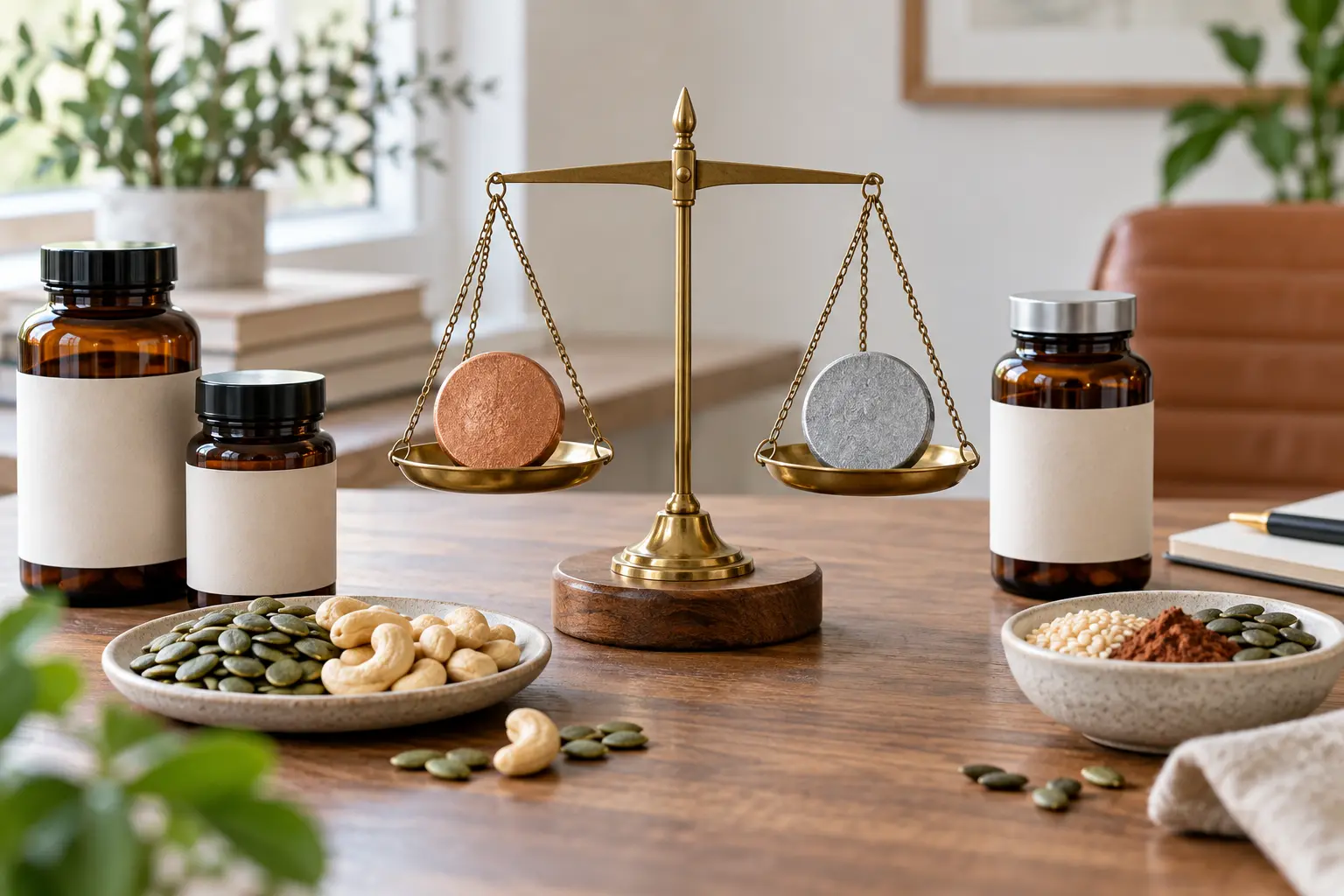
Copper and zinc are essential trace minerals. They support many enzymes and biological processes, but they also influence one another’s absorption. That is why copper and zinc supplement balance deserves more thought than simply adding both to a daily stack.
A person eating a varied diet has a different context from someone taking high-dose zinc, a multinutrient, an organ supplement and fortified foods at the same time.
What copper and zinc do
Copper contributes to iron metabolism, connective-tissue formation, energy production and nervous-system function. Zinc contributes to immune function, wound repair, protein synthesis, taste and many enzyme reactions.
These roles do not mean that extra intake improves each function indefinitely. Both deficiency and excess can cause problems, and symptoms are often non-specific.
Why high zinc can lower copper status
Long-term high-dose zinc can increase a protein in intestinal cells that binds copper, reducing the amount of copper that reaches the bloodstream. Over time, this may contribute to copper deficiency in susceptible people.
This does not mean everyone taking zinc needs a fixed amount of copper. The appropriate plan depends on dose, duration, diet, laboratory findings, health history and the reason zinc was started.
Food and supplements add together
Count the complete daily intake, not one label in isolation. Copper or zinc may appear in:
- multivitamins and mineral complexes;
- immune-support blends;
- single-mineral products;
- fortified foods and meal replacements;
- grass-fed beef liver or other organ supplements;
- beauty, hair or skin formulas.
Organ supplements may also contribute vitamin A, iron and other nutrients. Our guide to grass-fed beef liver supplements explains why the whole nutrient profile matters.
There is no universal perfect ratio
Online advice often presents a single zinc-to-copper ratio as a rule for everyone. Ratios can be useful for comparing a formula, but they do not replace the actual amounts or the person’s baseline status. A balanced-looking ratio can still provide too much of both minerals, while a short, clinician-directed course may reasonably look different from a long-term maintenance product.
When testing and clinical context matter
Possible copper or zinc problems cannot be diagnosed reliably from a symptom list. Fatigue, hair changes, altered taste, anaemia, numbness, recurrent infections and poor wound healing have many possible causes.
A clinician may consider diet, blood count, medicines, inflammation and relevant mineral tests. Results need interpretation because infection, inflammation and hormone status can influence some markers.
Who should avoid casual supplementation?
Professional guidance is particularly important for people with:
- known copper-metabolism disorders, including Wilson disease;
- significant liver or kidney disease;
- unexplained anaemia or neurological symptoms;
- malabsorption, bariatric surgery or inflammatory bowel disease;
- pregnancy or breastfeeding;
- long-term high-dose zinc use;
- several overlapping multinutrient or organ products.
Do not use copper to self-treat symptoms caused by another condition. Too much copper can be harmful.
A practical label audit
- List every supplement and fortified product used in a normal week.
- Record copper and zinc per serving, not per capsule unless those are the same.
- Check whether you take more than the suggested serving.
- Include organ supplements rather than treating them as ordinary food.
- Note how long each product has been used and why.
- Ask a pharmacist or clinician to review the total, especially for long-term use.
- Reassess products without a clear purpose instead of automatically renewing them.
Frequently asked questions
Should zinc always contain copper?
No. Suitability depends on the zinc amount, duration, diet and individual status. A fixed combination is not automatically appropriate.
Can beef liver provide copper?
Yes, organ products can contribute copper along with vitamin A, iron and other nutrients. The label and serving size should be included in the total supplement review.
Can copper improve energy?
Copper is involved in energy metabolism, but a supplement will not reliably improve fatigue unless copper status is relevant. Persistent fatigue needs assessment.
Is food safer than supplements?
Food usually provides nutrients in a broader dietary context, but individual restrictions and medical conditions still matter. Concentrated supplements make excessive intake easier.
Educational information only. This article does not diagnose copper or zinc deficiency and does not provide an individual mineral dose. Use laboratory testing and qualified clinical advice where appropriate.
Written by Lize Bührmann, Doctor of Natural Medicine and founder of Pharmatropia.