Grass-Fed Beef Liver Supplements: Nutrients and What to Know
From the Pharmatropia Knowledge Library
This guide expands one of our original newsletters into clear, practical and evidence-aware information.
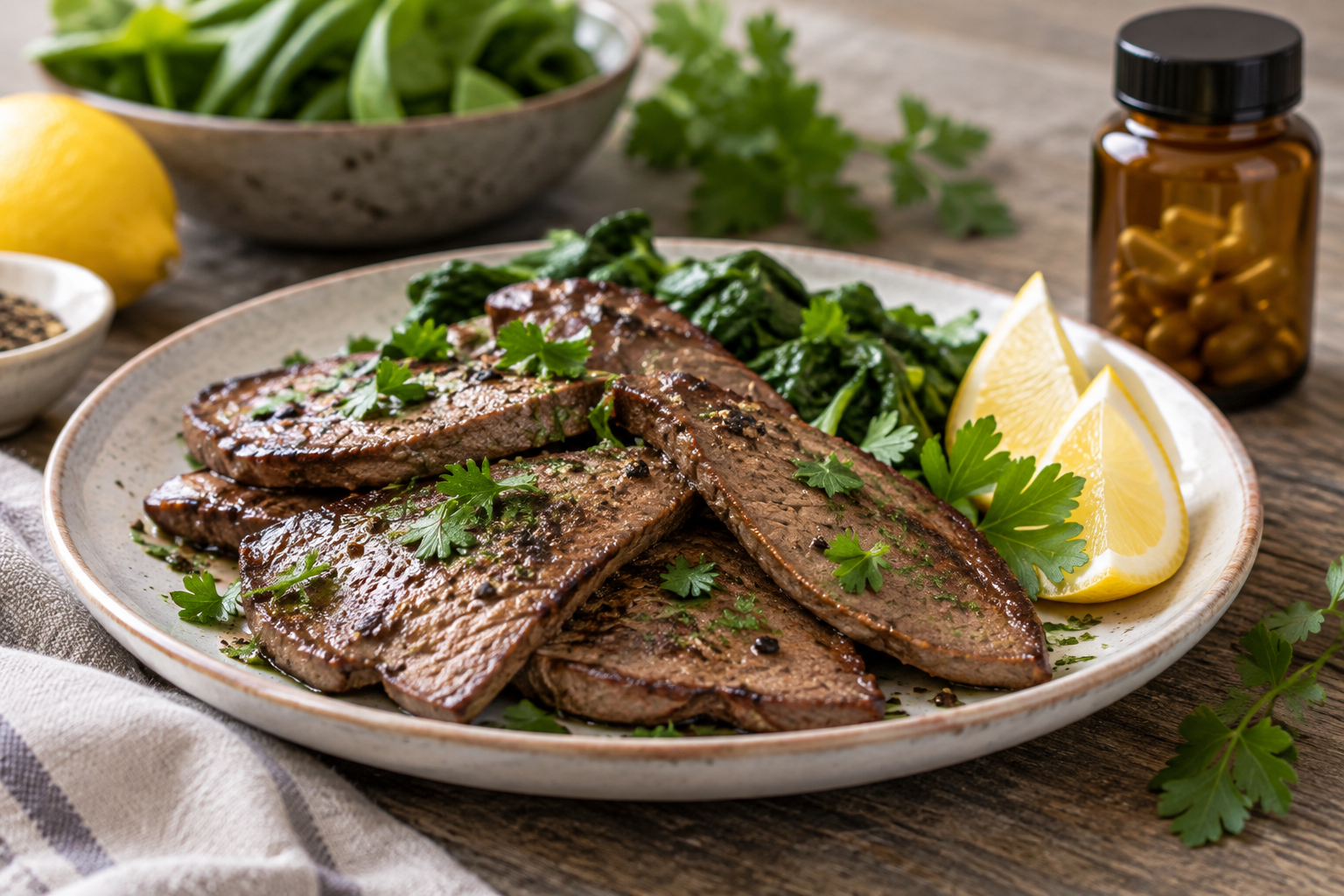
Beef liver is naturally nutrient dense, providing vitamin A, vitamin B12, riboflavin, copper, iron and other micronutrients. Desiccated liver capsules offer an alternative for people who do not enjoy organ meat, but they are still concentrated food and should not be treated as an unlimited general tonic.
Why organ foods are nutrient dense
The liver stores and processes many nutrients, which is why it contains high concentrations of particular vitamins and minerals. This can be useful when intake is low, but more is not always better, especially for preformed vitamin A and copper.
Food first and supplement second
A varied diet remains the foundation. A liver supplement cannot replace vegetables, fibre, adequate protein or medical investigation of fatigue and deficiency. Iron or B12 deficiency should be confirmed and followed appropriately rather than guessed from symptoms alone.
What to look for
- Clear serving size and nutrient information where available.
- Traceable sourcing and hygienic manufacturing.
- Third-party testing or credible quality documentation.
- No suggestion that the product replaces prescribed treatment.
- A dose that accounts for other multivitamins and fortified foods.
Important cautions
Pregnancy requires particular care because excessive preformed vitamin A can be harmful. People with iron overload conditions, copper metabolism disorders or relevant medication should get personalised advice. Check the total intake across all supplements rather than viewing each product in isolation.
Frequently asked questions
Is liver a good source of B12?
Yes, liver naturally contains substantial vitamin B12, but the amount in a capsule product depends on processing and serving size.
Can it replace an iron prescription?
No. Diagnosed iron deficiency requires proper assessment, dosing and follow-up.
Is grass-fed automatically safer?
Not automatically. Grass-fed sourcing may be a preference, but manufacturing quality and testing remain important.
Written by Lize Bührmann, founder of Pharmatropia. General educational information only; it does not replace individual medical advice.