
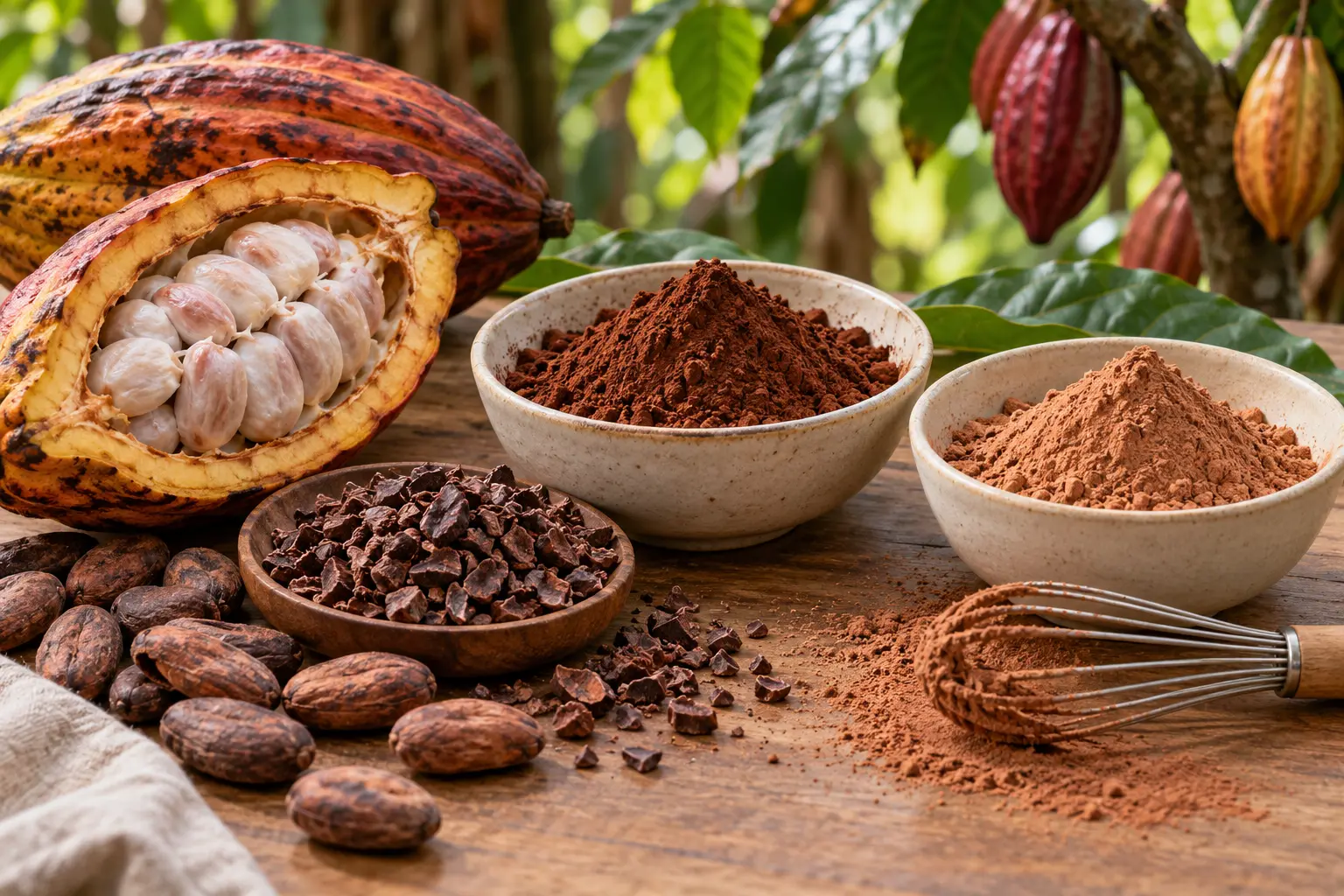
Cacao vs Cocoa Powder: Processing, Flavour and Stimulants Explained
Cacao and cocoa powder both come from the seeds of Theobroma cacao, yet the words on a packet do not always describe one standard process. Brands may use “cacao” for less heavily roasted products and “cocoa” for more conventionally processed powder, but labelling practices vary.
The most useful comparison is not which name sounds healthier. It is how the beans were processed, what the product contains, how it tastes and whether it suits the person using it.
They begin with the same plant
Cacao pods contain beans surrounded by pulp. After harvest, beans are usually fermented and dried. Fermentation helps develop flavour and reduces some naturally occurring bitterness. From there, beans may be roasted, cracked into nibs and ground into cacao mass or liquor. Pressing separates cocoa butter from the solids, which can then be milled into powder.
“Raw cacao” is not necessarily completely unheated. Fermentation and drying generate heat, and manufacturers use different temperature limits. If temperature matters to you, ask for the producer’s actual process rather than relying on the front label.
How cacao powder and cocoa powder commonly differ
Cacao powder
Cacao powder is often made from fermented, dried beans that receive less roasting. It usually tastes sharp, fruity and bitter. The word may signal minimal processing, but it does not guarantee a specific nutrient level or contaminant result.
Natural cocoa powder
Natural cocoa is generally roasted and remains acidic, with a strong chocolate flavour. It reacts with bicarbonate of soda in recipes, which matters for baking.
Alkalised or Dutch-process cocoa
Alkalisation reduces acidity, darkens the powder and creates a smoother flavour. It can also alter levels of some naturally occurring plant compounds. That does not make it “bad”; it makes it a different ingredient with different culinary properties.
What about nutrients?
Cacao products can contribute fibre, magnesium, iron, copper and plant compounds, but amounts vary with the bean, soil, fermentation, roasting, fat removal and serving size. A tablespoon of powder should not be treated as a substitute for a varied diet or as a treatment for nutrient deficiency.
Processing can reduce some flavanols, while a less processed product is not automatically safer or more nutritious in every respect. A laboratory result for the finished batch is more informative than broad marketing words.
Theobromine and caffeine
Cacao naturally contains theobromine and smaller amounts of caffeine. These compounds can feel stimulating, particularly in a large serving or for a sensitive person. Possible effects include restlessness, a racing heartbeat, reflux, headache or disrupted sleep.
People who react strongly to coffee may still react to cacao. Try it earlier in the day and start with the labelled serving rather than assuming a ceremonial portion is suitable. Chocolate and cacao products must also be kept away from dogs and other pets because theobromine can be toxic to them.
Is “ceremonial grade” a regulated standard?
No single international legal definition guarantees what “ceremonial grade” means. It may refer to origin, traditional relationships, minimal processing, high cocoa-butter content or a block of cacao mass intended for a drink. Ask practical questions:
- What is the country and region of origin?
- Is it powder, nibs or whole cacao mass?
- Has anything been added, including sugar, flavouring or emulsifiers?
- How was it fermented, dried and roasted?
- Has the batch been tested for microbial contamination and relevant heavy metals?
- Are labour practices and producer relationships explained transparently?
For cultural and historical context, see our guide to ceremonial cacao, theobromine and mindful use.
How to choose for different uses
- Smooth hot chocolate: cocoa powder may offer a familiar, rounded flavour.
- Bright, bitter smoothies: cacao powder or nibs can add texture and intensity.
- Baking: follow the recipe’s choice of natural or alkalised cocoa because acidity affects the result.
- A thick traditional-style drink: cacao mass retains cocoa butter and behaves differently from defatted powder.
Who should be cautious?
Individual advice is sensible for pregnancy, breastfeeding, significant reflux, heart-rhythm concerns, migraine triggers, stimulant sensitivity or medicines where caffeine-like compounds are relevant. Check added sugar and allergens, and do not assume that a natural product is suitable in unlimited amounts.
Frequently asked questions
Is cacao always healthier than cocoa?
No. Processing, serving size, testing and the rest of the diet matter more than one word on the label.
Can cacao replace coffee?
Some people enjoy it as an alternative, but it still contains theobromine and caffeine. It is not stimulant-free.
Why do two cacao powders taste different?
Variety, origin, fermentation, roast, fat content and alkalisation all influence flavour.
Can cacao treat fatigue or low mood?
No. It can be an enjoyable food, but persistent fatigue or low mood deserves assessment rather than a food-based cure claim.
Educational information only. This article does not diagnose a deficiency or recommend cacao as treatment for a health condition. Seek individual advice when medical conditions, pregnancy or medicines are involved.
Written by Lize Bührmann, Doctor of Natural Medicine and founder of Pharmatropia.