From the Pharmatropia Knowledge Library
This article expands one of our original newsletters into a practical, evidence-aware guide.
Cacao can be an everyday drink, a culinary ingredient or part of a meaningful ritual. Its value does not depend on extravagant promises. Understanding where cacao comes from, what it contains and how it is prepared creates a more respectful relationship with the plant.
Cacao and its long cultural history
Cacao has deep roots in Mesoamerican history, where it was prepared in drinks and used in social, ceremonial and economic life. Modern ceremonial cacao practices draw inspiration from these histories, although contemporary approaches vary and should not be presented as one single ancient tradition.
What makes cacao different from cocoa?
The words are sometimes used interchangeably. In retail contexts, cacao often refers to less heavily processed products, while cocoa commonly describes roasted or alkalised powder. Processing affects flavour and some plant compounds, so the label and ingredient list are more useful than marketing language alone.
Theobromine caffeine and flavour
Cacao naturally contains theobromine and smaller amounts of caffeine. The experience can feel different from coffee, but cacao is still stimulating for some people. Sensitivity, serving size and other caffeine consumed during the day all matter.
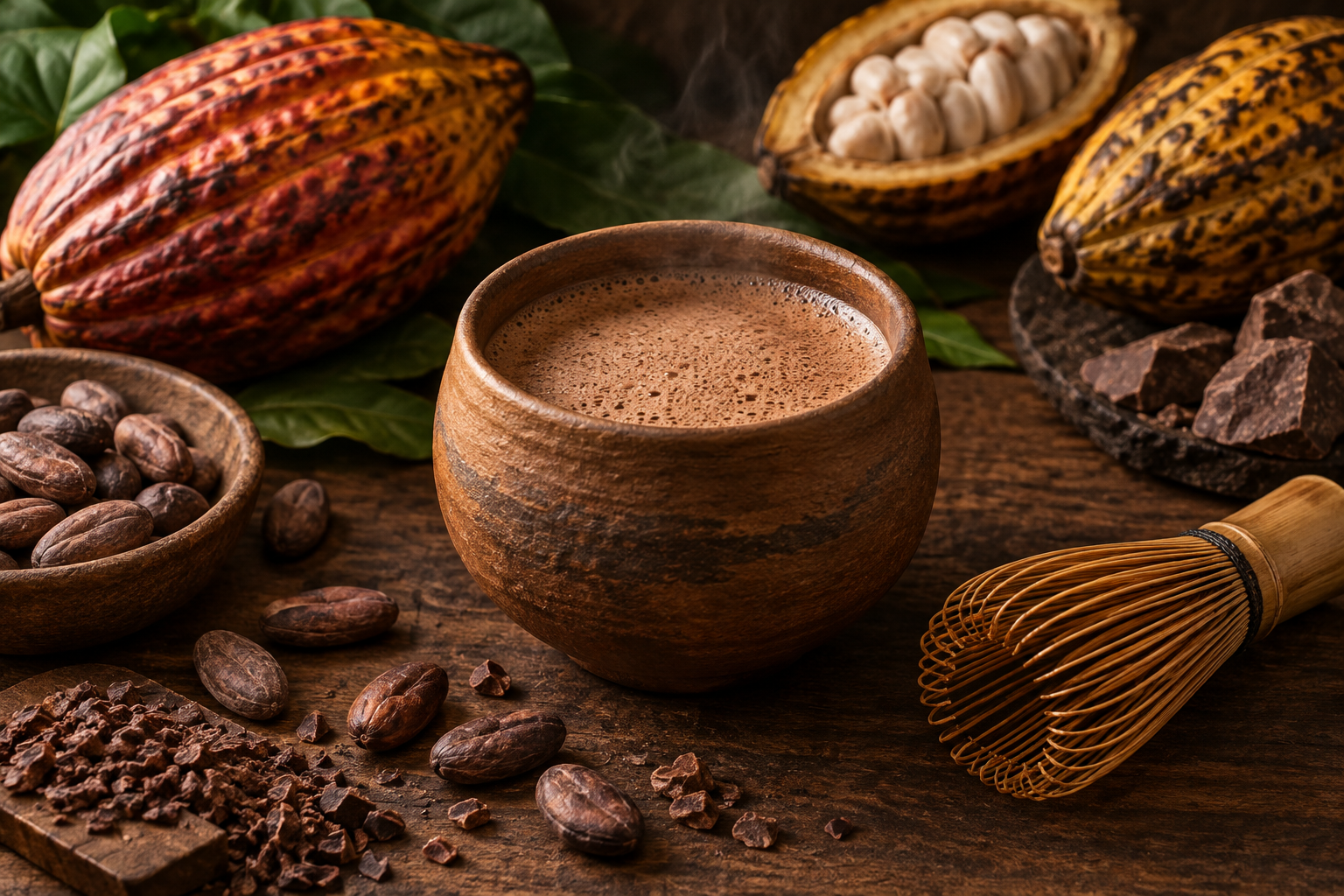
How to prepare a mindful cup
- Warm water or milk without vigorously boiling it.
- Whisk in finely chopped cacao or cacao powder.
- Add cinnamon, vanilla or a small amount of sweetener if preferred.
- Begin with a modest serving and notice how your body responds.
Safety considerations
People who are sensitive to stimulants, experience migraines or reflux, take medication, or have a heart condition should discuss concentrated cacao use with a qualified professional. Keep cacao products away from dogs and other animals because theobromine can be toxic to them.
Frequently asked questions
Is cacao caffeine free?
No. It usually contains some caffeine as well as theobromine.
Is ceremonial cacao a medical treatment?
No. Ritual can be personally meaningful, but cacao should not be promoted as a treatment for physical or mental illness.
Can cacao replace coffee?
Some people enjoy it as an alternative, but it still contains stimulants and may not suit everyone.
Written by Lize Bührmann, founder of Pharmatropia. General educational information only; it does not replace individual medical advice.