
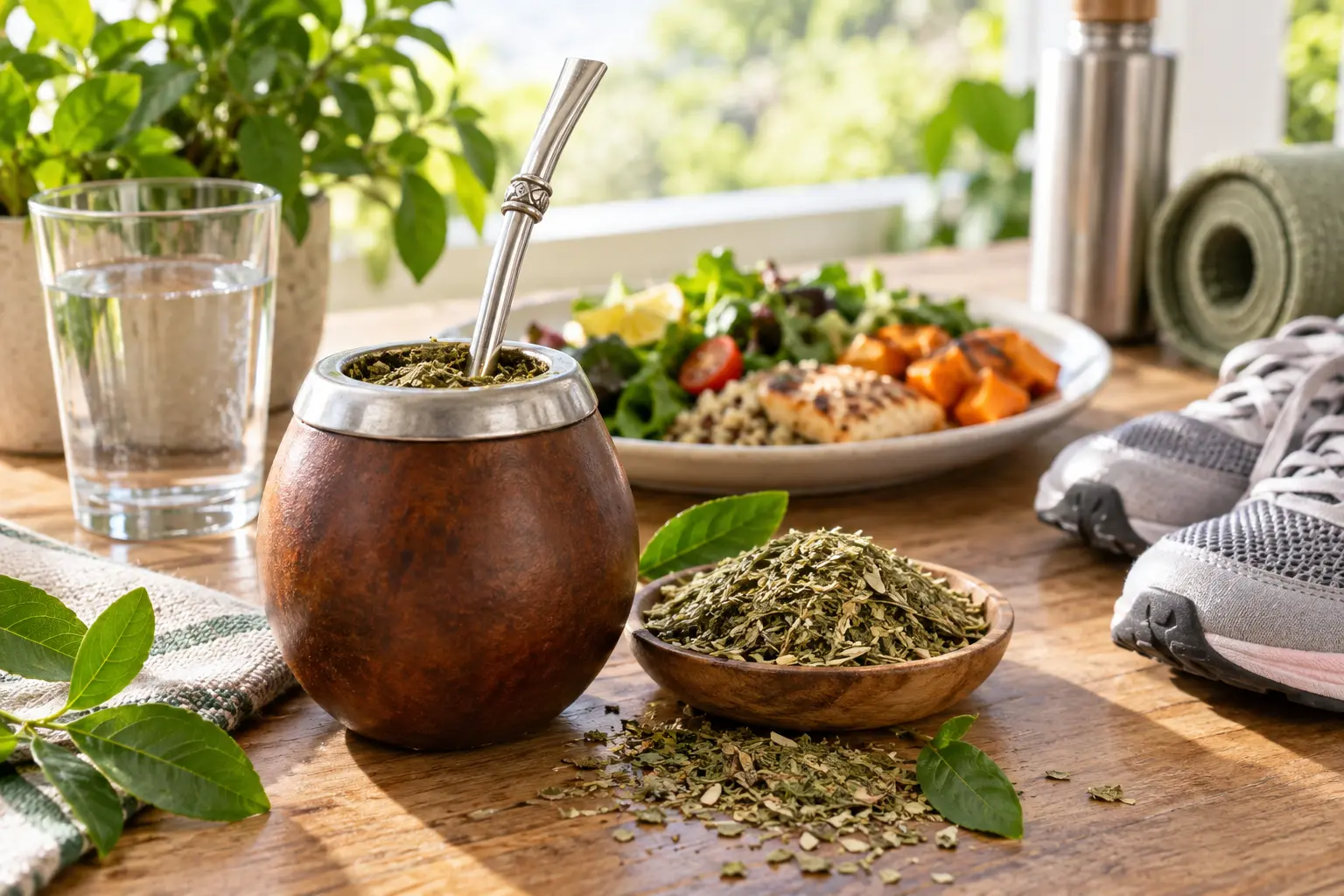
Yerba Maté and Weight Management: What Does the Evidence Show?
Yerba Maté is a traditional South American infusion enjoyed for its flavour, social ritual and caffeine. It is also marketed for appetite control and weight loss. The research is more nuanced than the advertising: Maté may influence alertness, appetite or metabolism in some settings, but it is not a dependable shortcut to weight change.
Why Yerba Maté enters weight conversations
Yerba Maté naturally contains caffeine and other plant compounds. Caffeine can temporarily increase alertness and may modestly affect energy expenditure or perceived effort during activity. Some small studies have explored appetite and body-composition outcomes, but study sizes, formulations and durations vary.
An observed change in a trial does not mean every commercial tea or capsule will produce the same result. Preparation, dose, added ingredients, diet, sleep and individual caffeine response all matter.
Appetite is not the same as nourishment
Feeling less hungry for a short period does not automatically support health. Skipping meals can lead to low energy, irritability or later overeating, particularly when the underlying issue is poor sleep, stress or an overly restrictive eating plan.
A useful approach is to keep regular, satisfying meals built around protein, fibre-rich carbohydrates, vegetables or fruit and appropriate fats. Tea can accompany that pattern; it should not replace it.
Caffeine can help or hinder
Caffeine may make movement feel easier and improve short-term focus, but late or excessive use can disturb sleep. Poor sleep can, in turn, affect appetite signals, recovery and food choices. People with anxiety, palpitations, reflux or migraine may also be sensitive.
Our Yerba Maté preparation and caffeine guide explains how brewing method and timing influence the experience.
Watch the complete drink
Ready-to-drink products may contain substantial added sugar. Home-made iced Maté can also become a high-sugar beverage when syrups or large amounts of juice are added. Check the label or measure what goes into the jug.
Capsules and concentrated extracts are not equivalent to a traditional infusion. They may deliver different amounts of caffeine and other constituents, sometimes alongside additional stimulants. Never assume “herbal” means caffeine-free.
A realistic way to use Yerba Maté
- Choose unsweetened or lightly sweetened preparations.
- Use it earlier in the day if sleep is sensitive.
- Count caffeine from coffee, energy drinks and pre-workouts as well.
- Pair it with regular meals rather than using it to ignore persistent hunger.
- Track sleep, anxiety, palpitations and digestive comfort.
- Stop if the costs outweigh the benefits.
Who needs extra caution?
Pregnancy and breastfeeding require individual caffeine guidance. People with uncontrolled blood pressure, heart-rhythm concerns, severe anxiety, significant reflux or medicines that interact with stimulants should ask a qualified healthcare professional before regular high-caffeine use.
Very hot beverages may injure the mouth and oesophagus. Allow water to cool below boiling before brewing and avoid drinking any tea at scalding temperatures.
Frequently asked questions
Will Yerba Maté make me lose weight?
No tea can guarantee weight loss. Any average effect seen in research is likely to be modest and depends on the wider eating, activity, sleep and health context.
Is iced Maté better than hot Maté?
Temperature does not turn it into a weight-loss product. Iced tea may be refreshing; the main practical differences are preparation, added sugar and food-safety storage.
Can I drink it on an empty stomach?
Some people tolerate it, while others experience nausea, shakiness or reflux. There is no need to force an empty-stomach routine.
Written by Lize Bührmann, founder of Pharmatropia. This article provides general education and is not personalised nutrition, weight-management or medical advice.