
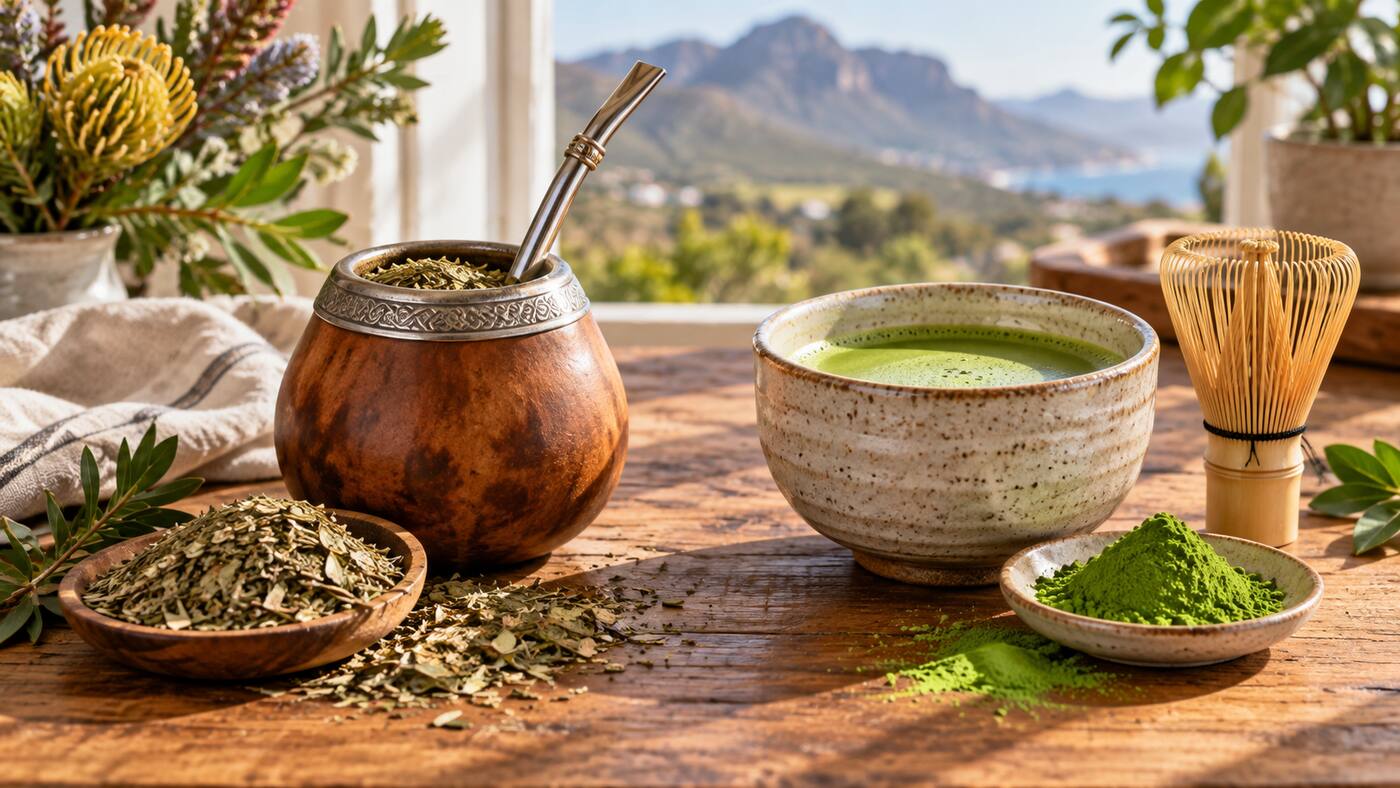
Yerba Maté vs Matcha: Which Has More Caffeine?
Written by Lize Bührmann, founder of Pharmatropia.
Neither Yerba Maté nor matcha always has more caffeine. A strong matcha made with more powder can exceed a lightly brewed cup of Maté, while a traditional Maté session with a well-filled gourd and repeated refills can deliver more total caffeine than one bowl of matcha. The meaningful comparison is caffeine per prepared serving—and per whole session—not the drink name.
Why the numbers vary so much
Matcha is powdered Camellia sinensis. You whisk the powder into water and consume the suspended leaf material. Yerba Maté is made from Ilex paraguariensis leaves and stems, normally infused and strained through a bombilla or prepared as tea bags.
Caffeine exposure changes with:
- grams of matcha powder or Maté used;
- leaf-to-stem proportion in Yerba Maté;
- water volume and temperature;
- steeping time;
- number of refills;
- product batch and growing conditions;
- bottled-drink formulation and added caffeine.
This variation is why confident “one cup equals X milligrams” claims can mislead.
Matcha: a measured powder dose
Because the leaf powder is consumed, the amount of matcha placed in the bowl is the most useful starting point. Published analyses show meaningful variation in caffeine concentration between matcha samples. A level half-teaspoon, a heaped teaspoon and a café latte made with multiple scoops are not equivalent.
Matcha also contains L-theanine and tea catechins. People often describe its alertness as smoother, but that subjective experience does not mean the caffeine dose is low. Milk, sweetener and water change flavour and energy density, not the amount of caffeine already supplied by the powder.
Yerba Maté: count the whole session
A mug of Maté brewed like ordinary tea is easier to count than a traditional gourd. With a gourd, the same leaves are infused repeatedly. A 2026 laboratory study simulating 15 traditional servings measured total caffeine extraction of 243 mg from a sample with stems and 273 mg from a stem-free sample. Those numbers describe the specific products and method studied, not every Maté session, but they demonstrate why refills matter.
Stem-free Yerba may deliver more caffeine because leaves contain more caffeine than stems. Water temperature, fine particles and packing also influence extraction. Our Yerba Maté preparation and caffeine guide explains traditional use in more detail.
A fair comparison at home
- Weigh the dry material: record grams of matcha or Yerba, not vague scoops.
- Define the serving: one matcha bowl, one 250 ml infusion or an entire gourd session.
- Check a reliable label: especially for bottled or blended products.
- Count other sources: coffee, chocolate, pre-workout and medicines all add to the day.
- Track effects: note sleep, anxiety, palpitations, headache and stomach comfort.
If a gentle morning drink is the goal, use a smaller measured amount rather than assuming one beverage is inherently “cleaner” or safer. If a sustained social ritual is the goal, remember that every Maté refill can add caffeine even as the flavour fades.
Which is better for focus?
Both provide caffeine, which can temporarily increase alertness. Matcha naturally contains L-theanine; Yerba Maté contains other methylxanthines and polyphenols. These differences are interesting, but product marketing often outruns head-to-head clinical evidence.
Choose by flavour, preparation style, verified quality, tolerance and total caffeine. Neither drink treats fatigue caused by anaemia, thyroid disease, depression, infection or chronic sleep loss.
Caffeine safety and timing
The US FDA cites 400 mg per day as an amount not generally associated with negative effects for most healthy adults, while emphasising wide variation in sensitivity. That is not a target and does not apply unchanged to pregnancy, breastfeeding, children, certain medical conditions or interacting medicines.
Caffeine can worsen sleep, anxiety, reflux, tremor or palpitations. If sleep is fragile, set a cut-off several hours before bedtime. Reduce gradually if regular high intake causes withdrawal headaches. Drink Maté warm rather than scalding hot; very-hot beverages can injure the oesophagus.
Ready to choose your Yerba Maté?
Compare loose leaf, imported brands, tea bags and preparation accessories in our Yerba Maté South Africa buying guide, or shop Pharmatropia loose-leaf Yerba Maté.
Frequently asked questions
Does one matcha have more caffeine than one Yerba Maté?
It depends on the grams used and the serving definition. A single measured matcha may exceed a light Maté infusion; a full refill-based Maté session may exceed one matcha.
Is Yerba Maté stronger without stems?
Often it can be more caffeine-dense because a larger proportion is leaf, but grind, batch and preparation still affect the result.
Can I drink both on the same day?
Many healthy adults can, but count the combined caffeine and your response. Avoid stacking them with energy drinks or stimulant pre-workouts without knowing the total.
Which is easier to measure?
Matcha can be simpler when the powder is weighed. A traditional Maté gourd requires counting the full session. A labelled tea bag or ready-to-drink product may be easier if caffeine is declared.
How does Maté compare with coffee?
Preparation again matters. See our separate Yerba Maté versus coffee comparison.
Educational disclaimer: This article is general information. Seek individual advice if you are pregnant or breastfeeding, have a heart rhythm condition, use stimulant medicines or react strongly to caffeine.
Sources and further reading
- 2026 analysis of caffeine in traditionally prepared Yerba Maté
- 2024 analysis of matcha composition and caffeine
- US FDA caffeine guidance