White Lotus Tea: Tradition, Symbolism and How to Brew It
From the Pharmatropia Knowledge Library
This guide expands one of our original newsletters into clear, practical and evidence-aware information.
White lotus is an aquatic flowering plant associated with beauty, renewal and contemplative practice. Modern interest often centres on tea rituals, relaxation and mindfulness. The plant’s cultural story is meaningful, but it is important not to turn symbolism or personal experience into unproven medical promises.
Understanding the name
The common name white lotus is applied to more than one aquatic plant in trade. Botanical identification matters because products may refer to Nymphaea lotus, Nymphaea pubescens or related species. A responsible supplier should state the botanical name, plant part and intended use.
Traditional and symbolic context
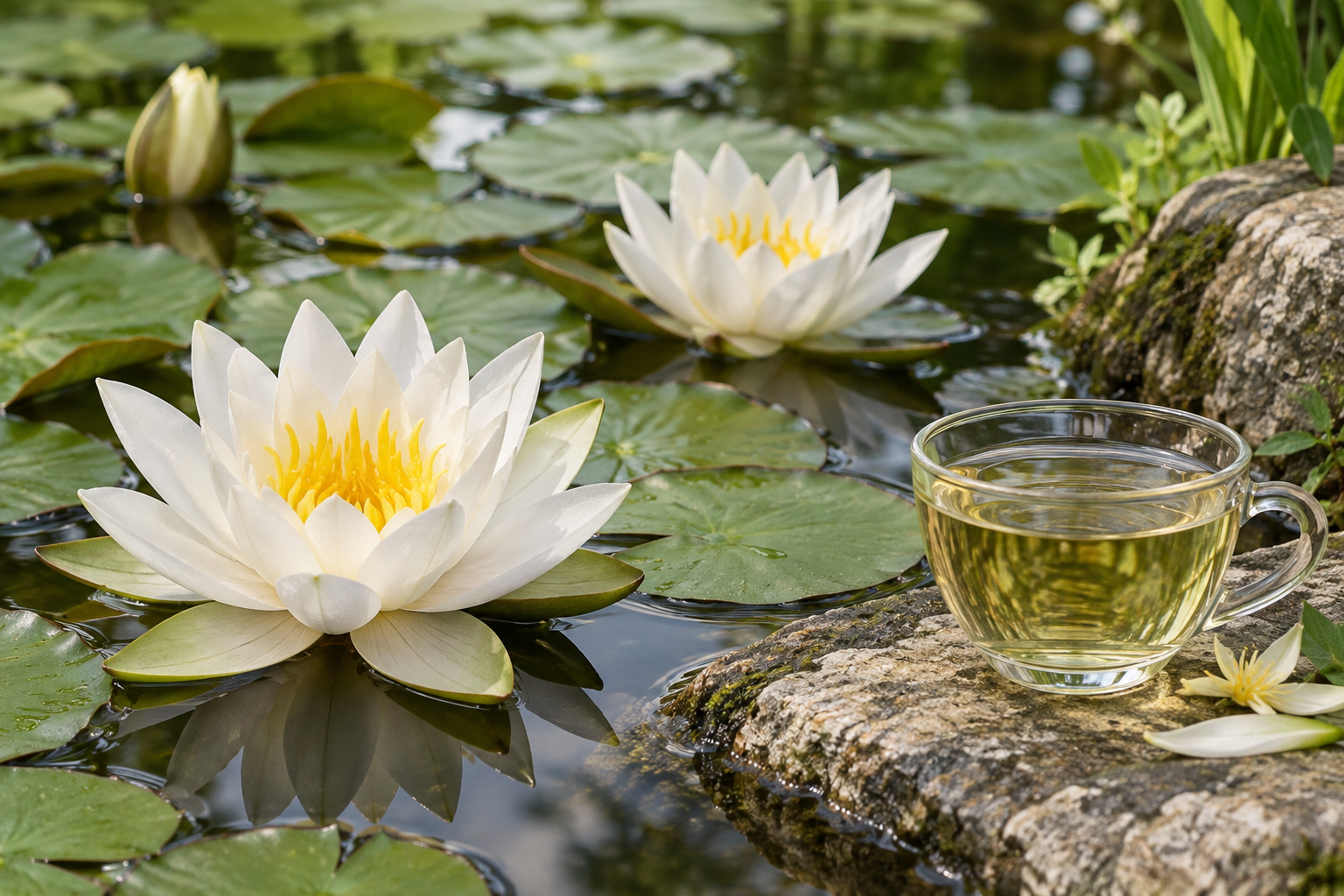
Lotus flowers appear across several cultural and spiritual traditions as symbols of purity, resilience and awakening. These meanings can enrich a personal tea ritual, but they should be described with respect and without claiming that the plant treats disease.
How to prepare a mindful cup
- Use food-grade flowers sold specifically for infusion.
- Start with a modest amount and steep in hot water for five to ten minutes.
- Strain carefully and notice the aroma and flavour before adding other ingredients.
- Create a calm setting: slow breathing, journalling or quiet reflection can be part of the ritual.
Safety and sensible use
Human research on white lotus preparations is limited. Avoid combining unfamiliar concentrated extracts with alcohol, sedatives or medicines that affect alertness. Pregnancy, breastfeeding, childhood and regular medication are good reasons to seek individual professional guidance first.
Frequently asked questions
Is white lotus the same as blue lotus?
No. They may be related aquatic plants, but the common names and species are not interchangeable.
Does white lotus tea contain caffeine?
Pure white lotus flower tea is naturally caffeine free.
Can traditional use prove a health claim?
No. Traditional use offers cultural context but does not replace product testing or clinical research.
Written by Lize Bührmann, founder of Pharmatropia. General educational information only; it does not replace individual medical advice.