Can You Take Sceletium With Coffee or Caffeine?
Written by Lize Bührmann, founder of Pharmatropia.
Short answer: there is no good clinical evidence showing that Sceletium and caffeine are either a proven combination or universally unsafe together. Because the two may affect alertness, mood and physical sensations differently, the safest approach is to avoid assuming they balance each other, check your medicines first and introduce only one change at a time.
This is particularly important for people who are sensitive to caffeine, prone to anxiety or palpitations, pregnant or breastfeeding, or using medicines that affect serotonin or the nervous system.
Why people combine Sceletium and caffeine
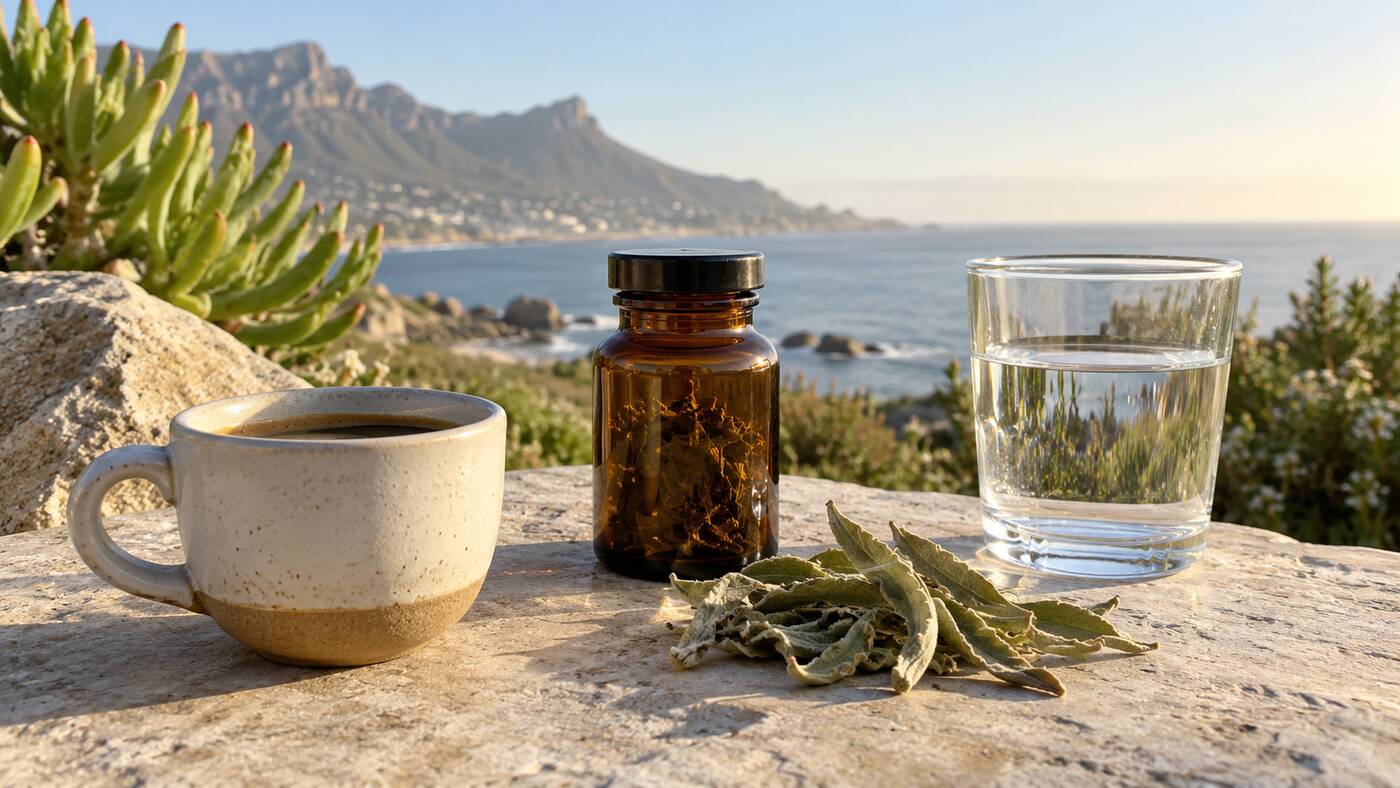
Sceletium tortuosum is a South African plant with a long Indigenous history of use. Modern extracts are often marketed for calm, focus or stress support. Caffeine is a stimulant that can temporarily improve alertness, but can also cause anxiety, tremor, a racing heart and sleep disruption.
The online idea is that Sceletium may “smooth out” caffeine. That is a hypothesis, not an established clinical result. Published Sceletium studies have examined particular standardised extracts on their own—not a general combination with coffee, energy drinks or pre-workouts.
What the Sceletium research actually shows
Laboratory research suggests that certain Sceletium alkaloids can affect serotonin-transporter binding and phosphodiesterase-4. A small placebo-controlled imaging study of 16 healthy participants found changes in threat-related brain circuitry after a specific standardised extract. Another small trial assessed the tolerability of two doses of that same standardised extract over three months.
Those findings cannot be applied automatically to every fermented plant powder, tincture, gummy or capsule. They also do not answer whether caffeine changes Sceletium’s effects. Read the indexed research on Sceletium pharmacology and the small human imaging study.
For preparation context, see what fermented Sceletium means.
What caffeine adds to the picture
Caffeine blocks adenosine receptors and can increase alertness. Its effects vary widely with body size, genetics, tolerance, sleep, medicines and the amount consumed. The FDA cites 400 mg per day as an amount not generally associated with negative effects for most healthy adults, but this is a population reference—not a personal target.
Too much caffeine can cause insomnia, anxiety, jitters, nausea, headache, increased heart rate or palpitations. These symptoms can make it difficult to work out whether a new Sceletium product is suiting you. See the FDA’s caffeine guidance.
Who should be especially cautious?
- Anyone taking an SSRI, SNRI, MAO inhibitor, tramadol or another serotonergic medicine.
- People with panic attacks, significant anxiety, arrhythmias, uncontrolled blood pressure or severe insomnia.
- Anyone using an energy drink, pre-workout or multiple products that contain hidden caffeine.
- People who are pregnant, trying to conceive or breastfeeding.
- Children and teenagers.
- Anyone using a concentrated extract without a clearly stated amount and specification.
Sceletium’s serotonin-related pharmacology is why our guide to Sceletium and antidepressants treats medicine screening as the first step.
A safer way to assess the combination
- Count all caffeine sources. Coffee, Yerba Maté, tea, chocolate, energy drinks and pre-workouts can add up.
- Do not start both on the same day. If a professional has approved each product, introduce one variable at a time so that effects are easier to interpret.
- Choose a clearly identified Sceletium product. Check the botanical name, form, amount, other ingredients and whether the label refers to a specific standardised extract.
- Keep timing conservative. Taking caffeine late in the day can disturb sleep even if it initially feels helpful.
- Stop for concerning effects. Palpitations, marked agitation, confusion, tremor, fever, severe headache or fainting need prompt assessment.
Frequently asked questions
Does Sceletium cancel caffeine jitters?
That has not been established. A calming subjective response in one person does not mean Sceletium neutralises caffeine’s cardiovascular or sleep effects.
Can I take Sceletium with Yerba Maté?
Yerba Maté naturally contains caffeine. Treat it as a caffeine source and consider the same medicine, anxiety, heart-rate and sleep questions.
Is fermented Sceletium weaker than an extract?
Not necessarily; they are different preparations. Alkaloid content and serving amounts can vary, so “fermented” and “extract” are not interchangeable strength claims.
Is there a recommended Sceletium-to-caffeine ratio?
No clinically validated ratio exists. Avoid protocols that present a universal ratio as proven.
Educational disclaimer: This article is general information, not medical advice or a dosing protocol. Sceletium may interact with medicines, especially serotonergic medicines. Ask a pharmacist or qualified clinician before combining products.