Pink Lotus Tea: History, Ritual and a Gentle Cup
From the Pharmatropia Knowledge Library
This guide expands one of our original newsletters into clear, practical and evidence-aware information.
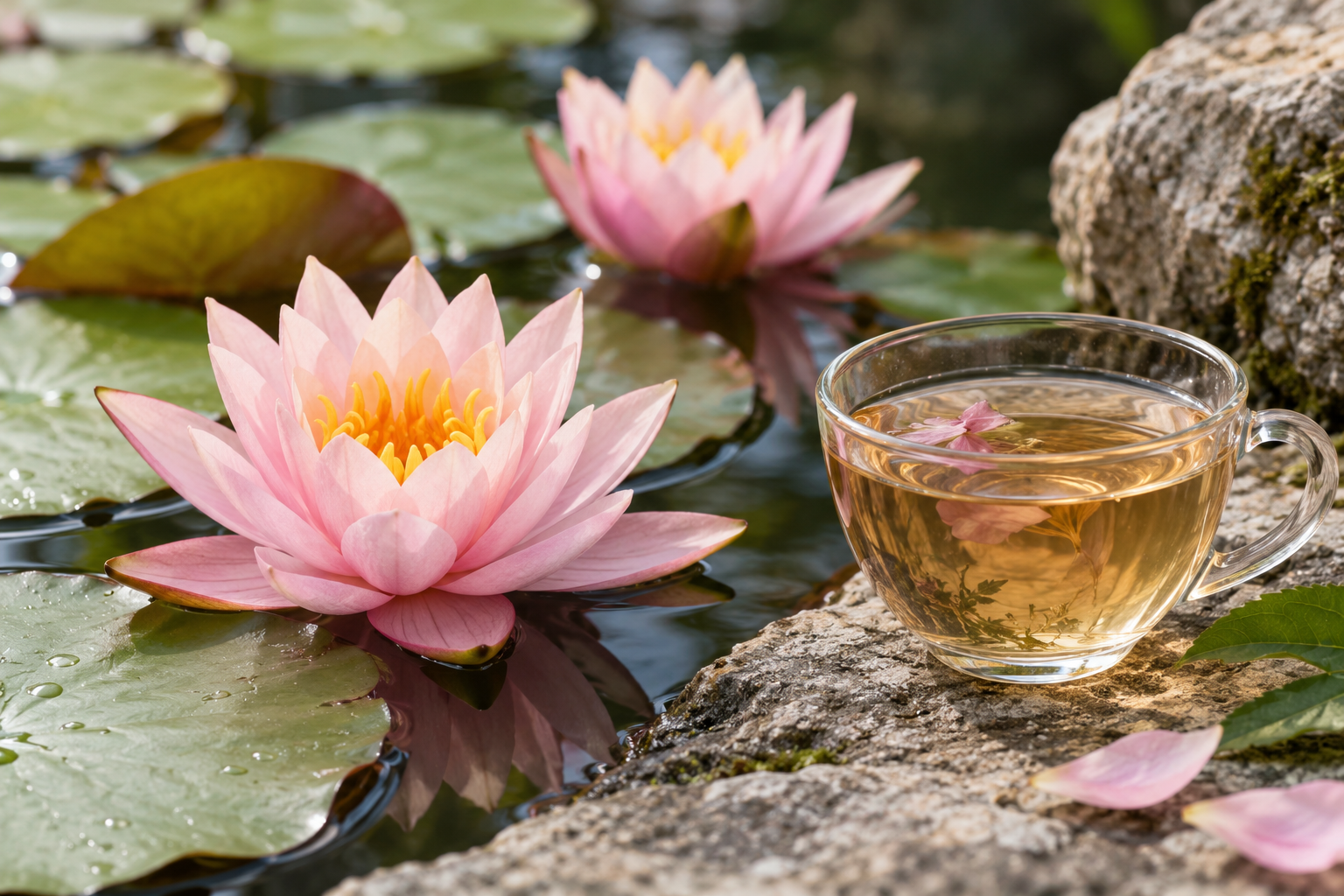
Pink lotus is valued for its striking flowers and its place in contemplative and cultural traditions. It can be approached as a sensory botanical ritual: an invitation to pause, prepare a beautiful cup and become more present. That is different from presenting it as a treatment.
Pink lotus and botanical identity
Product labels may use pink lotus for different Nymphaea or Nelumbo species. Check the Latin name and plant part before buying, particularly when a product is intended for tea rather than decoration.
Why ritual matters
Ritual can change how we relate to ordinary moments. Preparing tea slowly, setting aside a phone and focusing on scent, warmth and breath may support a calmer experience without requiring exaggerated claims about the herb itself.
Brewing suggestions
- Choose whole, food-grade flowers with clear sourcing information.
- Steep gently for five to ten minutes and adjust according to taste.
- Try it on its own before combining it with other botanicals.
- For a cold infusion, brew hot first, cool safely and refrigerate.
What the evidence can and cannot say
Pink lotus contains plant compounds of scientific interest, including flavonoids, but laboratory antioxidant findings do not automatically predict a clinical benefit in people. Human evidence remains limited, so a careful guide should focus on tradition, flavour and responsible use.
Frequently asked questions
Is pink lotus tea intoxicating?
A normally prepared food-grade tea should not be promoted for intoxication. Concentrated products may behave differently and deserve extra caution.
Can it be used every day?
There is not enough high-quality long-term research to give a universal answer. Use modestly and consider personal medication and health factors.
How should it be stored?
Keep dried flowers sealed, dry and away from heat and direct sunlight.
Written by Lize Bührmann, founder of Pharmatropia. General educational information only; it does not replace individual medical advice.