
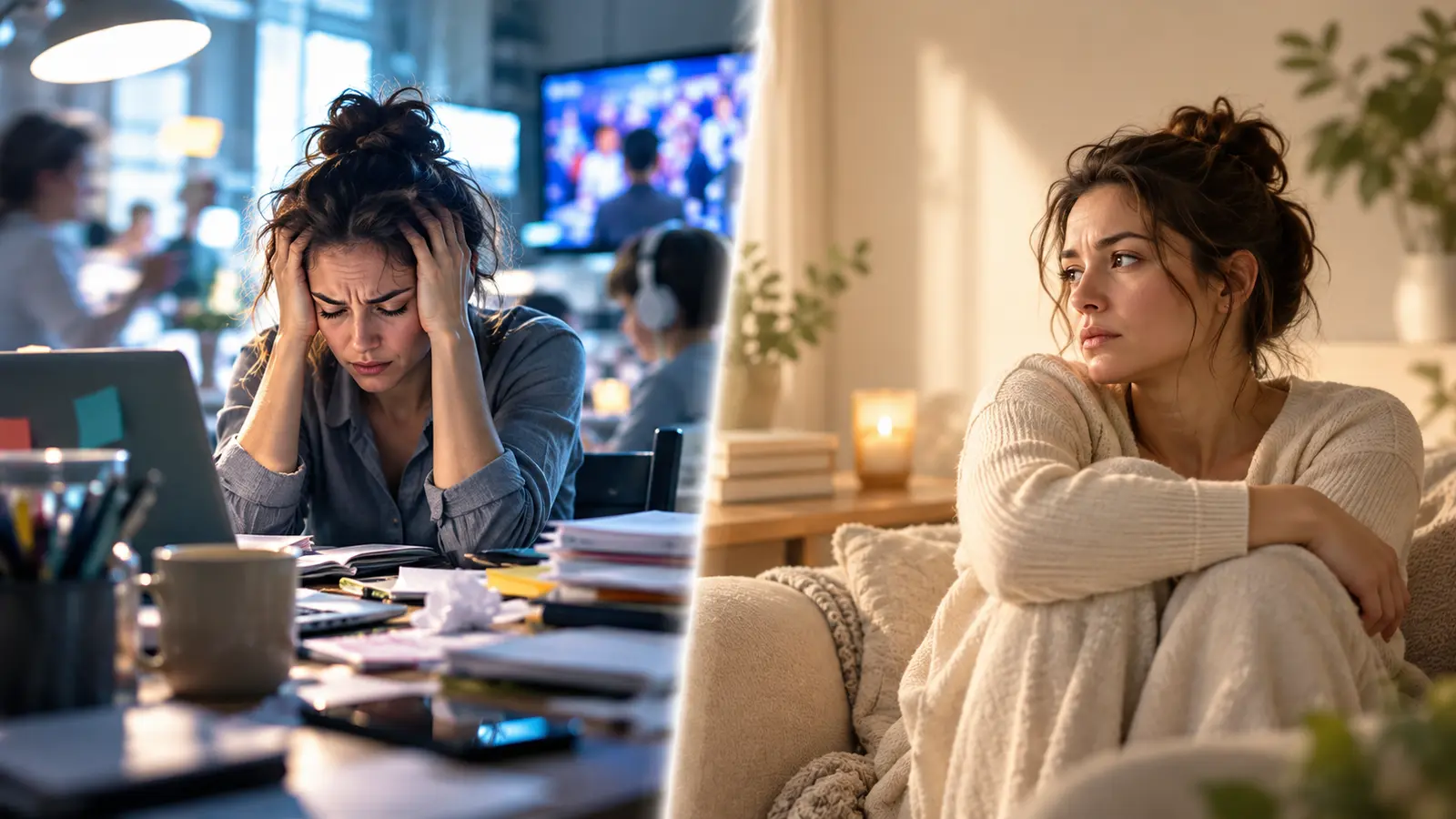
Overstimulation vs Anxiety: Similar Feelings, Different Clues
Overstimulation and anxiety can feel remarkably similar. Both may bring irritability, a racing heart, difficulty thinking, muscle tension and a strong urge to leave. The difference is not always obvious in the moment, and the two can reinforce each other.
Looking at triggers, sensory load and what brings relief can provide useful clues. These clues are not a diagnosis, but they can help you describe the pattern more clearly and choose a sensible first response.
What is overstimulation?
Overstimulation occurs when the brain is receiving or processing more input than it can manage comfortably at that time. Noise, bright or flickering light, crowds, touch, smells, heat, notifications and constant conversation can combine until capacity is exceeded.
People with migraine, neurodevelopmental differences, trauma histories, chronic illness or severe fatigue may be more sensitive to particular inputs, but anyone can become overstimulated when enough demands accumulate.
What is anxiety?
Anxiety involves anticipation of danger, uncertainty or a negative outcome. It may be linked to a specific situation or continue without an obvious external trigger. Thoughts often move towards “what if”, and the body prepares as though action may be needed.
Anxiety is not simply overthinking. It can involve strong physical symptoms, avoidance and significant distress. Persistent symptoms should be assessed rather than self-diagnosed from a checklist.
Clues that sensory load is a major driver
- Symptoms rise in noisy, bright, crowded or visually busy places.
- You become irritable before noticing fearful thoughts.
- Speech, touch or ordinary decisions suddenly feel like too much.
- A quieter, darker or cooler environment brings relatively quick relief.
- The threshold is lower after poor sleep, pain or a demanding day.
Clues that anxiety is a major driver
- Worry continues in a quiet and comfortable environment.
- Attention repeatedly returns to a feared future outcome.
- Reassurance helps briefly but the same doubt returns.
- You avoid a situation mainly because of what might happen.
- Physical symptoms rise when thinking about the situation, even before entering it.
Why they often overlap
Sensory overload can feel unsafe and trigger anxiety. Anxiety can increase scanning and make ordinary sensations feel more intrusive. Once the cycle begins, a crowded room may amplify worry while worry makes the room harder to tolerate.
The first step does not have to prove which came first. Reduce avoidable input, then observe what remains. If distress settles substantially, sensory load was probably important. If worry continues, an anxiety-focused tool may also be needed.
A two-stage response
Stage 1: lower the input
- Move to a quieter or less crowded space.
- Reduce screen brightness and unnecessary notifications.
- Use familiar hearing or light protection where appropriate.
- Pause conversation and decisions for a few minutes.
- Check heat, hunger, thirst, pain and fatigue.
Stage 2: address the remaining worry
Name the feared outcome, separate facts from predictions and choose one proportionate action. If there is no action to take now, write down when you will revisit the concern. The stress-reframing guide offers a practical sequence.
Track the pattern for one week
For each episode, record:
- location and sensory conditions;
- what happened immediately before symptoms rose;
- the first body signal you noticed;
- the main thought, if any;
- what you changed in the environment;
- how quickly symptoms shifted;
- sleep, pain, caffeine and medication timing.
This record can help a clinician distinguish anxiety, sensory sensitivity, migraine, medication effects and other possibilities.
Make environments easier without shrinking your life
Reasonable accommodations can preserve participation: arriving before a venue becomes crowded, choosing a seat near an exit, taking planned breaks, using natural light or asking for written instructions. The goal is not to tolerate unlimited discomfort. It is to reduce avoidable load while keeping meaningful activities possible.
For lower-pressure planning around capacity, see supporting a neurodivergent nervous system.
When assessment is important
Seek professional assessment when symptoms are new, worsening, frequent or limiting ordinary life. Hearing or vision changes, fainting, severe headache, chest pain, new neurological symptoms and significant breathing difficulty need appropriate medical attention.
Frequently asked questions
Can overstimulation cause a panic attack?
It may contribute to intense anxiety or panic in some people, but similar symptoms can have other causes and should be assessed when severe or unexplained.
Does anxiety always involve fearful thoughts?
No. Some people notice physical activation first. The pattern over time is more useful than one moment.
Are earplugs and dark glasses always the answer?
They can be useful tools, but constant protection may not suit everyone. Choose aids according to the situation and professional advice where needed.
Can poor sleep lower my sensory threshold?
Yes. Many people find ordinary sound, light and decision-making harder after insufficient sleep.
Educational note: This article is general information and is not medical or psychological advice. Individual assessment is important for persistent, severe or unexplained symptoms.