
How to Store Loose-Leaf Herbal Tea: Light, Heat, Moisture and Freshness
Loose-leaf herbal teas are colourful, aromatic and easy to personalise, but dried botanicals still change over time. Light can fade delicate pigments, warmth can speed the loss of aroma, and moisture can turn a pleasant tea cupboard into a mould risk.
Good storage does not need to be complicated. The aim is to keep the tea dry, shaded, cool, clean and clearly identified from the day it arrives.
The four main enemies of loose-leaf tea
1. Moisture
Dried leaves and flowers readily absorb humidity from the air. Repeatedly opening a large container above a steaming kettle adds more moisture. Once dampness enters, clumping and microbial growth become possible.
2. Light
Direct sunlight and bright shelf lighting can fade flowers such as hibiscus and butterfly pea and may speed the breakdown of aromatic compounds. Clear jars look attractive, but they are best kept inside a closed cupboard.
3. Heat
A shelf above the kettle, oven or sunny window may become much warmer than the rest of the room. A consistently cool cupboard is usually better than a decorative display near a heat source.
4. Air and strong odours
Every opening exposes the tea to oxygen and surrounding aromas. Dried botanicals can take on smells from spices, coffee, cleaning products or incense. Use containers that close firmly and store strongly scented ingredients separately.
Choose the right container
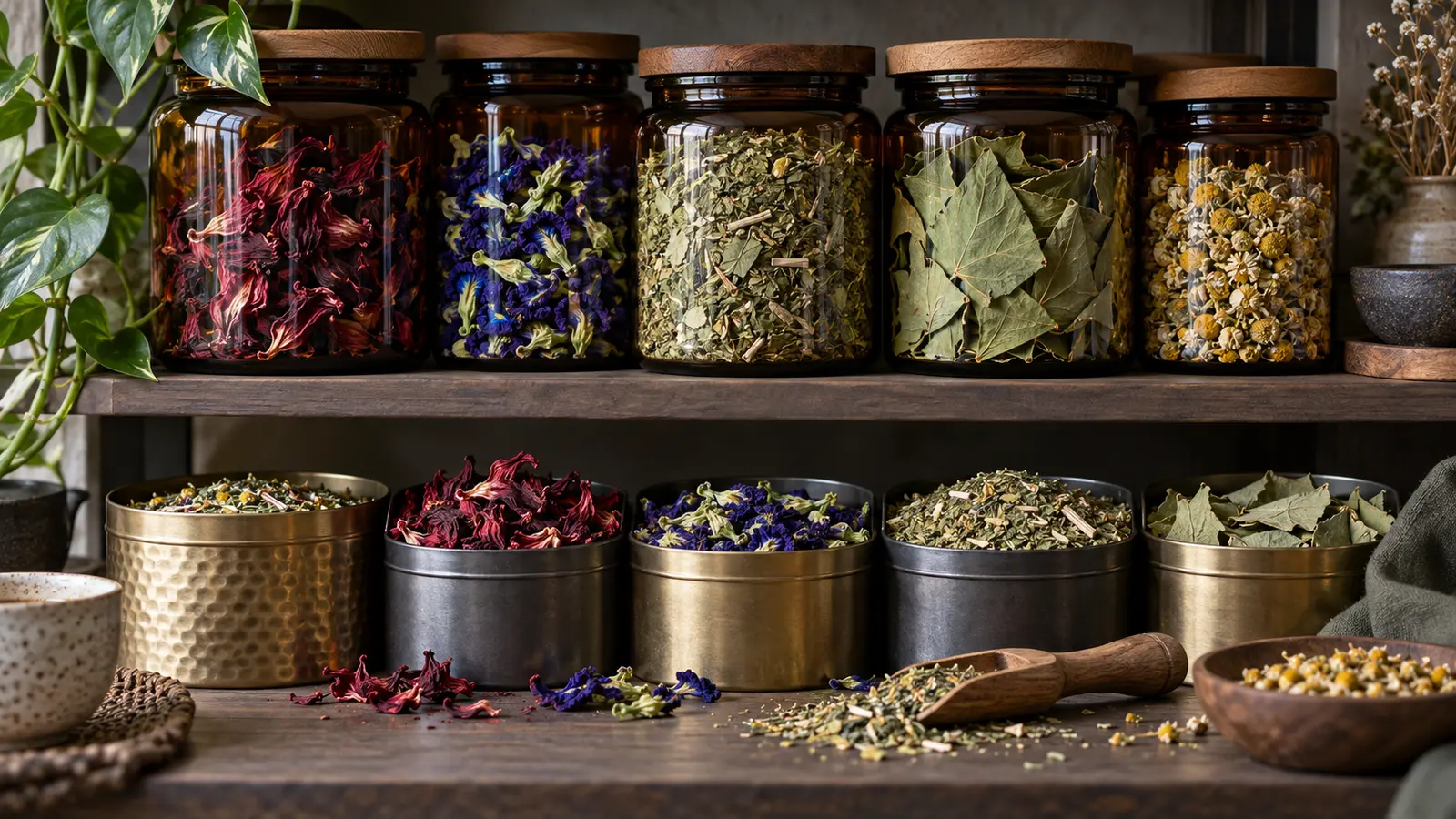
Good options include amber glass jars, opaque food-grade tins and well-sealed food-safe pouches. The container should be clean, completely dry and sized so that it is not mostly empty for months.
- Amber glass: easy to clean and offers some light protection.
- Opaque tins: lightweight and good for a cupboard, provided the lid seals well.
- Resealable barrier pouches: useful for refills and travel when properly closed.
- Clear glass: acceptable inside a dark cupboard, but not in direct light.
Avoid transferring tea into a container that still carries the aroma of coffee, spices or a previous blend.
Label more than the tea name
A useful label includes the common name, scientific name if known, plant part, supplier, purchase or opening date and batch code. If you create a blend, record each ingredient and the approximate proportions. This matters if you later need to identify an allergen, interaction or unusual reaction.
A simple storage routine
- Inspect the tea and packaging when it arrives.
- Keep the supplier label or photograph it before decanting.
- Transfer only into a completely dry container.
- Use a clean, dry scoop rather than damp fingers.
- Close the container immediately after measuring.
- Store it in a cool, dark cupboard away from steam and strong odours.
- Use older stock first and review the cupboard every three months.
Should loose-leaf tea go in the fridge or freezer?
Usually, routine refrigeration is not necessary and can introduce condensation each time a cold container is opened in warm, humid air. Freezing may be used in controlled commercial storage for some products, but at home it creates avoidable moisture and odour risks. Follow the supplier’s specific instructions where they differ.
How long does herbal tea stay fresh?
There is no single shelf life for every botanical. Whole leaves and flowers often retain aroma longer than finely powdered material, while oily seeds or peels may change more quickly. Packaging quality and local humidity also matter.
Use the supplier’s best-before guidance, but also inspect the tea. A best-before date is not permission to use a product that smells musty, has become damp or shows contamination.
Signs that tea should be discarded
- visible mould, webbing or insects;
- unexpected dampness or persistent clumping;
- a musty, sour or rancid smell;
- an unexplained colour or texture change;
- a damaged seal or unknown storage history;
- a blend you can no longer identify confidently.
Do not try to rescue mouldy botanicals by heating, rinsing or removing the visible section. Discard the contents and clean and dry the container thoroughly.
Special considerations for colourful and aromatic teas
Hibiscus and butterfly pea are valued partly for their vivid colour, while damiana, lotus and yerba maté have distinctive aromas. Store each separately unless you intentionally made a blend. This reduces flavour transfer and makes it easier to identify the cause if a product changes.
For ideas on organising a small, useful collection rather than accumulating too many open bags, see our guide to building a practical herbal tea pantry.
Brewing hygiene matters too
Storage protects the dry tea; clean preparation protects the brewed tea. Use clean utensils and fresh water. Refrigerate prepared iced tea promptly and do not keep it indefinitely. If a brew develops an unusual smell, fizz or film, discard it.
Frequently asked questions
Can I keep tea in the bag it arrived in?
Yes, if it is a food-safe barrier pouch with a reliable seal. Press out excess air gently and close it fully after each use.
Are silica packets safe in a tea jar?
Only use a food-contact moisture-control product supplied for that purpose, keep it intact and follow its instructions. Never use an unknown packet or allow its contents to mix with the tea.
Why has my tea lost colour but still smells normal?
Light, oxygen and time can fade colour before obvious spoilage appears. It may still brew safely if it has been stored correctly, but quality and flavour may be reduced.
Can I mix new tea with old tea?
It is better not to. Mixing batches hides age and traceability and could transfer moisture or contamination to the new stock.
Educational note: This article offers general food-storage information and is not medical advice. Botanical teas can have allergens, medicine interactions and pregnancy considerations; check suitability with a qualified professional.