
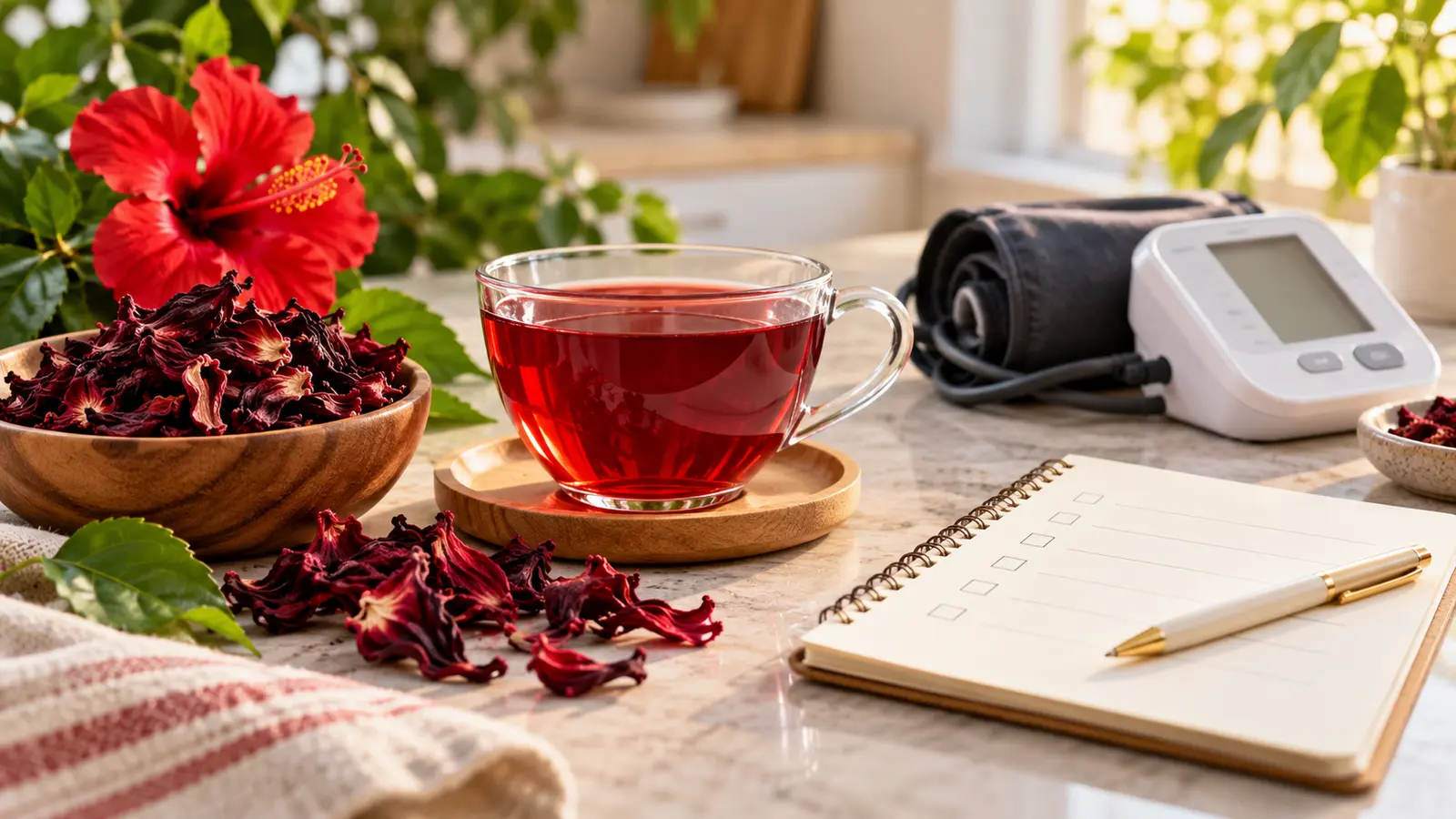
Hibiscus Tea and Blood-Pressure Medicine: What to Check
Ruby-red hibiscus tea is enjoyed across many cultures for its tart flavour and refreshing character. Research also suggests that regular hibiscus tea may modestly lower blood pressure in some adults. That possible effect is precisely why people who use blood-pressure medicine should treat it as more than just flavoured water.
This does not mean hibiscus is automatically unsafe. It means the combination deserves consistency, monitoring and a conversation with the clinician or pharmacist who knows your treatment.
Why hibiscus may affect blood pressure
Hibiscus contains anthocyanins and other plant compounds. Clinical trials and pooled analyses have reported reductions in systolic and diastolic blood pressure, although study methods, tea preparations and participant groups vary. Hibiscus should therefore not be presented as a replacement for prescribed treatment.
Our broader guide covers hibiscus tea, tradition and evidence-based use.
What could happen when it is combined with medicine?
If both the tea and a medicine lower blood pressure, the effects may add together. For some people this may be clinically unimportant; for others it could contribute to blood pressure that is too low, particularly after a dose change, dehydration, illness or heat exposure.
Possible warning signs include:
- dizziness or light-headedness, especially when standing;
- unusual weakness, blurred vision or nausea;
- fainting or near-fainting;
- confusion, chest discomfort or shortness of breath.
These symptoms can have several causes. Severe symptoms, fainting, chest pain, one-sided weakness or breathing difficulty need urgent medical attention.
Do not stop prescribed medicine on your own
A home reading that looks good does not prove that medicine is no longer needed. Blood pressure changes from hour to hour, and abruptly changing treatment can be risky. Take your readings and your hibiscus-use details to the professional managing your prescription.
A practical monitoring approach
1. Keep the tea preparation consistent
“One cup” can range from a weak infusion to a concentrated brew. Record the product, amount, steeping time and number of cups. Extracts and concentrated liquids are not equivalent to an ordinary cup of tea.
2. Measure under similar conditions
Use a validated upper-arm monitor if possible. Sit quietly for about five minutes, keep both feet supported, place the cuff on bare skin and keep the arm at heart level. Take readings at the times recommended by your clinician rather than checking repeatedly because of anxiety.
3. Record symptoms as well as numbers
Note dizziness, headaches, missed medicine, unusual exercise, alcohol, illness and dehydration. Context helps a clinician interpret a reading.
4. Introduce one change at a time
Starting hibiscus, another herb and a new supplement together makes it difficult to identify the cause of a problem.
Who should get individual advice first?
Speak to a clinician or pharmacist before regular or concentrated use if you:
- take medicine for blood pressure, heart rhythm, diabetes or fluid balance;
- have kidney or liver disease;
- are pregnant, planning pregnancy or breastfeeding;
- have a history of fainting or very low blood pressure;
- are preparing for surgery; or
- use several herbs or supplements that may affect blood pressure.
Bring the actual packaging or a clear photo of the ingredient list. Botanical products can contain blends, sweeteners or additional active ingredients that change the risk assessment.
What about blood sugar and cholesterol claims?
These areas are being studied, but evidence is not strong enough to treat hibiscus as a medicine for diabetes or high cholesterol. If you use glucose-lowering treatment, monitor according to your care plan and discuss any regular concentrated hibiscus product with your healthcare team.
Frequently asked questions
Can I drink occasional hibiscus tea if I take blood-pressure tablets?
Many people may be able to, but suitability depends on your readings, medicines, dose and health conditions. Ask your pharmacist or prescriber, especially if you already experience dizziness or low readings.
Is cold-brewed hibiscus safer than hot tea?
Not necessarily. Temperature changes flavour and extraction, but a strong cold brew can still contain substantial plant compounds. Strength and quantity matter more than whether it is served hot or cold.
How quickly can hibiscus lower blood pressure?
Studies generally examine repeated use over time, not an instant rescue effect. Never take extra hibiscus to correct a high reading. Follow the action plan supplied by your clinician.
Should I use hibiscus instead of my medicine?
No. Do not replace, reduce or stop prescribed treatment without guidance from the professional managing it.
Bottom line
Hibiscus tea can be a pleasant part of a balanced routine, but its possible blood-pressure effect deserves respect. Keep the preparation consistent, watch for symptoms, record readings and involve your clinician or pharmacist before making it a regular habit alongside treatment.
This article is educational and is not medical advice. Individual medicine decisions should be made with a qualified healthcare professional.