
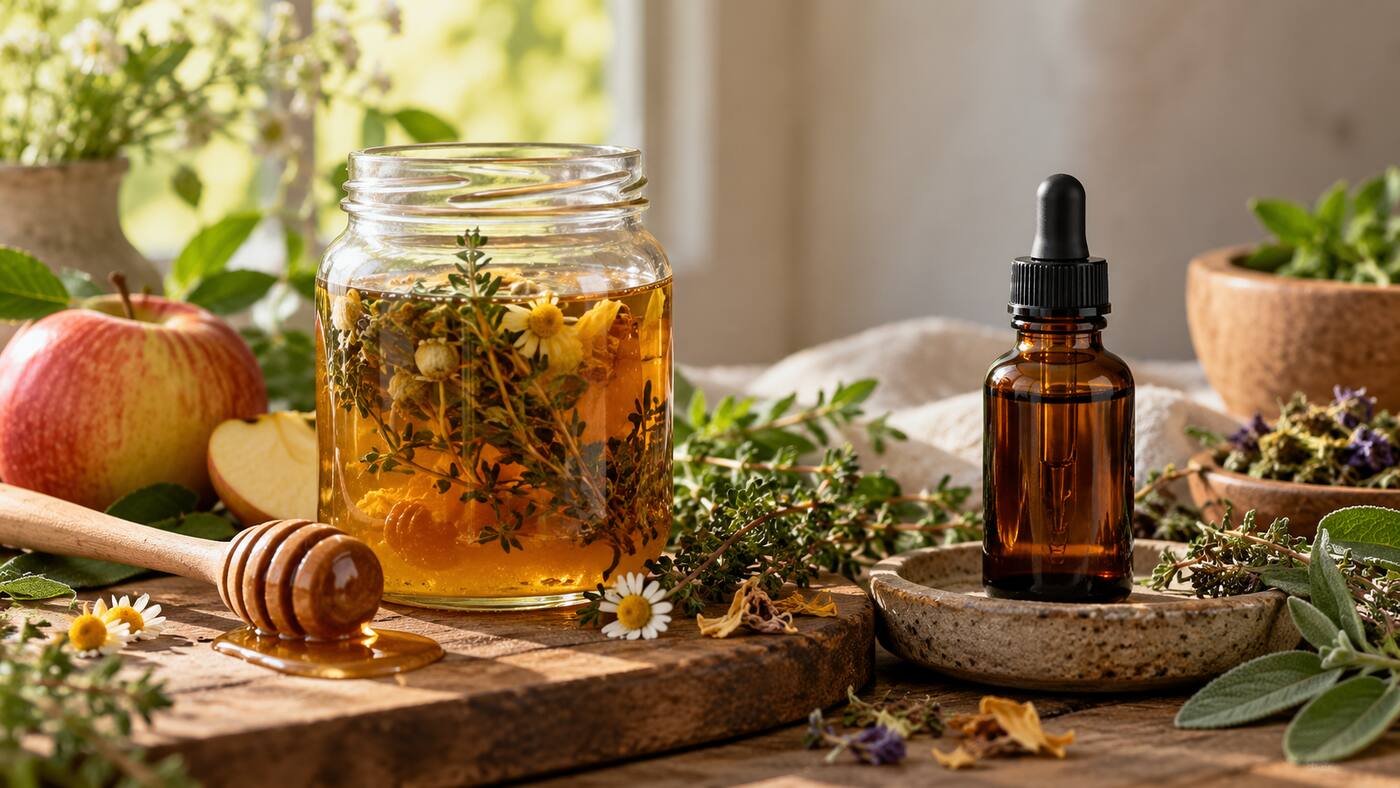
What Is an Herbal Oxymel? Oxymel vs Tincture Explained
Written by Lize Bührmann, founder of Pharmatropia.
An herbal oxymel is a sweet-and-sour preparation made from honey and vinegar, with or without infused herbs. A tincture is a concentrated liquid extract usually made with alcohol, although glycerine and other solvents may be used. They are different preparations, and a tablespoon of oxymel cannot be converted automatically into a dropper of tincture.
Oxymel vs tincture at a glance
| Feature | Oxymel | Tincture |
|---|---|---|
| Traditional base | Honey and vinegar | Alcohol and water, or another declared solvent |
| Taste | Sweet, sharp and acidic | Often bitter or alcoholic |
| Common serving style | Diluted spoonful or culinary-style preparation | Measured millilitres or drops |
| Key cautions | Sugar, acidity, honey allergy and dental exposure | Alcohol, concentration, interactions and dosing accuracy |
| Does the format prove effectiveness? | No | No |
Where does the word oxymel come from?
The name combines words for acid and honey. Oxymels have a long history in several medical and culinary traditions, including Persian medicine. Modern products may be simple honey-and-vinegar mixtures or compound preparations containing herbs, spices or fruit.
That history should be described respectfully, but it does not make every modern recipe clinically proven. A 2023 systematic review found a varied body of preclinical and clinical research using different formulations, making broad claims about “oxymel” as one uniform treatment inappropriate.
How is an herbal oxymel prepared?
Methods vary. Some makers infuse herbs into vinegar, then combine the strained vinegar with honey. Others macerate ingredients in a honey-vinegar mixture. The final product depends on the plant, fresh or dried material, proportions, acidity, time, hygiene and storage.
Because homemade water-containing botanicals can spoil, do not assume that honey or vinegar makes every mixture indefinitely shelf stable. Use a validated recipe, clean equipment and conservative storage directions. Discard a preparation showing gas, mould, unusual pressure, an off smell or a damaged seal.
How is a tincture different?
A tincture’s solvent profile is chosen to extract particular plant constituents and preserve the preparation. Its label may include a ratio such as 1:5 and an alcohol percentage. Read our guides to tincture ratios and tincture alcohol percentages for those terms.
An oxymel’s honey and vinegar contribute flavour and nutritional components of their own. This means the carriers are part of the serving, not merely invisible extraction aids.
Who should take extra care?
- People with diabetes: honey contributes sugar and should be included in the eating plan.
- People with reflux, ulcers or sensitive teeth: vinegar’s acidity may irritate symptoms or enamel.
- Children under one year: honey should not be given because of infant botulism risk.
- People using medicines: assess both the herbs and repeated vinegar or sugar exposure.
- Anyone with an allergy: check honey, pollen and every botanical ingredient.
Which preparation should you choose?
Choose based on the exact formula and your needs, not on the idea that one is more “natural”. An oxymel may appeal to someone who enjoys a food-like sweet-and-sour preparation. A tincture may provide smaller measured servings and a different extraction profile. A glycerite is another option but is not identical to either; see our tincture versus glycerite guide.
Frequently asked questions
Is fire cider an oxymel?
Many modern fire-cider recipes are oxymel-like because they combine vinegar, honey and botanicals. Recipes vary widely, so the name does not define a standard strength.
Is an oxymel alcohol-free?
A simple honey-and-vinegar oxymel is generally alcohol-free, but a commercial formula may include tinctures or other ingredients. Read the full label.
Can I replace a tincture with an oxymel?
Not dose for dose. The solvents, concentration and formula may differ substantially.
Does honey neutralise the vinegar?
No. It softens the taste, but the preparation remains acidic and should be treated accordingly.
Sources and educational note
See the 2023 systematic review of oxymel studies and our South African tincture buyer’s guide. This article explains traditional formats and does not prescribe a preparation for a health condition.