
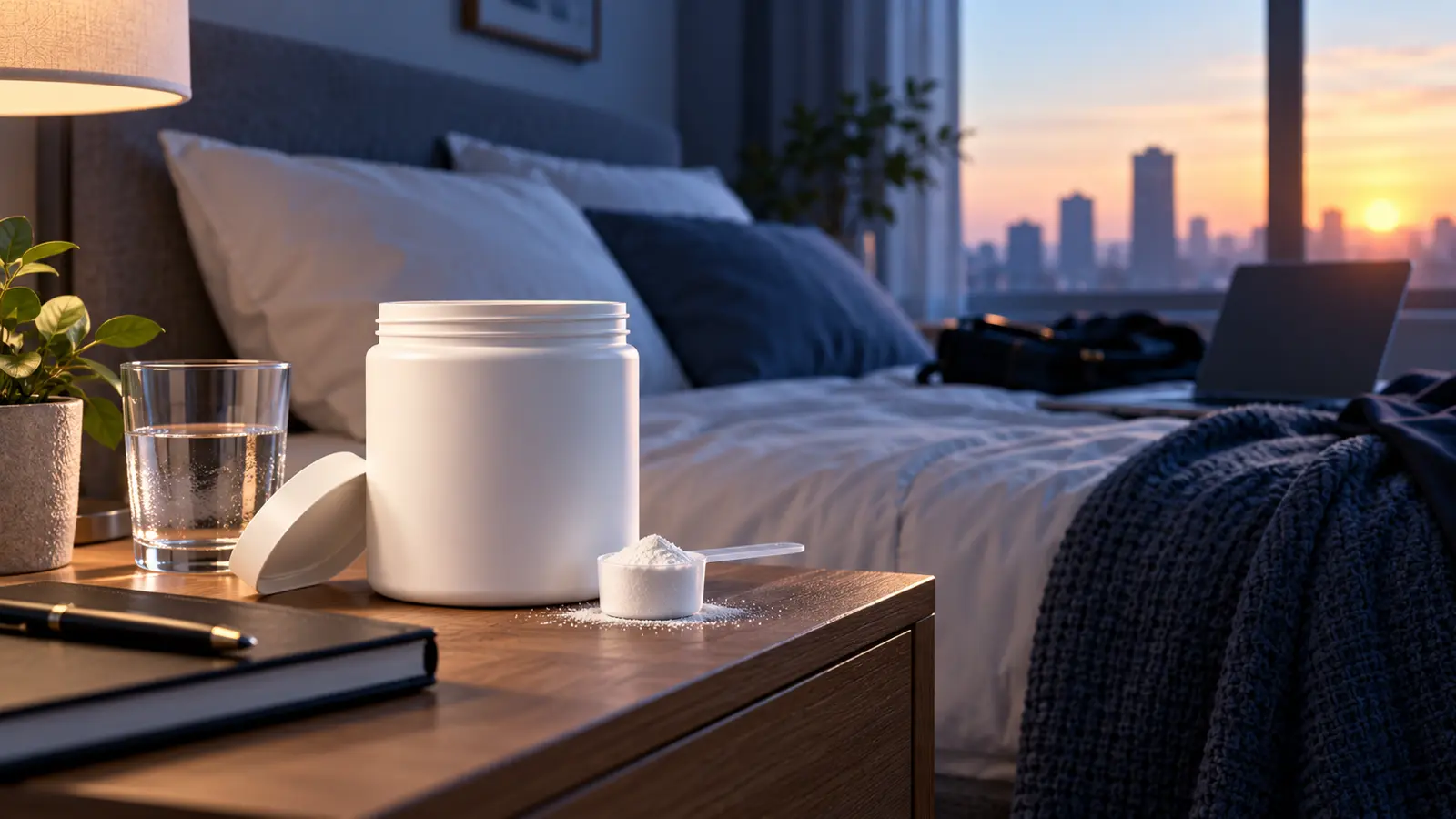
Can Creatine Replace Sleep? What Research Can and Cannot Say
A poor night’s sleep can leave concentration, reaction time, mood and physical performance feeling noticeably reduced. Because creatine supports rapid energy recycling in muscle and other tissues, it is sometimes marketed as a way to “offset” sleep loss. That interpretation goes too far. Creatine may help with selected tasks in some sleep-deprived people, but it does not reproduce the many biological functions of sleep.
This guide explains what creatine can reasonably do, where the evidence is still thin, and what to prioritise after a short night.
The short answer: creatine cannot replace sleep
Sleep is an active biological process. During sleep, the brain and body regulate memory, emotion, immune activity, hormones, appetite, tissue repair and metabolic health. A supplement that influences cellular energy cannot deliver all of those functions.
A few controlled studies have reported improvements in particular cognitive or physical measures after creatine use during sleep deprivation. That is interesting, but it is not evidence that a person is fully restored, safe to drive, or protected from the wider effects of ongoing sleep loss.
What creatine does in the body
Creatine helps form phosphocreatine, an energy reserve used to regenerate adenosine triphosphate (ATP). Its strongest and most consistent evidence is for supporting repeated high-intensity exercise, strength and lean-mass gains when paired with training. Creatine is also present in the brain, which is why researchers are studying its possible effects on cognition and fatigue.
For a broader introduction to the supplement, see our guide to creatine monohydrate benefits, evidence and use.
What the sleep-deprivation research actually shows
Small trials and a recent controlled study suggest that creatine may improve certain measures such as memory, processing speed or perceived fatigue during acute sleep deprivation. However, the research base is still small. Studies differ in dose, duration, participant diet and degree of sleep loss, so their results cannot automatically be applied to everyone.
There are also important limits:
- An improvement in one test does not mean every aspect of judgement or reaction time is normal.
- A laboratory sleep-deprivation protocol is not the same as months of poor-quality sleep.
- A high single dose used in research is not necessarily an appropriate everyday dose.
- People may feel more capable while still being impaired.
That last point matters for driving, operating machinery, making clinical decisions or doing other safety-sensitive work.
Why sleep still comes first
Creatine cannot correct the root cause of poor sleep. Repeated sleep restriction is associated with poorer emotional regulation, metabolic strain and reduced performance. If disrupted sleep is becoming a pattern, the useful question is not only which supplement to take, but what is preventing adequate sleep.
Our guide to poor sleep and emotional regulation explains why the effects can extend beyond tiredness.
A practical plan after a bad night
- Reduce risk first. Avoid driving or hazardous work if you are fighting sleep, zoning out or struggling to focus.
- Protect the next sleep opportunity. Keep caffeine earlier in the day, seek morning light and return to a regular bedtime.
- Use movement strategically. A walk and daylight may help alertness without pretending to remove the sleep debt.
- Eat and hydrate normally. Avoid chasing energy with repeated stimulants or unusually large supplement doses.
- Investigate repetition. Loud snoring, breathing pauses, restless legs, persistent insomnia or excessive daytime sleepiness deserve professional assessment.
Using creatine sensibly
Creatine monohydrate is the most studied form. Many adults use a modest daily amount rather than occasional large doses. Product quality and individual health still matter. Speak to a qualified health professional before use if you have kidney disease, are pregnant or breastfeeding, are under 18, take regular medicines, or have been advised to limit protein or fluid intake.
More is not automatically better. Large servings can cause stomach upset or diarrhoea, and rapid changes on the scale may reflect water held in muscle rather than fat gain.
Frequently asked questions
Should I take creatine only after a bad night?
Most established sports-nutrition evidence relates to consistent use, not using creatine as an emergency wakefulness product. An occasional large dose should not be copied from a study without professional guidance.
Can creatine make it safe to drive when tired?
No. Do not use a supplement or caffeine as proof that you are fit to drive. If you are drowsy, delay the trip, change drivers or use a safer form of transport.
Can I combine creatine and caffeine?
Many people do, but caffeine can disturb the next night’s sleep and may cause anxiety, palpitations or stomach upset in sensitive people. Check the total caffeine from coffee, energy drinks, pre-workouts and tablets.
When should persistent tiredness be checked?
Seek assessment if tiredness continues despite adequate sleep opportunity, or if it comes with breathing pauses, fainting, chest pain, severe mood changes or sudden neurological symptoms.
Bottom line
Creatine is a useful, well-studied sports supplement and an interesting subject in sleep-loss research. It may support selected performance measures in some circumstances, but it is not a substitute for sleep, recovery or a medical assessment of ongoing fatigue.
This article is for education only and is not medical advice. A qualified healthcare professional can help you assess persistent sleep problems, medicine interactions and whether creatine is suitable for you.