How to Buy Indigenous Medicinal Plants Responsibly in South Africa
To buy Indigenous medicinal plants responsibly in South Africa, look for correct botanical identity, cultivated or demonstrably sustainable sourcing, traceable suppliers, respectful benefit-sharing and realistic safety information. “Natural”, “wild harvested” and “traditional” are not automatic quality marks. In some cases, wild collection can contribute to serious population decline.
A responsible purchase protects three things at once: the person using the product, the plant population and the communities whose knowledge has shaped its use.
Why sourcing matters in South Africa
South Africa’s botanical diversity is extraordinary, but demand for medicinal species can exceed what wild populations can sustain. The South African National Biodiversity Institute (SANBI) has highlighted conservation work involving Wild Ginger, Heartleaf Ministar and Pepper-bark Tree—species affected by overharvesting, habitat pressure and regional trade.
The issue is not an argument against traditional medicine. It is an argument for keeping culturally important species available for future generations through cultivation, careful harvest, habitat protection and collaboration with knowledge holders.
Start with the botanical name
Common names can refer to several plants. Ask for the genus, species and plant part used. Leaf, bark, root and rhizome are not interchangeable: they can differ in chemistry, cultural use and ecological impact.
Botanical identity also improves safety. Substitution or misidentification can expose a consumer to unexpected compounds. Good suppliers use documented identification and, where appropriate, analytical methods rather than relying only on appearance.
Prefer cultivated material for threatened species
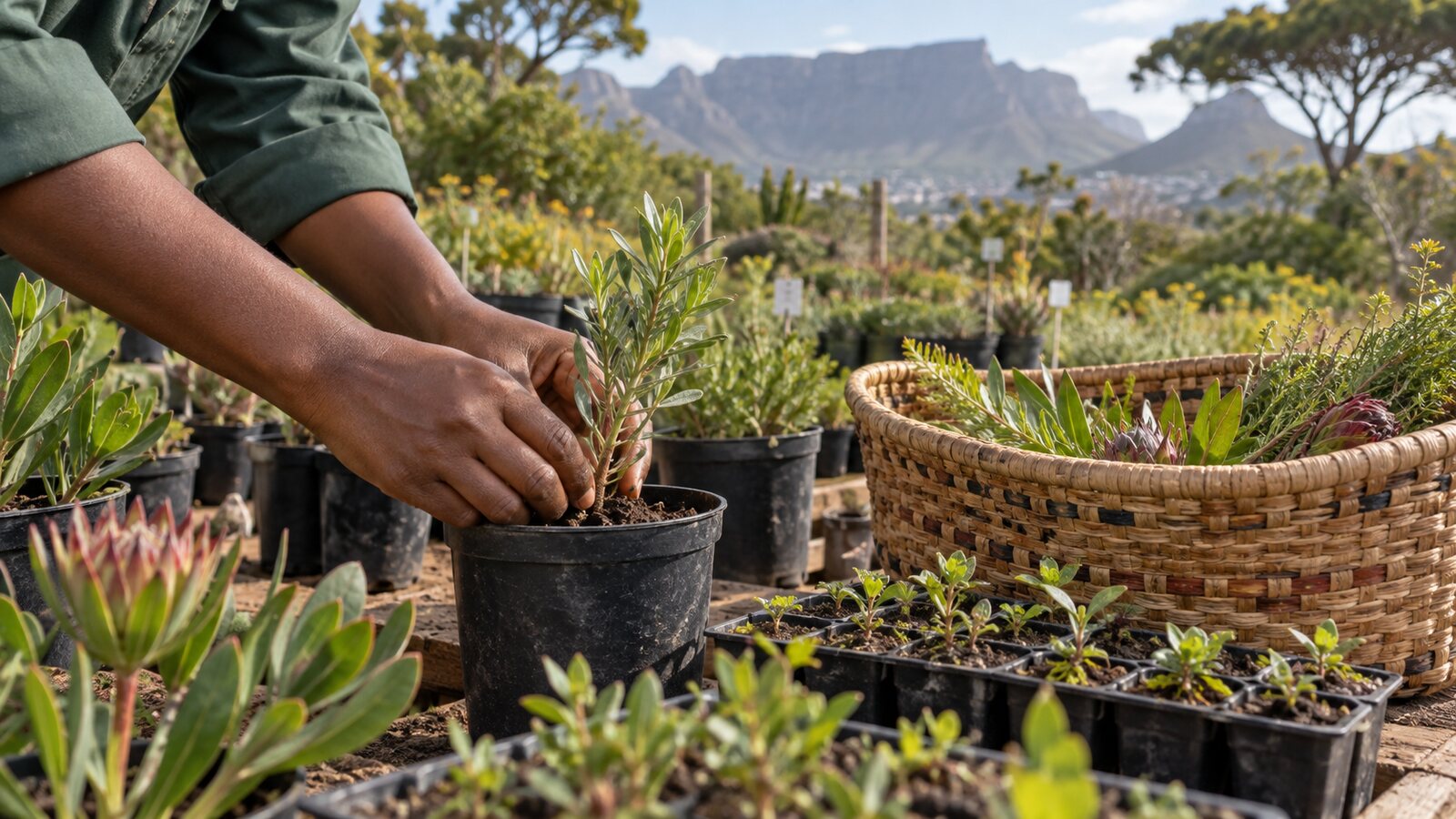
Cultivation can reduce pressure on wild populations and improve traceability. It is especially important for plants where harvesting kills or seriously damages the organism, such as removal of roots, rhizomes or extensive bark.
SANBI’s current Red List classifies Wild Ginger (Siphonochilus aethiopicus) as Critically Endangered. SANBI reports severe historical declines driven largely by destructive rhizome harvesting. Pepper-bark Tree (Warburgia salutaris) has improved from Endangered to Vulnerable through collaborative recovery work, including supplying cultivated plants, but it still requires careful management.
If a seller promotes “rare wild-harvested” material as a premium feature, pause. For threatened species, that language may signal ecological risk rather than superior quality.
Ask six questions before buying
- What is the scientific name and plant part?
- Was it cultivated or wild harvested? If wild, what makes the harvest legal and sustainable?
- Where was it sourced? A country name alone is not full traceability.
- How was identity and contamination checked?
- Who benefits? Is there a meaningful relationship with growers, harvesters or knowledge-holding communities?
- What are the dose, warnings and limits of the evidence?
A supplier may not disclose confidential commercial detail, but should still be able to explain its sourcing and quality approach without vague “ancient secret” marketing.
Benefit-sharing is more than a marketing story
South Africa has a legal framework for access to Indigenous biological resources and associated traditional knowledge. The Department of Forestry, Fisheries and the Environment’s Bioprospecting, Access and Benefit-Sharing clearing house explains the permitting and benefit-sharing system.
For consumers, this means cultural attribution should not end with a decorative origin story. Responsible trade considers permissions, fair relationships, benefit-sharing and the difference between public historical information and living community knowledge.
Separate traditional use from clinical evidence
Traditional use is valuable cultural and practical knowledge. It does not automatically mean that a preparation has been proven in modern clinical trials for a particular condition. Equally, a lack of trials does not erase cultural meaning.
A clear product description should state which claims come from tradition, which are based on laboratory or clinical research, and which remain uncertain. The WHO Global Traditional Medicine Strategy 2025–2034 places evidence, safety, regulation, sustainability and respect for Indigenous rights together rather than treating them as competing priorities.
Safety and quality still apply
An ethically sourced plant can still interact with medication, be unsuitable during pregnancy, or be contaminated if processed poorly. Check for:
- a complete ingredient list and preparation form;
- batch and expiry details;
- appropriate microbial, heavy-metal or contaminant controls for the product type;
- realistic claims that avoid “cure”, “guaranteed” and “no side effects”;
- a way to report an adverse reaction or ask a product question.
The SAHPRA health-supplement guideline specifically identifies exaggerated terms such as “miracle”, “100% safe”, “no side effects” and “guaranteed” as undesirable claims. Those phrases are useful red flags for shoppers too.
What responsible sourcing looks like in practice
It may look less dramatic than marketing suggests: cultivated plants, documented species, leaves used instead of destructive bark harvest where appropriate, harvest rotations, supplier relationships, batch records and conservative claims. Responsible sourcing can cost more because it accounts for labour, cultivation, testing and long-term stewardship.
For more context, see our respectful guide to Indigenous and ethnobotanical medicines and our South African guide to choosing traditional plant remedies.
Frequently asked questions
Is wild harvested always better than cultivated?
No. Cultivation can improve consistency and protect wild populations. Quality depends on species, growing conditions, harvest, processing and testing—not on a romantic label.
How can I check whether a South African plant is threatened?
Search the SANBI Red List using the scientific name. Conservation status can change, so use the live database rather than an old social post.
Does “organic” mean sustainably sourced?
Not automatically. Organic production and biodiversity sustainability answer different questions. Ask about cultivation or harvest separately.
Should I buy bark or root products?
Only when identity, legality, sustainability and safety are clear. Removing bark or roots can kill a plant, so cultivated sources or less destructive alternatives may be preferable.
Educational information only. Traditional and herbal products can cause adverse effects or interact with medicines. Seek qualified advice for symptoms, pregnancy, breastfeeding, children or ongoing treatment.
Written by Lize Bührmann, founder of Pharmatropia.