
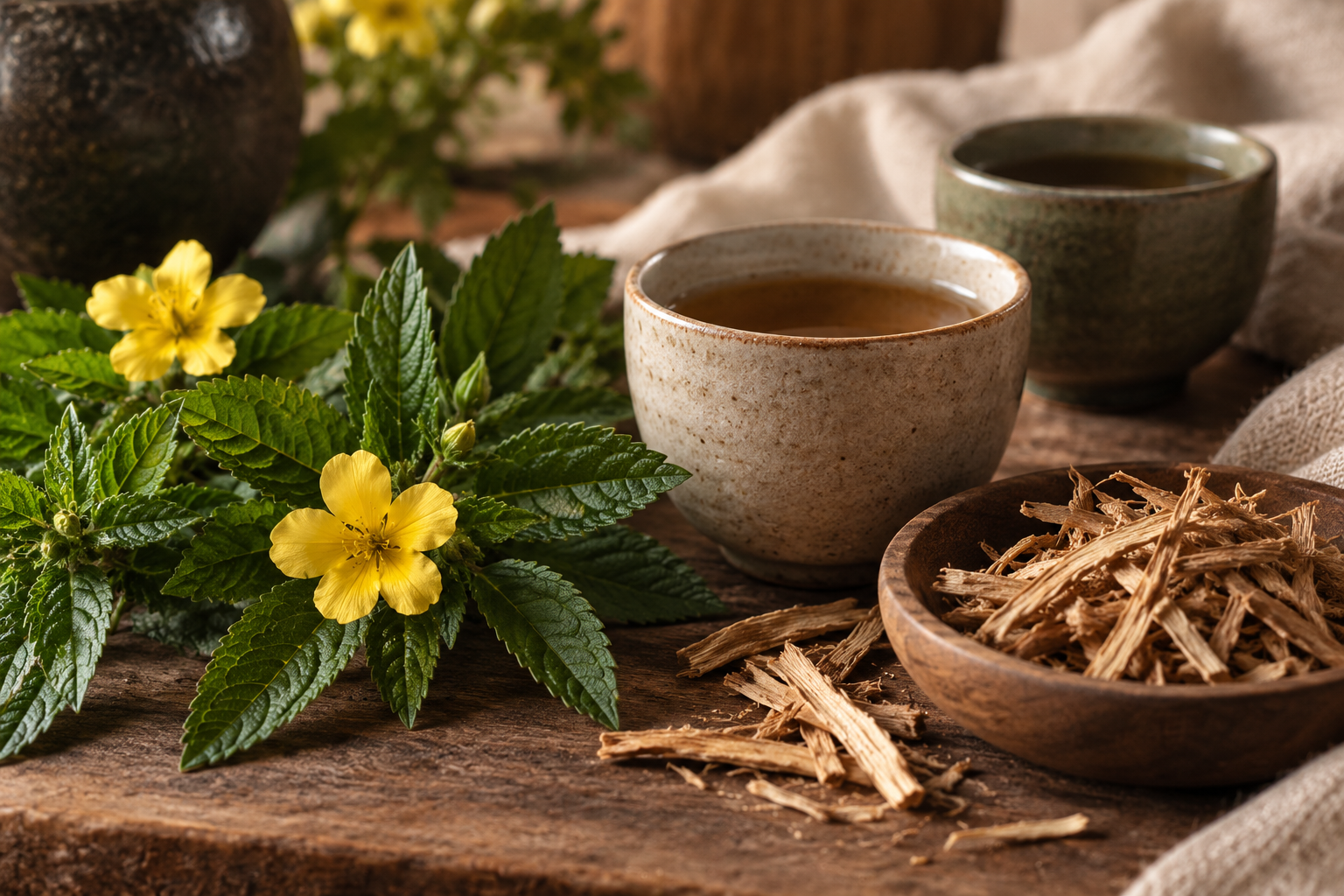
Botanical Sexual Wellbeing: Damiana, Muira Puama and Mindful Use
From the Pharmatropia Knowledge Library
This guide expands one of our original newsletters into clear, practical and evidence-aware information.
Sexual wellbeing is shaped by physical health, hormones, medication, stress, sleep, relationship safety and emotional connection. Botanicals such as damiana and muira puama have long traditional histories, but they should be approached as one possible part of a wider conversation—not as guaranteed aphrodisiacs.
Damiana in traditional use
Damiana, Turnera diffusa, is an aromatic shrub traditionally used in parts of the Americas. It is commonly associated with mood, relaxation and sensuality. Modern human research is limited, and product preparations vary.
Muira puama in traditional use
Muira puama is a common trade name applied to Amazonian plant materials, often Ptychopetalum species. It has traditional associations with vitality and sexual function, but strong clinical evidence for specific outcomes remains limited.
Look beyond a single ingredient
Low desire or changes in sexual response may relate to menopause, cardiovascular health, pelvic pain, medication, depression, relationship dynamics or fatigue. A respectful, whole-person approach is more useful than framing the issue as a simple failure of performance.
Responsible use
- Confirm the botanical name and extraction method.
- Avoid products that promise guaranteed results.
- Check interactions when using antidepressants, blood-pressure medicine or other regular treatment.
- Pregnancy and breastfeeding require professional guidance.
- Stop if a product causes palpitations, marked anxiety, dizziness or another concerning reaction.
Frequently asked questions
Do herbal aphrodisiacs work immediately?
There is no reliable evidence that these botanicals guarantee an immediate effect.
Can they be mixed with alcohol?
That may increase side effects or reduce judgement. A cautious approach is to avoid combining unfamiliar products with alcohol.
When should a change in sexual function be assessed?
Seek advice when it is persistent, distressing, painful, sudden or accompanied by other health changes.
Written by Lize Bührmann, founder of Pharmatropia. General educational information only; it does not replace individual medical advice.