
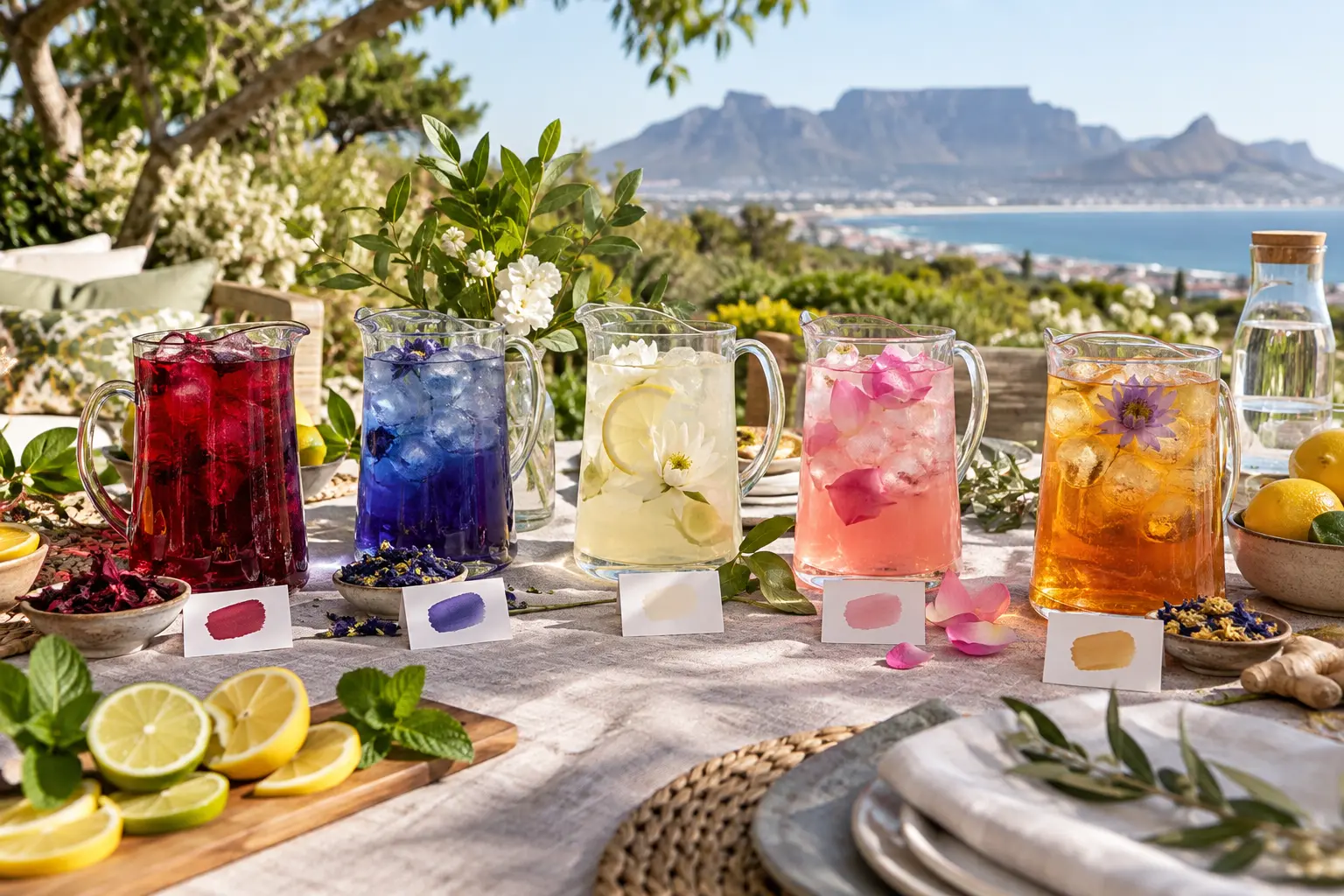
Botanical Iced Tea for Guests: A Beautiful, Safety-Aware Guide
A row of jewel-coloured iced teas can make a summer table memorable. Hibiscus, blue pea and lotus teas each offer a different colour, flavour and cultural story. Good hosting also means making ingredients visible, keeping drinks safely chilled and allowing guests to choose without health promises.
Five teas for a colourful table
Hibiscus
Hibiscus produces a vivid tart red infusion that pairs well with citrus or a modest amount of sweetener. It may affect blood pressure or blood sugar in some people, so avoid presenting it as a treatment and make the ingredient clear.
Blue pea butterfly flower
Blue pea creates a striking blue tea that shifts towards purple when lemon or another acid is added. The colour change is a chemistry effect involving plant pigments—not evidence of detoxification or another health benefit.
Pink, white and blue lotus
Lotus teas carry different cultural and symbolic associations and have gentle floral profiles. Evidence for many modern wellness claims is limited, and products can vary. They should be offered as botanical beverages or reflective rituals, not as treatments for anxiety, sleep or mood.
Label every jug clearly
Guests should not need to guess what they are drinking. Place a simple card beside each pitcher listing the botanical, sweetener, citrus, spices and any other ingredients. If you create blends, list every component. Keep the original packaging available in case someone needs more detail.
Ask before adding honey, sugar substitutes or strong flavourings. Offer plain water as prominently as the teas.
Consider allergies, pregnancy and medicines
“Caffeine-free” and “natural” do not mean suitable for everyone. Botanical allergy is possible, pregnancy-specific evidence may be limited, and some ingredients can interact with medicines or influence blood pressure or blood sugar.
- Do not pressure guests to try an unfamiliar botanical.
- Keep each serving utensil with its own jug.
- Avoid secret “wellness” ingredients.
- Provide a clearly identified, familiar alternative.
- For children, pregnant guests or people managing health conditions, let them make an informed choice.
Brew, cool and store safely
Use clean food-grade equipment and potable water. Follow the product’s preparation instructions rather than assuming every flower needs the same strength or steeping time. Strain loose material carefully.
Cool the infusion promptly, transfer it to clean covered containers and refrigerate. Keep serving jugs cold, especially in warm South African weather. Do not keep topping up an old batch with a new one, and discard tea that develops an unusual odour, cloudiness, fermentation, surface growth or unexpected fizz.
Control sweetness without losing hospitality
Serve sweetener on the side or prepare a lightly sweetened base with an unsweetened option. Whole citrus slices, mint and chilled fruit can add aroma and visual appeal, although they also need clean handling and refrigeration.
Our herbal tea pantry guide covers storage and choosing botanicals. For the science behind the colour-changing drink, see the blue pea butterfly tea guide.
A simple hosting plan
- Choose two or three teas rather than overwhelming guests.
- Prepare a small test batch to check flavour and colour.
- Label ingredients and sweeteners.
- Chill promptly in covered containers.
- Set out water, clean glasses and separate serving utensils.
- Enjoy the drinks as hospitality—not as a health intervention.
Frequently asked questions
Can botanical iced tea be made the day before?
Often yes, if it is prepared hygienically, cooled promptly and kept covered in the refrigerator. Follow the product instructions and use a fresh batch if anything seems unusual.
Can I mix all five botanicals together?
You can blend compatible flavours, but fewer ingredients make allergies and preferences easier to manage. Separate pitchers also preserve the colours.
Are these teas suitable for children?
Suitability depends on the exact botanical, strength, age and health context. Offer water and familiar caffeine-free drinks, and let a parent or guardian decide.
Written by Lize Bührmann, founder of Pharmatropia. This article is for general educational and hosting purposes and is not medical advice.