Blue Pea, Bobinsana and Hibiscus: A Thoughtful Botanical Guide
Blue pea, Bobinsana and hibiscus are visually striking botanicals with different cultural histories and uses. They should be understood individually, not bundled together as a substitute for first aid or medical care.
Blue pea flower
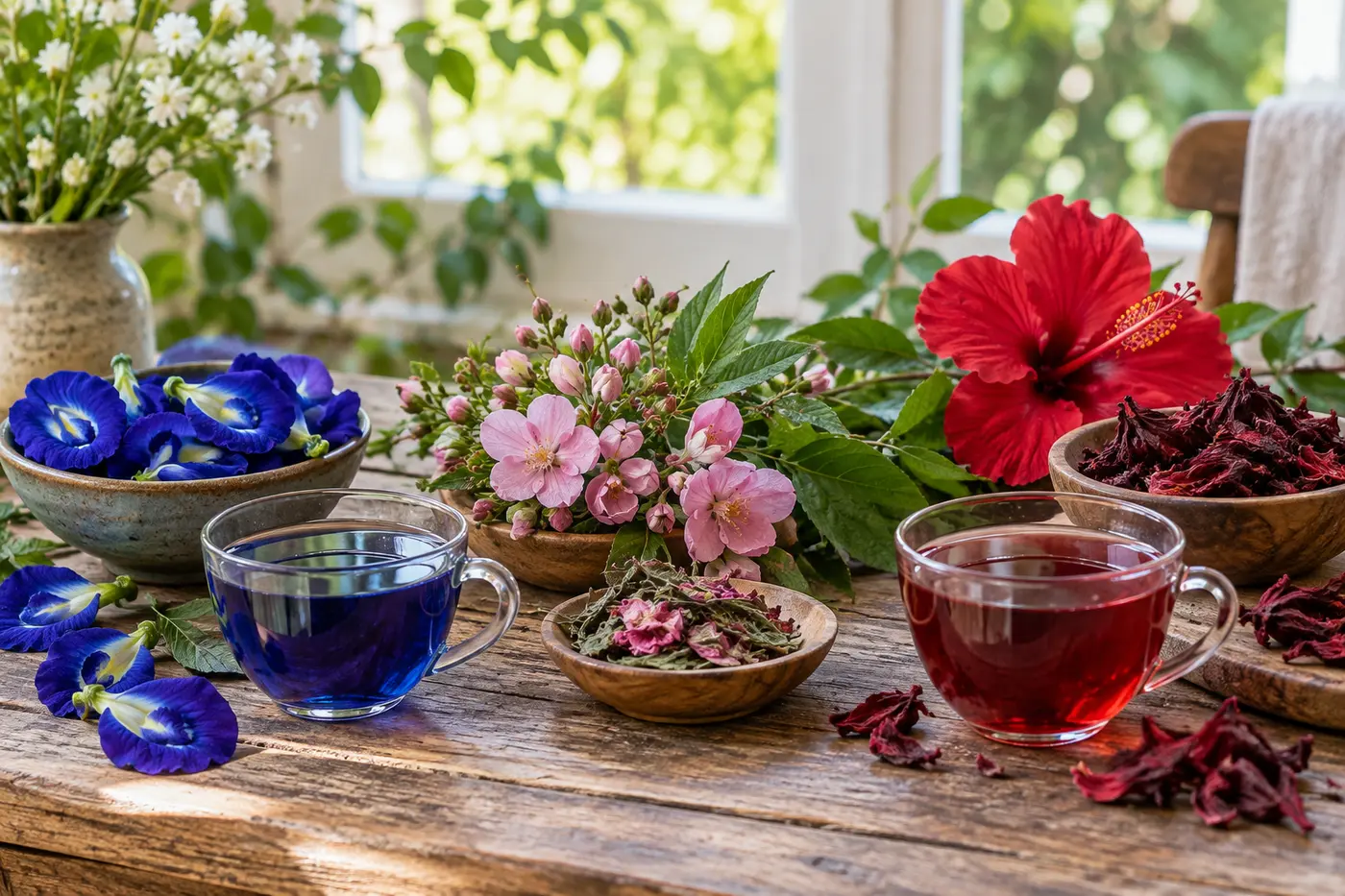
Blue pea, or Clitoria ternatea, is used as a colourful herbal infusion in parts of South and Southeast Asia. Its vivid blue pigments change towards purple or pink when lemon or another acid is added. Laboratory research has examined its anthocyanins and other compounds, but claims that it treats eye disease, headaches or serious illness are not established.
A simple tea
Steep a small amount of dried flower in hot water until the desired colour and flavour develops. Add citrus after brewing if you would like to see the natural colour change.
Bobinsana
Bobinsana, commonly identified as Calliandra angustifolia, has a history of traditional use in parts of the Amazon. Contemporary wellness language often associates it with emotional reflection and ritual practice. Human clinical research is limited, so descriptions should clearly distinguish cultural use from proven medical benefit.
Because preparations vary and reliable interaction data are limited, people using medicines, living with a medical condition, or who are pregnant or breastfeeding should avoid casual experimentation and seek qualified guidance.
Hibiscus
Hibiscus tea is usually prepared from the calyces of Hibiscus sabdariffa. It produces a tart, ruby-red drink enjoyed hot or cold. Research has explored possible effects on blood pressure and metabolic markers, but it is not a replacement for prescribed treatment. Its tart flavour also makes it easy to over-sweeten, so taste before adding sugar.
A refreshing infusion
Steep dried hibiscus in hot water and cool if preferred. Serve plain or with modest additions such as citrus or spice.
Why a botanical kit is not a first-aid kit
Tea and tincture rituals may support comfort, hydration or reflection, but they cannot safely treat severe dehydration, dangerously high blood pressure, acute eye symptoms, serious pain, allergic reactions or infection. Keep evidence-based first-aid supplies available and seek professional care for urgent symptoms.
Frequently asked questions
Can these botanicals be combined?
They can appear in the same wellness routine, but combining products increases uncertainty around dose and interactions. Introduce one product at a time if a qualified professional considers it appropriate.
Is natural always safe?
No. Plants contain active compounds, and identity, preparation, dose and individual health all matter.
Can hibiscus replace blood-pressure medicine?
No. Never stop or change prescribed treatment without the clinician managing it.
Written by Lize Bührmann, founder of Pharmatropia. This article is educational and is not medical advice or emergency-care guidance.