The Colour Blue in Wellness Rituals: Calm, Clarity and Honest Reflection
Blue is widely associated with calm, trust, honesty and clear thinking. These meanings appear in design, spiritual traditions and everyday language, but they are not universal prescriptions. A blue object or room may feel spacious to one person and cold to another.
A grounded colour ritual uses blue as a cue for attention and reflection—not as a treatment.
Why colour can change an atmosphere
Colour influences how a space is perceived, while memory, culture, brightness and context shape the response. A soft blue textile in daylight feels different from a bright blue screen at night. Personal association matters more than a rigid chart assigning one emotion to every colour.
Research on colour psychology can be interesting, but it does not justify claims that blue heals disease, lowers blood pressure for everyone or guarantees calm.
A blue ritual for clear communication
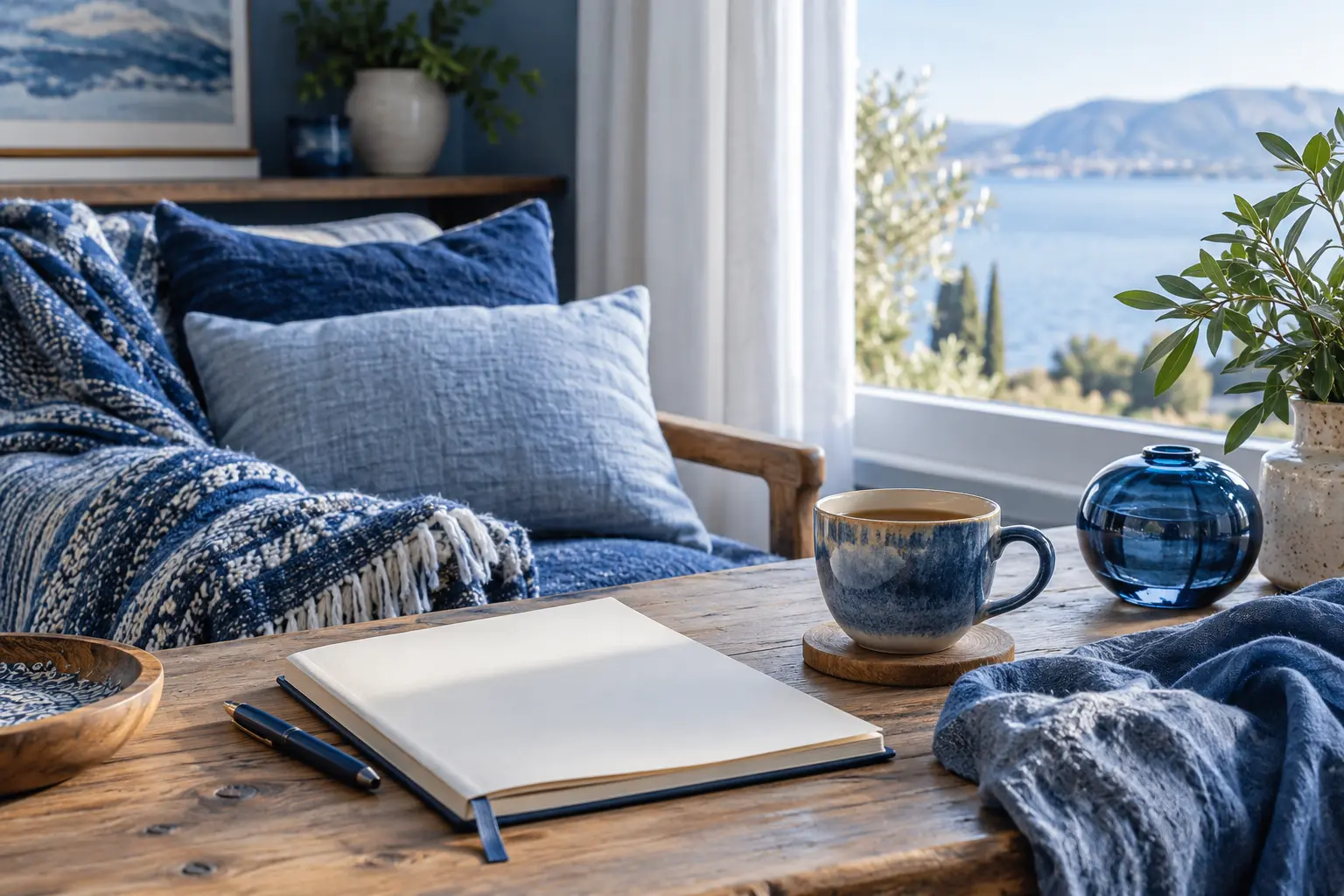
- Choose one blue item: a cloth, cup, notebook or flower.
- Sit somewhere comfortable with ordinary neutral lighting.
- Write the facts of the situation without interpretation.
- Name what you feel and what you need.
- Draft one honest, respectful sentence you could say or send.
- Choose a practical next action and a boundary for the conversation.
The colour provides a consistent visual cue. The useful part is the pause, the writing and the action that follows.
Blue in daytime and evening spaces
Blue décor is not the same as blue-rich light. Bright screens and cool lighting in the evening can delay sleep for some people. If blue is part of an evening ritual, use a physical object under dim, warm light rather than an intense blue lamp.
Our indigo evening ritual guide offers a fuller sleep-boundary practice.
Blue botanicals and blue branding
Blue lotus and blue pea butterfly flower are often grouped because of colour, but they are different plants with different histories and constituents. A colour category is not a safety category. Always check botanical identity, preparation, medicines and individual suitability.
For the botanical itself, read our grounded guide to Blue Lotus history and safety.
Use symbolism without bypassing the problem
A calming visual ritual may help someone prepare for a difficult conversation, but it cannot make an unsafe relationship safe or resolve a workplace problem on its own. Trust and honesty require behaviour, boundaries and accountability.
If blue evokes sadness, isolation or an unpleasant memory, choose another colour. There is no wellness prize for forcing a symbol that does not suit you.
A simple blue reflection prompt
Write for five minutes using three questions:
- What do I know to be true right now?
- What have I not yet asked or said clearly?
- What action would align with both honesty and care?
End by doing one small practical thing: send a message, schedule a conversation, rest, gather information or decide not to respond until you are steadier.
Frequently asked questions
Does blue scientifically reduce anxiety?
Responses differ, and colour alone is not an anxiety treatment. Environment and personal association influence the effect.
Is blue always the best colour for sleep?
No. Blue-rich light at night may interfere with sleep timing. A blue object can be used under warm, dim lighting if it feels calming.
Do I need to buy a special product?
No. A notebook, piece of fabric or everyday cup is enough. Attention and follow-through matter more than purchasing an object.
Written by Lize Bührmann, founder of Pharmatropia. This reflective wellness article is for education and does not replace psychological or medical care.