Are Herbal Smoking Blends Safer Than Tobacco?
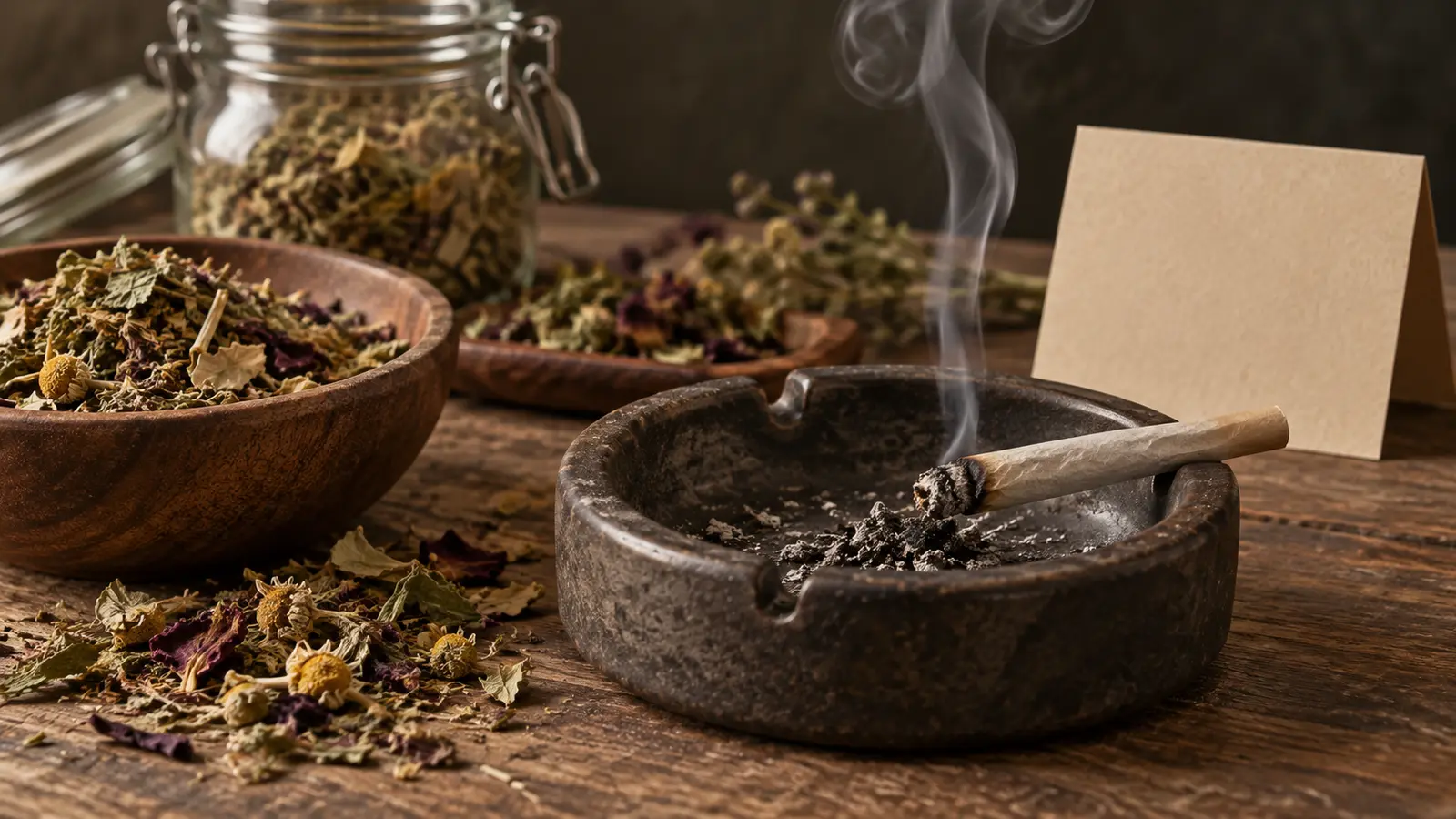
Herbal smoking blends are often described as “natural”, “tobacco-free” or “nicotine-free”. Those descriptions may be accurate about the ingredients, but they do not make inhaled smoke harmless. Burning plant material creates fine particles, gases and irritating chemicals, regardless of whether the plant is tobacco, mullein, damiana, lotus or another herb.
The clearest answer is therefore: removing tobacco may remove nicotine and some tobacco-specific exposures, but smoking an herbal blend still exposes the airways and lungs to combustion products.
What changes when plant material burns?
Combustion is a chemical process. Heat breaks down organic matter and creates a complex mixture that can include carbon monoxide, fine particulate matter, volatile compounds and polycyclic aromatic hydrocarbons. The exact mixture depends on the plant, temperature, paper, additives and how the product is used.
A herb’s traditional use as a tea does not establish the safety of inhaling its smoke. Burning can destroy some compounds, create new ones and deliver particles directly to delicate lung tissue.
“Nicotine-free” is not the same as “risk-free”
Nicotine is responsible for much of tobacco’s dependence potential and has important cardiovascular effects. A genuinely nicotine-free blend may avoid nicotine dependence, but lung irritation and combustion exposure remain. There is also limited long-term research on many commercial herbal mixtures.
Labels can create false reassurance when they emphasise what is absent without explaining the consequences of smoke itself.
Other risks that are easy to miss
Product identity and contamination
Loose plant material may be misidentified, contaminated with mould, pesticides or microbes, or mixed with undeclared ingredients. A pleasant smell is not a reliable quality test.
Second-hand exposure
Smoke affects people nearby. Children, pregnant people, older adults, pets and anyone with asthma or heart or lung disease may be especially vulnerable to irritation or worsening symptoms.
Fire and burn injuries
Smouldering material, candles and improvised holders add preventable fire risk, especially when a person is tired, impaired or using a product in bed.
Medicine and herb interactions
Some plants can affect alertness, heart rate or medicine metabolism. Inhaled dosing is difficult to predict, and blends make it harder to identify which ingredient caused an unwanted reaction.
Who should avoid smoke exposure?
The safest choice for lung health is not to inhale burnt plant material. Avoidance is particularly important for anyone who is pregnant or breastfeeding, under 18, has asthma, chronic obstructive pulmonary disease, heart disease or a history of severe allergy, or is recovering from a respiratory infection.
Stop exposure and seek urgent help for severe breathlessness, blue lips, chest pain, fainting, confusion or swelling of the face or throat.
Do water pipes or filters make herbal smoke safe?
No device makes combustion harmless. Water may cool smoke, and a filter may alter some particles, but neither removes the full mixture of gases and fine material. Cooling can even make deeper inhalation feel easier.
Is vaping an herbal extract a safe alternative?
Not automatically. Heating liquids creates a different aerosol with its own ingredients, device risks and uncertainties. Products not specifically manufactured and tested for inhalation should never be put into a vaping device. Oils can be especially dangerous when inhaled.
A practical harm-reduction approach
- Do not start smoking because a blend is marketed as natural.
- Do not use smoke around children, pets or people with respiratory conditions.
- Never combine unknown blends with alcohol or sedating products.
- Check the full ingredient list and avoid products that do not identify every plant.
- Do not assume that a ceremonial or traditional context removes physical risk.
- If you use tobacco or nicotine and want to stop, ask a clinician or pharmacist about evidence-based cessation support.
People sometimes use herbal blends as a substitute while trying to stop tobacco. Replacing one smoking ritual with another can preserve the behavioural cue and ongoing smoke exposure. A structured stopping plan, counselling and approved treatments have a stronger evidence base.
Frequently asked questions
Are herbal cigarettes less harmful than tobacco cigarettes?
They may not contain nicotine or tobacco, but their smoke still contains harmful combustion products. “Less harmful” cannot be assumed from the ingredient list alone, and it does not mean safe.
Is mullein smoke good for the lungs?
Traditional use and online claims do not establish that inhaling mullein smoke improves lung health. Smoke can irritate the airways, including when the plant itself is commonly used in other preparations.
Can an herbal blend help me quit smoking?
It may replace part of the ritual for some people, but it continues smoke exposure and has not replaced evidence-based cessation care. Ask for support that addresses both dependence and habits.
Does an organic label change the combustion risk?
Organic production may relate to farming practices, but burning organic plant matter still creates smoke and fine particles.
Bottom line
Tobacco-free and nicotine-free are useful facts, not complete safety assessments. The main issue is combustion: inhaling smoke from any plant can irritate and harm the respiratory system. For lung health, the safest option is to avoid inhaling burnt material.
This article is educational and is not medical advice. A qualified healthcare professional can help with breathing symptoms, smoking cessation and questions about medicine or herb interactions.