Can You Take Amanita Muscaria and Sceletium Together?
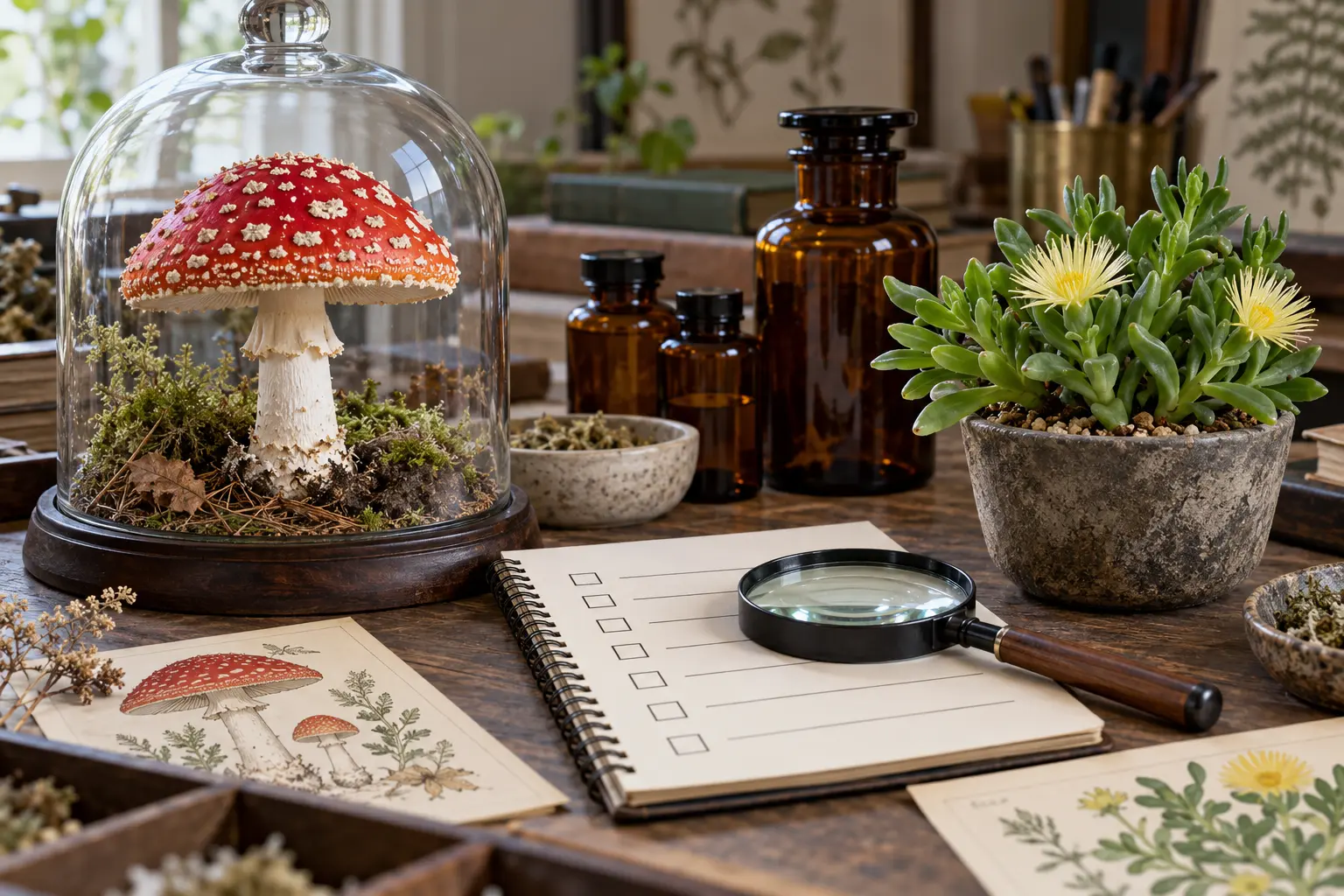
Amanita muscaria and Sceletium are sometimes marketed in the same broad “calm” or sleep category. That does not mean they work in the same way or are safe to combine. There are no good clinical interaction studies establishing a reliable combination, serving or risk profile.
The safety-first answer is that Amanita muscaria and Sceletium should not be assumed compatible. The uncertainty becomes more important when medicines, alcohol or other nervous-system-active products are involved.
They contain very different compounds
Amanita muscaria
Amanita muscaria can contain ibotenic acid and muscimol in amounts that vary by specimen and preparation. Muscimol acts mainly at GABA-A receptors, while ibotenic acid has different excitatory effects. Preparation may change the balance, but it does not make every product predictable or harmless.
Sceletium tortuosum
Sceletium contains mesembrine-type alkaloids. Laboratory and early clinical research suggests effects involving serotonin reuptake and other pathways. Extract strength, alkaloid profile and preparation vary.
Because the products act through different pathways and evidence on the combination is lacking, one label cannot be used to predict the other’s effect.
What could go wrong?
Potential concerns include excessive drowsiness, dizziness, impaired coordination, nausea, vomiting, agitation, confusion, altered judgement, unusual changes in blood pressure or heart rate, and unpredictable mental effects. A severe reaction may require urgent care.
Combining two products also makes it difficult to identify which caused a benefit or adverse effect. Variation between batches adds another layer of uncertainty.
Medicines and substances that increase concern
Do not combine these products casually with:
- antidepressants or other medicines that affect serotonin;
- sedatives, sleeping tablets, benzodiazepines or opioid pain medicines;
- antipsychotic, anti-seizure or complex psychiatric treatment;
- alcohol, cannabis or other substances that impair coordination or alertness;
- multiple calming, dream or sleep supplements.
Sceletium has a particularly important interaction concern with serotonin-affecting medicines. Read our guide to Sceletium and antidepressant interactions. For the mushroom’s broader risks, see Amanita muscaria, muscimol and safety red flags.
People who should be especially cautious
Avoid self-experimentation during pregnancy or breastfeeding, in children, or with a history of seizures, serious liver or kidney disease, significant cardiovascular instability, psychosis, mania, severe dissociation or substance dependence. A previous reaction to either product is a clear reason not to retry a combination without medical assessment.
Why timing them apart does not prove safety
Taking products hours apart may reduce simultaneous peak effects, but it does not eliminate interaction risk. Active compounds and metabolites can remain in the body, and individual clearance varies. “I felt fine last time” is not evidence that the next batch or context will be safe.
If a person has already combined them
Do not take more to correct or balance the effect. Avoid driving, bathing alone, cooking over flame or operating machinery. Stay with a sober, responsible adult and obtain urgent medical or poison-centre advice for severe sleepiness, repeated vomiting, collapse, seizure, breathing difficulty, marked agitation, confusion, chest pain or unusual behaviour.
Bring the packaging and ingredient information to clinicians if possible.
A safer decision process
- Define the actual goal—sleep, anxiety, mood, curiosity or ritual.
- Check whether a health condition, medicine or sleep disorder needs assessment first.
- Review each product separately with a pharmacist or qualified clinician.
- Do not treat the absence of a listed interaction as proof of safety.
- Avoid adding several variables at once.
- Stop and seek help when adverse effects appear.
Frequently asked questions
Do Amanita and Sceletium cancel each other out?
No. There is no reliable evidence that one neutralises the other.
Can they be used together for sleep?
There is insufficient evidence to establish a safe or effective combination for sleep. Persistent sleep problems deserve assessment.
Is a small amount automatically safe?
No. Product variability, preparation, medicines and individual sensitivity matter, and a “small” amount is not standard across products.
Can a pharmacist check the combination?
A pharmacist can review medicines and known risks, but may still conclude that the evidence is too limited to recommend combined use.
Educational and harm-reduction information only. This article does not recommend combining Amanita muscaria, Sceletium or any nervous-system-active product. Seek individual clinical advice and emergency care when needed.
Written by Lize Bührmann, Doctor of Natural Medicine and founder of Pharmatropia.