
A Thoughtful Natural First-Aid Kit: What Belongs and What Does Not
From the Pharmatropia Knowledge Library
This guide expands one of our original newsletters into clear, practical and evidence-aware information.
A useful first-aid kit should make it easier to respond calmly to minor everyday problems while recognising when professional care is needed. Natural products may have a supporting role, but they should not displace sterile dressings, proper wound care or emergency treatment.
Dependable essentials
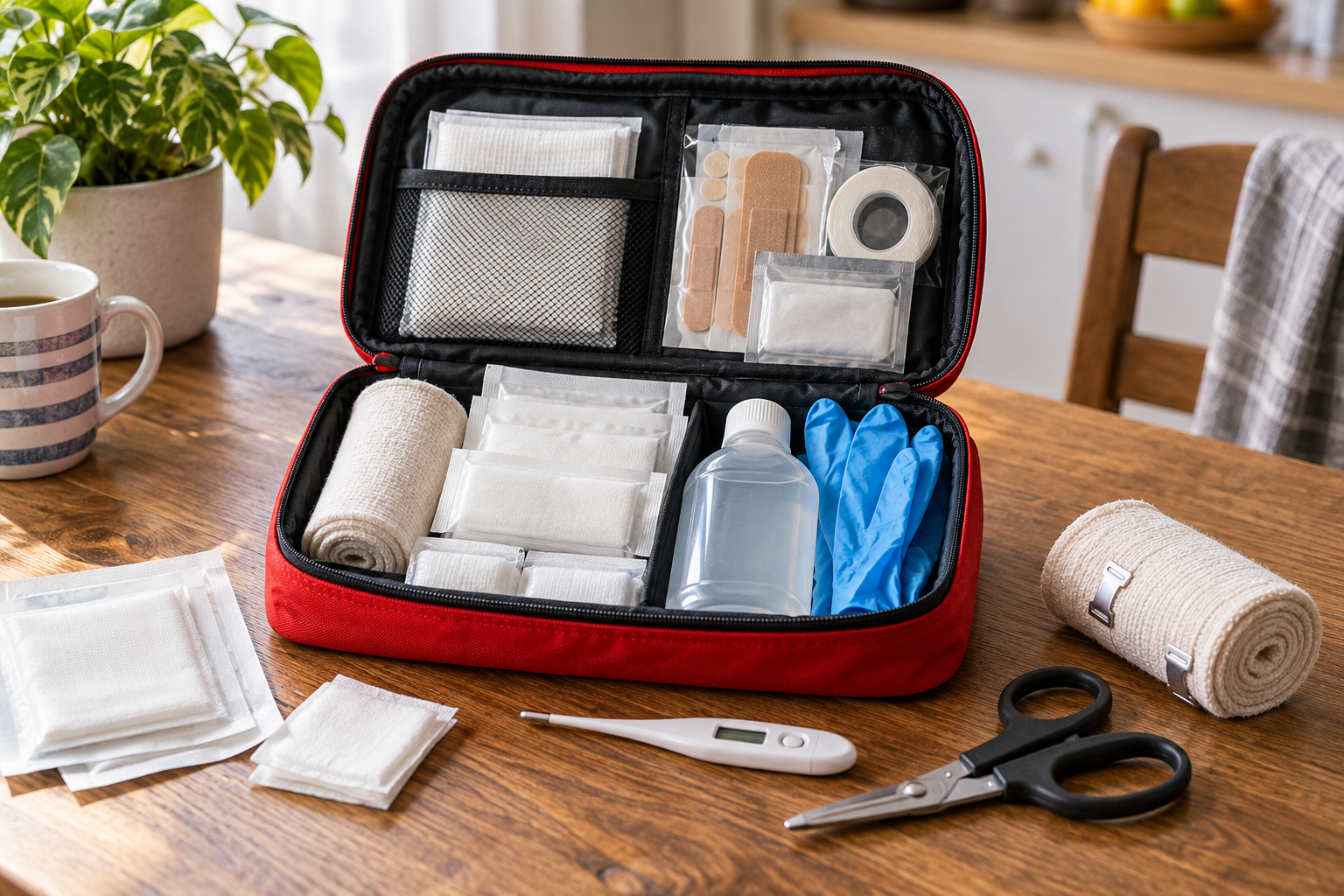
- Adhesive dressings in several sizes.
- Sterile gauze, medical tape and a clean bandage.
- Saline for rinsing minor wounds or eyes.
- Disposable gloves and hand sanitiser.
- Tweezers, blunt-ended scissors and a thermometer.
- Any personal emergency medication prescribed to the household.
- Emergency contact information.
Where complementary products may fit
A simple, clearly labelled soothing gel or balm may be useful for minor intact-skin discomfort, provided allergies and age restrictions are considered. Keep ingredient lists short and avoid applying essential oils, tinctures or powders directly into open wounds or eyes.
Know the limits
Deep wounds, uncontrolled bleeding, serious burns, bites, eye injuries, head injuries, breathing difficulty and signs of severe allergic reaction need professional or emergency care. Tetanus status may also matter after contaminated wounds.
Maintain the kit
Review the kit every six months. Replace expired products, restock used items and keep it where adults can access it quickly but children cannot. Include simple written instructions so a stressed person does not need to improvise.
Frequently asked questions
Should hydrogen peroxide be used on every wound?
Routine use can irritate tissue. Gentle rinsing with clean running water or saline is often more appropriate for minor wounds.
Can essential oils be put directly on a burn?
No. Cool a minor burn under cool running water and avoid unproven substances that may irritate or trap heat.
What is the most important first-aid skill?
Knowing when a problem exceeds home care and acting promptly.
Written by Lize Bührmann, founder of Pharmatropia. General educational information only; it does not replace individual medical advice.