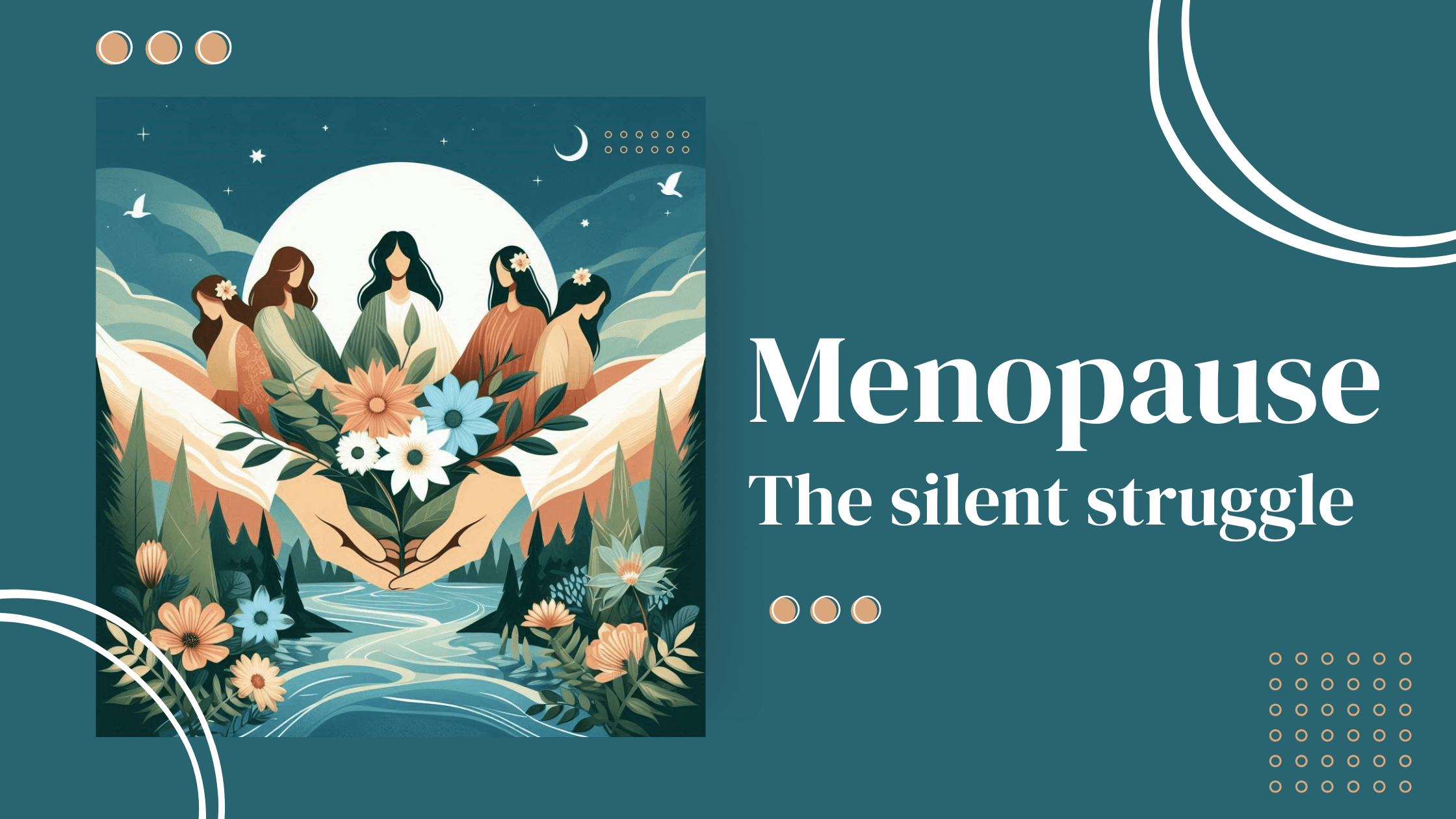
Menopause can significantly impact a woman’s mental health due to the hormonal changes and life transitions that occur during this time.
- Mood Changes: Many women experience mood swings, irritability, and feelings of sadness or depression. These changes can be similar to premenstrual syndrome (PMS) but may occur more frequently.
- Anxiety and Stress: Increased anxiety and stress are common during menopause. This can be due to hormonal fluctuations as well as life changes, such as children leaving home or caring for aging parents.
- Cognitive Effects: Some women report experiencing “brain fog,” which includes forgetfulness, difficulty concentrating, and problems with memory.
- Sleep Disturbances: Menopause often brings sleep problems, such as insomnia or night sweats, which can exacerbate feelings of fatigue and irritability.
- Self-Esteem and Confidence: Physical changes during menopause, such as weight gain or hot flashes, can affect self-esteem and confidence.
Understanding your health better, you need to know if you are currently experiencing any symptoms related to perimenopause or menopause:
Perimenopause:
- Meaning: Perimenopause, also known as the menopause transitional phase, occurs before menopause.
- Timeline: It typically starts in the 40s, although this transition period can vary from person to person.
- Symptoms: During perimenopause, you’ll experience symptoms such as irregular periods, hot flashes, mood swings, and sleep disturbances.
- Hormonal Changes: Perimenopause is marked by a gradual drop in estrogen levels, which can cause irregular cycles.
- Duration: Perimenopause can last from a few months to up to 4 years.
- Fertility: Despite hormonal changes, it’s still possible to get pregnant during perimenopause.
Menopause:
- Definition: Menopause officially occurs when you stop menstruating.
- Estrogen Levels: The ovaries produce significantly less estrogen, leading to the cessation of periods.
- Diagnosis: Your doctor will diagnose menopause once you haven’t had a period for a full year.
- Fertility: After menopause, pregnancy is no longer possible.
As complex as the different phases of menopause are, Golden Bridge doesn’t focus on increasing or decreasing hormones, as everyone has different needs and specifications. Rather it strengthens the driving force of life Itself and equips the participant on all levels of existence to enable optimal functionality.
A lifesaver to literally bring back your life in a truly natural and holistic way: gentle, powerful and ultimately supportive. An incredible partner and companion through perimenopause and menopause. Taken daily as a tincture, it works on multiple levels alleviating symptoms and challenges in the physical, mental and emotional realms. It increases what is referred to in Chinese medicine as ‘Jing’ or life essence.
When embarking on an unknown and possibly precarious journey, you want your driver to be strong and well equipped, metaphorically this is what Jing does. The increased Jing makes everything in transition easier. Alongside physical relief, the Golden Bridge brings an elite quality of spiritual clarity and an effortlessness to one’s life as one has sufficient energy and will to do whatever needs to be done.

Participants in The Golden Bridge trial experienced incredible results from Our Trials:
– Hot Flushes: Up to 59% reduction
– Brain Fog: 90% reported significant improvement
– Sleep disturbances: 41% experienced better sleep
– Mood: 90% saw dramatic improvement
– Energy: 59% felt more energized
– Libido: 45% noted improvement
– Itchy Ears: 100% found relief
– Dry Skin: 62% saw improvement
– Vaginal Dryness:*77% experienced relief
– Belly Weight: 50% saw reduction
– Headaches: 60% reported fewer headaches
– Periods (Perimenopausal): 23% had less pain
-100% of participants would take it again and recommend it!
Participants in trial also experienced improvement in: Periods of depression / Joint pain/ Feeling ungrounded.
Very interesting!! One of our trial participant’s Dad had an orchiectomy, and he experienced hot flushes, mood imbalance and sleep disturbances. Being on the Golden Bridge for over two months his symptoms decreased by 90%.
Side note: Orchiectomy is a surgical procedure in which one or both testicles are removed. The surgery can be performed for various reasons: treatment for testicular cancer. Some of the side effects from orchiectomy result from a decrease in hormone levels (typically when both testicles are removed).


Add comment