
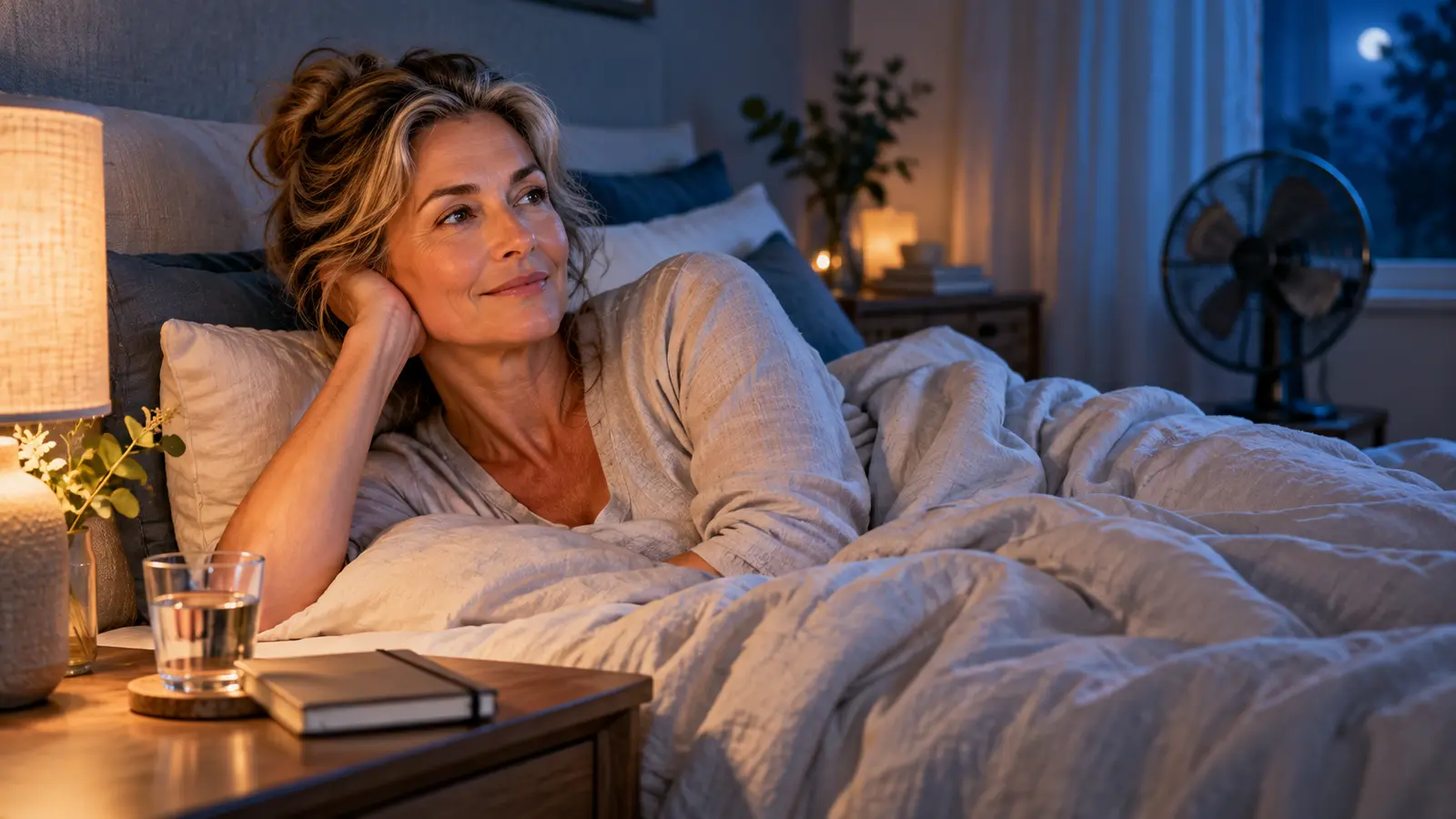
Menopause Sleep Problems: Night Sweats, Waking and What to Track
Sleep can change noticeably during perimenopause and menopause. Some women wake hot and drenched; others feel alert at 02:00 without an obvious flush. A few fall asleep easily but wake repeatedly and never feel restored. These patterns may overlap, yet they do not always have the same cause.
A short symptom record can help you and your healthcare practitioner distinguish temperature-related waking from insomnia, breathing problems, medication effects, mood symptoms or another health issue. It also makes it easier to test one change at a time instead of buying several products and guessing which one mattered.
Why sleep may change during the menopause transition
Changes in ovarian hormone patterns can affect temperature regulation, mood and the timing or depth of sleep. Hot flushes and night sweats may directly wake you, while worry about another poor night can make it harder to settle again. At the same time, midlife often brings additional sleep disruptors such as caring responsibilities, work pressure, pain, bladder symptoms and changes in alcohol or caffeine tolerance.
Not every sleep problem in a woman over 40 is caused by menopause. Thyroid conditions, iron deficiency, sleep apnoea, restless legs, depression, anxiety, reflux, medicines and other conditions may create similar symptoms. This is why a pattern-based review is more useful than assuming one explanation.
Night sweats, hot flushes and insomnia are related—but different
Night sweats
A night sweat involves heat and sweating significant enough to disturb sleep or require cooling, changing clothes or bedding. Note whether the episode follows alcohol, a late spicy meal, a warm room or a new medicine, but do not assume these are always the cause.
Sleep-maintenance insomnia
This means waking during the night and struggling to return to sleep. It may occur with or without heat. Record what woke you first: warmth, a noise, pain, urination, a racing mind or no clear trigger.
Early-morning waking
Waking well before the intended time can accompany stress or mood changes, but it may also reflect an earlier sleep schedule. The wider context matters, especially daytime energy and mood.
A useful two-week menopause sleep record
Keep the record simple enough to complete every morning. Include:
- bedtime, estimated sleep time and final waking time;
- number and approximate time of awakenings;
- whether heat, sweating, pain, urination or worry was present;
- room temperature, fan or bedding changes;
- caffeine and alcohol timing;
- medicines, supplements or hormone therapy and the time taken;
- menstrual-cycle information, if relevant;
- daytime sleepiness, concentration and mood;
- snoring, gasping, morning headache or dry mouth reported by you or a partner.
Use broad estimates rather than watching the clock repeatedly, which can increase alertness. After two weeks, look for clusters: for example, heat before most awakenings, or poor sleep mainly after late caffeine.
Practical changes to test one at a time
Create adjustable cooling
Use light, breathable layers that can be removed quickly. Keep water nearby and consider a fan or cooler room if safe and practical. Choose bedding that can be washed and dried easily. The aim is flexible comfort, not making the room uncomfortably cold.
Protect the sleep window
Keep waking time reasonably consistent, seek morning daylight and avoid extending time in bed to chase lost sleep. If you are awake for a prolonged period, a quiet, dimly lit activity may be less frustrating than trying harder to sleep.
Review stimulants and alcohol
Caffeine can last longer than expected, and alcohol may fragment the second half of the night even when it feels sedating initially. Track timing before making a judgement. If you use regular medication, discuss changes with the prescriber rather than stopping suddenly.
Use a calm return-to-sleep routine
Try a repeatable sequence: cool down, take a slow breath out, relax the jaw and shoulders, and place attention on a neutral sound or body sensation. Avoid checking messages or solving tomorrow’s problems in bed.
When to discuss treatment options
Speak to a healthcare practitioner when symptoms are frequent, severe or affecting work, driving, mood or relationships. Depending on your history, a clinician may discuss menopause-specific options, non-hormonal treatments, sleep-focused therapy or investigation for another cause. Hormone therapy is appropriate for some people and unsuitable for others; the decision requires an individual risk-and-benefit discussion.
For a wider overview, see our guide to understanding the menopause transition. If heat is not the main issue, our general night-waking checklist may help you prepare for a consultation.
Red flags that deserve prompt assessment
- loud snoring, choking or pauses in breathing;
- night sweats with unexplained fever or weight loss;
- chest pain, fainting or severe shortness of breath;
- new neurological symptoms;
- persistent low mood, hopelessness or thoughts of self-harm;
- sleepiness that makes driving or operating equipment unsafe.
Frequently asked questions
Are all menopause awakenings caused by low oestrogen?
No. Hormonal change may contribute, but sleep disorders, medicines, stress, pain and other medical conditions can overlap.
Should I buy a sleep supplement first?
Start by identifying the pattern and reviewing medicines or health conditions with a professional. Supplements can interact with medicines and may duplicate ingredients in other products.
How long should I track my sleep?
Two weeks is often long enough to reveal a pattern without becoming burdensome. Bring the record to your appointment.
Can menopause-related sleep improve?
Yes, many people improve with targeted support. The most useful approach depends on whether heat, insomnia, breathing, mood, pain or another factor is driving the disruption.
Educational note: This article provides general information and is not medical advice. Seek personalised assessment before starting, stopping or combining medicines, hormone therapy or supplements.